
Renter-Friendly Wall Storage: 9 No-Drill Ideas
Explore renter-friendly wall storage without drilling using over-door storage, adhesive hooks, tension rods, magnetic options, shelves, and safer removal.
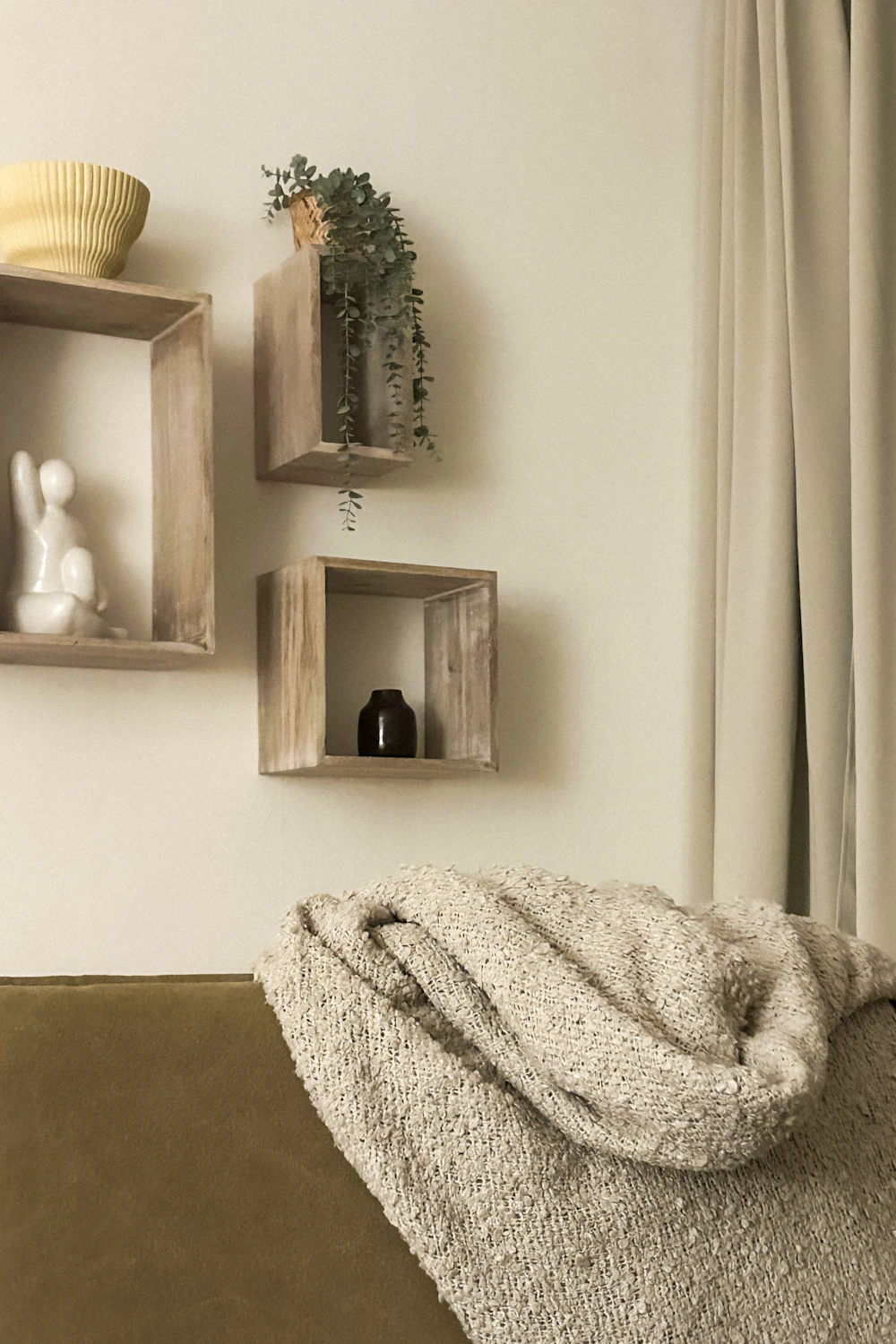
Renter-friendly wall storage is less about finding products labelled “damage-free” and more about choosing a storage method that matches the wall, the load, the lease, and the way you plan to remove it. In a small apartment, vertical space is valuable, but drilling may be restricted and removable products are not risk-free on every paint or finish.
This guide focuses specifically on wall storage without drilling: over-door systems, adhesive hooks, tension rods, magnetic storage, freestanding vertical units, leaning storage, cabinet-door organizers, and furniture that uses wall height without permanent mounting. The goal is to gain storage while keeping the solution realistic for a rental.
Before Putting Anything on a Rental Wall
Start by checking five things before you hang or press anything against the surface:
- The lease: some rentals prohibit drilling, adhesives, or wall mounting; others allow small holes with repair at move-out.
- The surface: smooth painted drywall, tile, glass, metal, wood, textured walls, and wallpaper respond differently to adhesives and pressure.
- The paint condition: weak, flaking, freshly painted, or poorly bonded paint can lift even when a product is marketed as removable.
- The load: keys and oven mitts are a different problem from shelves, glass frames, or electronics.
- The removal method: follow the product instructions exactly rather than pulling an adhesive strip straight away from the wall.
Renter-Friendly Wall Storage: Quick No-Drill Comparison
| Method | Best for | Typical load class | Wall contact | Portable |
|---|---|---|---|---|
| Over-door storage | Shoes, pantry items, scarves, cleaning supplies | Light to medium | Minimal | Yes |
| Adhesive hooks | Keys, utensils, lightweight accessories | Light | Direct adhesive | Usually |
| Tension rods | Cabinets, closets, alcoves | Light to medium | Pressure at two points | Yes |
| Magnetic storage | Fridge or other compatible metal surfaces | Varies by product | None on wall | Yes |
| Leaning ladder storage | Towels, blankets, baskets | Light to medium | Light contact | Yes |
| Freestanding shelves | Books, boxes, heavier everyday storage | Medium to high | None for support | Yes |
For tall freestanding units, follow the manufacturer’s stability and anti-tip instructions. If anchoring is required and your lease limits wall attachment, a lower, wider unit may be a better choice than ignoring a safety requirement.
1. Over-the-Door Storage
Over-door organizers are one of the simplest ways to add vertical storage without touching the wall. They work well for shoes, scarves, cleaning products, pantry packets, small towels, or accessories. In a bedroom, they can replace part of a missing closet; in a bathroom, they can hold lightweight toiletries; and in an entryway, they can support a compact drop zone. They can also add lightweight storage in a small laundry room or laundry closet when the door still closes freely.
Measure the door thickness, bracket thickness, top clearance, and hinge side. A system that technically fits the door can still stop it from closing cleanly or rub against the frame. If the front entrance is your main problem area, see our small-entryway drop-zone guide.
2. Adhesive Hooks for Lightweight Items
Adhesive hooks are useful for small, lightweight items when the surface is compatible with the product instructions. Good uses include keys, measuring spoons, oven mitts, light hats, cable loops, or a small empty tote. Avoid treating the printed load rating as permission to hang anything of that weight on any surface; surface preparation, paint condition, temperature, humidity, and installation time all matter.
Decision rule: if the object is valuable, fragile, heavy, or positioned where a failure could injure someone, choose a more secure method approved for that application.

3. Tension Rod Storage
Tension rods use pressure between two opposing surfaces rather than screws. Small rods can create a temporary rail inside a cabinet, under a sink, inside a wardrobe, or across a narrow alcove. They are useful for spray bottles, lightweight scarves, small baskets with hooks, or vertical separation inside deep cabinets.
Measure the opening carefully and choose a rod designed for that span. Do not overtighten against weak plaster, soft wood, or delicate finishes. A tension system is only useful when both contact points are stable enough to take the pressure.
4. Magnetic Storage in the Kitchen
Magnetic racks can add storage to a compatible refrigerator side or other metal surface without touching the wall. They are useful for spice jars, lightweight kitchen tools, towels, or small containers. Test the surface first because not every appliance panel is magnetic, and keep the load within the product’s instructions.
Position the rack where opening an appliance door will not make it slide or knock into a nearby cabinet. For more compact kitchen ideas, see how to maximize storage in a tiny kitchen.
5. Freestanding Vertical Shelving
When the load is heavier, a freestanding unit is often more practical than trying to make adhesive wall storage do a job it was never meant to do. A narrow bookcase, modular cube unit, rolling tower, or shallow shelving unit can use wall height while the floor carries the weight.
Keep the deepest and heaviest items low. Do not block doors, heaters, or main walking paths. Tall furniture may require anti-tip anchoring according to the manufacturer, so check those instructions before assuming that “freestanding” means no wall interaction is ever needed.
If you need broader planning help, our small-apartment storage guide explains how to choose between tall shelving, multi-use furniture, carts, and door storage without crowding circulation.
6. Leaning Ladder Storage
A leaning ladder can hold towels, throws, lightweight baskets, or frequently worn clothing while using only a narrow footprint. It is useful in bedrooms and bathrooms where a bulky cabinet would feel heavy. Add soft floor pads if the feet could mark the flooring, and make sure the ladder cannot slide on a smooth surface.
Do not use a decorative leaning ladder as a substitute for a load-bearing shelf. Keep heavy objects low and follow any stability guidance supplied with the product.
7. Pegboard Alternatives Without Permanent Installation
Pegboard is flexible because hooks and cups can move as your needs change, but a traditional wall-mounted panel still requires fixing. Renters can get the same adjustable function from a freestanding pegboard panel, desk-mounted organizer, shelf-backed grid, or furniture-mounted panel.
This is especially useful for a small workspace because pens, headphones, notes, and cables can move upward without taking over the desktop. For a complete setup, see our small-space home-office guide.
8. Cabinet-Door Storage
The inside of a cabinet door is vertical storage that does not involve the room wall at all. Over-cabinet hooks, lightweight hanging caddies, and compatible adhesive holders can work for cleaning cloths, hair tools, small kitchen lids, or bathroom accessories.
Check the hinge clearance and make sure the organizer does not hit shelves or plumbing when the door closes. In humid rooms, choose materials appropriate for moisture and avoid trapping wet items inside a closed cabinet. Our small-bathroom organization guide has more moisture-aware ideas.
9. Furniture That Uses Wall Height Without Mounting
A tall garment rack with shelves, a narrow étagère, a bookshelf with baskets, or a headboard-storage unit can use vertical volume without relying on adhesive shelves. The advantage is flexibility: the unit can move to another room or another rental.
Use this approach when the category is too heavy or too important for a removable hook. Keep the unit proportionate to the room and protect the main walking route. In a bedroom with no closet, a well-sized garment rack plus under-bed storage often works better than trying to hang many independent solutions from the wall.
What Should You Avoid Hanging With Adhesives?
Even when a product is marketed for removable mounting, some objects are poor candidates because the consequence of failure is too high. Avoid using a lightweight adhesive solution for:
- glass shelves or heavy glass frames;
- expensive electronics;
- heavy books or loaded floating shelves;
- objects directly above a bed, sofa, crib, or frequently used chair;
- valuable artwork that could be damaged in a fall;
- loads beyond the exact product and surface instructions.
When the object truly needs a structural fixing, the right renter-friendly decision may be to ask the landlord for permission, use an approved mounting method, or choose a freestanding alternative.
How to Remove Adhesive Storage More Safely
Removal is part of installation planning. Before attaching the product, read the removal directions and keep any pull tabs accessible. Many removable systems are designed to be released in a specific direction rather than peeled outward from the wall.
- Do not yank a hook or strip directly away from the paint.
- Follow the manufacturer’s removal angle and speed.
- Support the hook or item as you release the adhesive.
- Stop if the paint begins to lift and reassess rather than forcing the strip.
- For wallpaper, textured surfaces, fresh paint, or delicate finishes, use only products explicitly approved for that surface.
Best No-Drill Storage by Room
| Room | First options to consider | What to keep off adhesives |
|---|---|---|
| Kitchen | Magnetic rack, over-cabinet hooks, tension rod, slim freestanding cart | Heavy cookware, knife storage unless specifically designed and secure |
| Bathroom | Over-door organizer, tension storage, freestanding narrow shelf | Heavy glass, items affected by humidity if adhesive is not rated for it |
| Bedroom | Over-door pockets, garment rack, leaning ladder, under-bed storage | Heavy decor above the bed |
| Entryway | Over-door hooks, small freestanding rack, light adhesive key hooks | Heavy bags on lightly mounted hooks |
| Home office | Desk-mounted pegboard, cable clips, freestanding shelf | Monitors, heavy shelves, expensive equipment |
A Simple Renter-Friendly Priority Order
When several methods could solve the same problem, use the lowest-commitment option that can safely handle the load:
- Freestanding or furniture-based storage for heavier items.
- Over-door or over-cabinet systems where clearance allows.
- Tension or magnetic storage on compatible surfaces.
- Adhesive hooks and holders for light items when the exact wall surface and removal instructions are compatible.
This hierarchy complements our broader guide to renter-friendly apartment organization. That article covers general reversible storage; this one focuses specifically on wall and vertical storage without drilling.
The Bottom Line
The most reliable renter-friendly wall storage usually comes from matching the method to the load and surface instead of trying to make every solution adhesive. Use doors, furniture, tension, magnets, and freestanding vertical storage first where they make sense. Reserve removable hooks for lightweight, compatible uses, and treat the manufacturer’s installation and removal instructions as part of the storage plan.
Photo sources: Spoorthi J and Blake Wisz on Unsplash, used under the Unsplash License.