
Small Entryway Organization: 9 Practical Drop-Zone Ideas
Create small entryway organization without a hallway using shallow shoe storage, hooks, a landing shelf, mail control, wet-weather storage, and a simple drop zone.
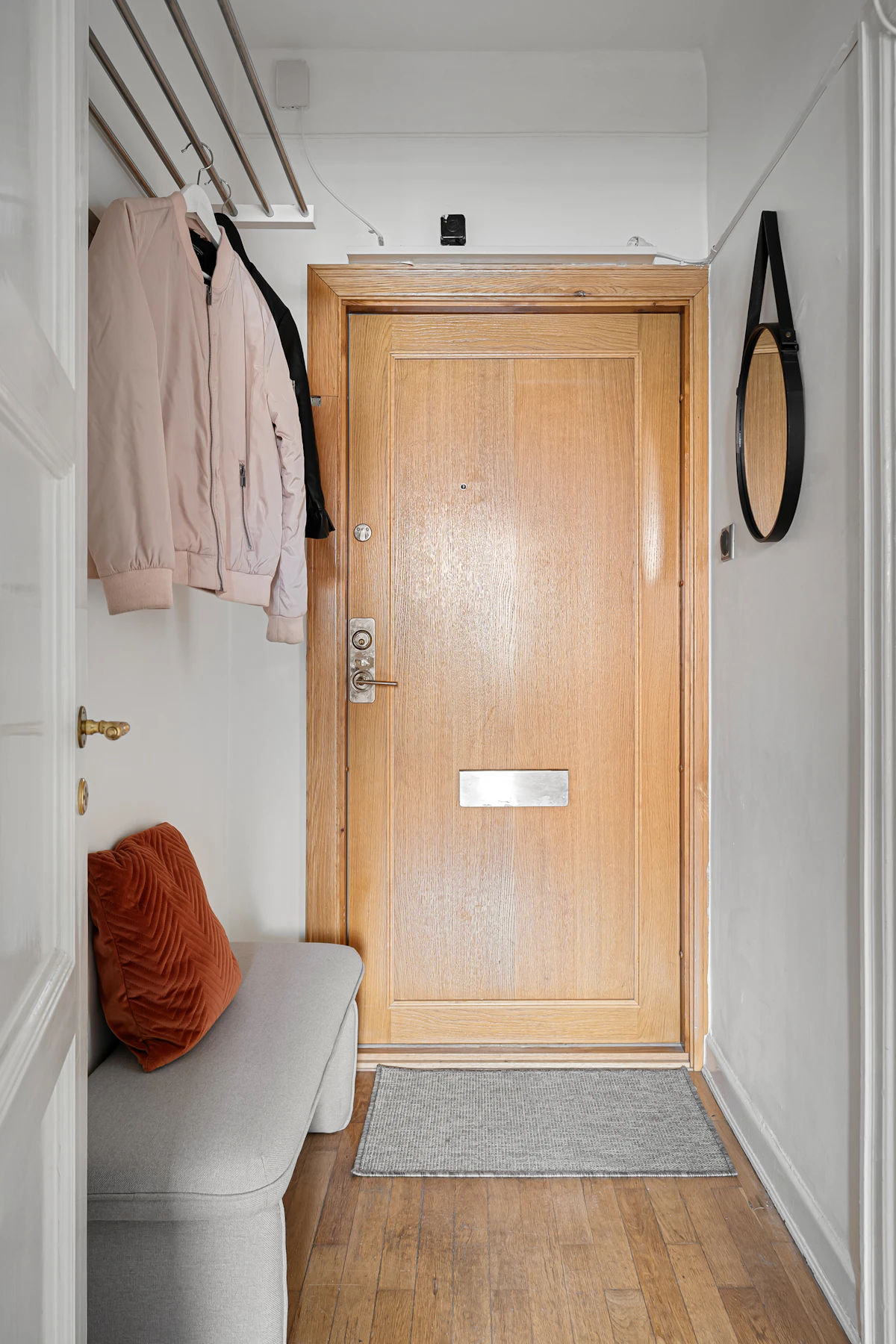
When the front door opens directly into a living room or kitchen, the entryway has to be created rather than discovered. The best solution is usually a very shallow drop zone that handles only the things you touch when entering or leaving: shoes, keys, one everyday bag, outerwear, mail, and wet-weather items. When fall adds bulky coats and boots, our small entryway coat-storage guide shows how to add seasonal capacity without blocking the hallway.
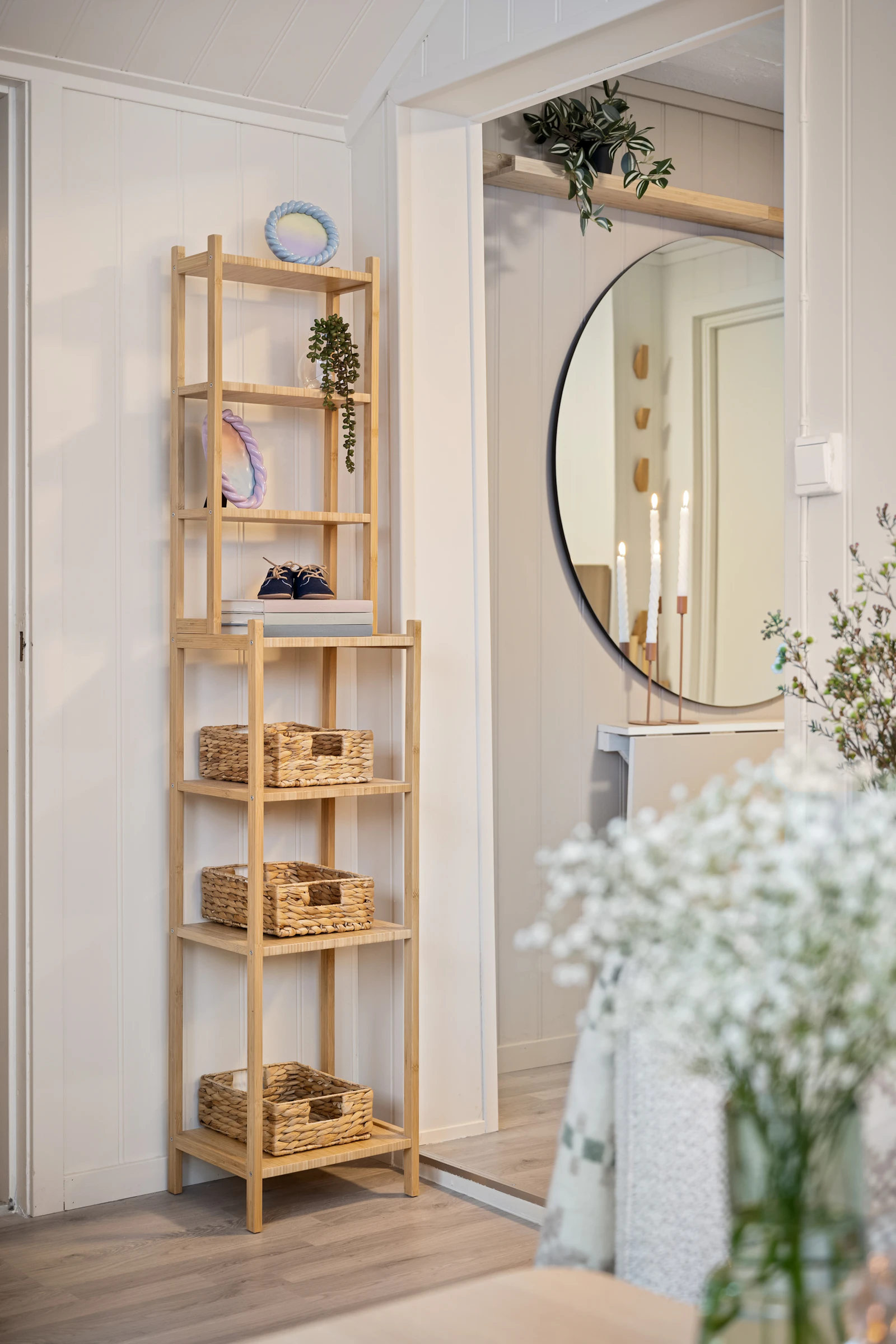
Small Entryway Organization: Measure the Door Swing Before Anything Else
Open the front door fully and mark the area it occupies. Any cabinet, bench, basket, or umbrella stand must sit outside that swing. Then measure the remaining wall depth and the width of the main path into the home. In a tight entry, even 10 cm of extra furniture depth can make the space feel much narrower.
1. Choose a Shallow Shoe Solution
Flip-front shoe cabinets are useful because some models are only around 15–25 cm (6–10 in) deep, but capacity varies greatly by shoe size and design. Measure your largest everyday footwear before buying; bulky trainers and boots may not fit narrow compartments.
Decision rule: use a flip-front cabinet for everyday low shoes; use a low open rack or tray if your household wears larger trainers, boots, or wet shoes frequently.
2. Put Hooks at the Height of the People Who Use Them
Wall hooks or an over-door rack can keep coats and bags off chairs. Staggering heights can make the wall easier to use for adults and children. Do not overload hooks beyond their rated capacity, and use appropriate wall fixings if they are permanently mounted. If drilling is restricted, use the alternatives in our renter-friendly organization guide.
3. Add One Small Landing Surface
A narrow shelf, console, or wall-mounted ledge gives keys and outgoing items a predictable home. Keep this surface intentionally small so it cannot become a dumping ground. A tray roughly the size of the objects you actually need—keys, wallet, sunglasses—creates a natural limit.
4. Contain Wet Shoes and Umbrellas
Use a washable boot tray, absorbent mat, or narrow umbrella stand to stop water and dirt moving into the living area. Place it where it can dry properly and clean it regularly during wet weather.
5. Use a Mirror Without Sacrificing Storage
A wall mirror is useful for a final check and can visually brighten a dark entrance. If wall width is limited, choose a mirror with a narrow shelf or hooks, or place it above the shoe cabinet rather than dedicating a separate wall to it.
6. Give Mail a Hard Limit
Paper clutter grows quickly near the door. Use one slim vertical file or wall pocket with just two categories: action and outgoing. Recycle junk mail immediately instead of creating a third pile for “later.”
7. Build a 60-Second Arrival Routine
A drop zone only works when using it is easier than dropping items elsewhere. A simple sequence is: shoes in rack, keys on tray, coat on hook, bag on one designated hook or shelf, mail sorted immediately. If the routine takes longer than a minute, simplify the storage. This arrival habit also reduces the clutter you have to clear during a 15-minute daily reset.
Example Layout for a 1-Metre Wall
- Bottom: 60–80 cm wide shallow shoe unit or tray.
- Middle: 3–5 hooks for coats and bags.
- Upper zone: mirror or narrow shelf.
- Side: slim umbrella stand only if the door swing allows it.
What to Avoid
- A deep bench that narrows the only route into the home.
- More hooks than the household actually needs.
- An oversized bowl or tray that becomes a miscellaneous-item bin.
- Shoe storage that cannot fit the footwear you actually wear.
Plan Capacity for the Household You Actually Have
An entryway for one person needs a very different system from an entry used by a couple, children, or frequent guests. Count the number of everyday shoes, coats, bags, and key sets that genuinely need to live near the door. Build for that number rather than buying the largest organizer that fits the wall.
| Household need | Good first choice | Keep elsewhere |
|---|---|---|
| 1–2 people | Slim shoe unit + 3–4 hooks + key tray | Seasonal coats and spare bags |
| Family | Low shoe rack + staggered hooks + labeled basket | Out-of-season footwear |
| Very narrow entry | Wall hooks + tiny landing shelf | Bench and deep furniture |
Create a Renter-Friendly Version of the Drop Zone
If you cannot drill, use an over-door hook rack, freestanding coat stand, narrow shoe tray, or a small console that provides its own vertical structure. For light wall storage, check the exact surface and product instructions rather than assuming every removable adhesive is damage-free. The detailed renter-friendly wall storage guide covers these options in more depth.
Rotate the Entryway by Season
A small drop zone should not hold the entire year at once. In warm months, move heavy coats and boots out. In wet seasons, give more space to drying shoes, umbrellas, and outerwear. Seasonal rotation prevents the entry from becoming permanent overflow storage.
Strongest Takeaway
An entryway without a hallway should be treated as a transition strip, not another storage room. Store only the items used when coming and going. For more low-footprint ideas, see smart storage solutions for small apartments and our renter-friendly organization guide.
Image source: Unsplash, used under the Unsplash License.