
Small Fridge Organization: 17 Practical Ideas for Apartments
Small fridge organization for apartments: 17 practical ideas for safer food zones, clear storage, leftovers, produce, door storage and grocery-day flexibility.
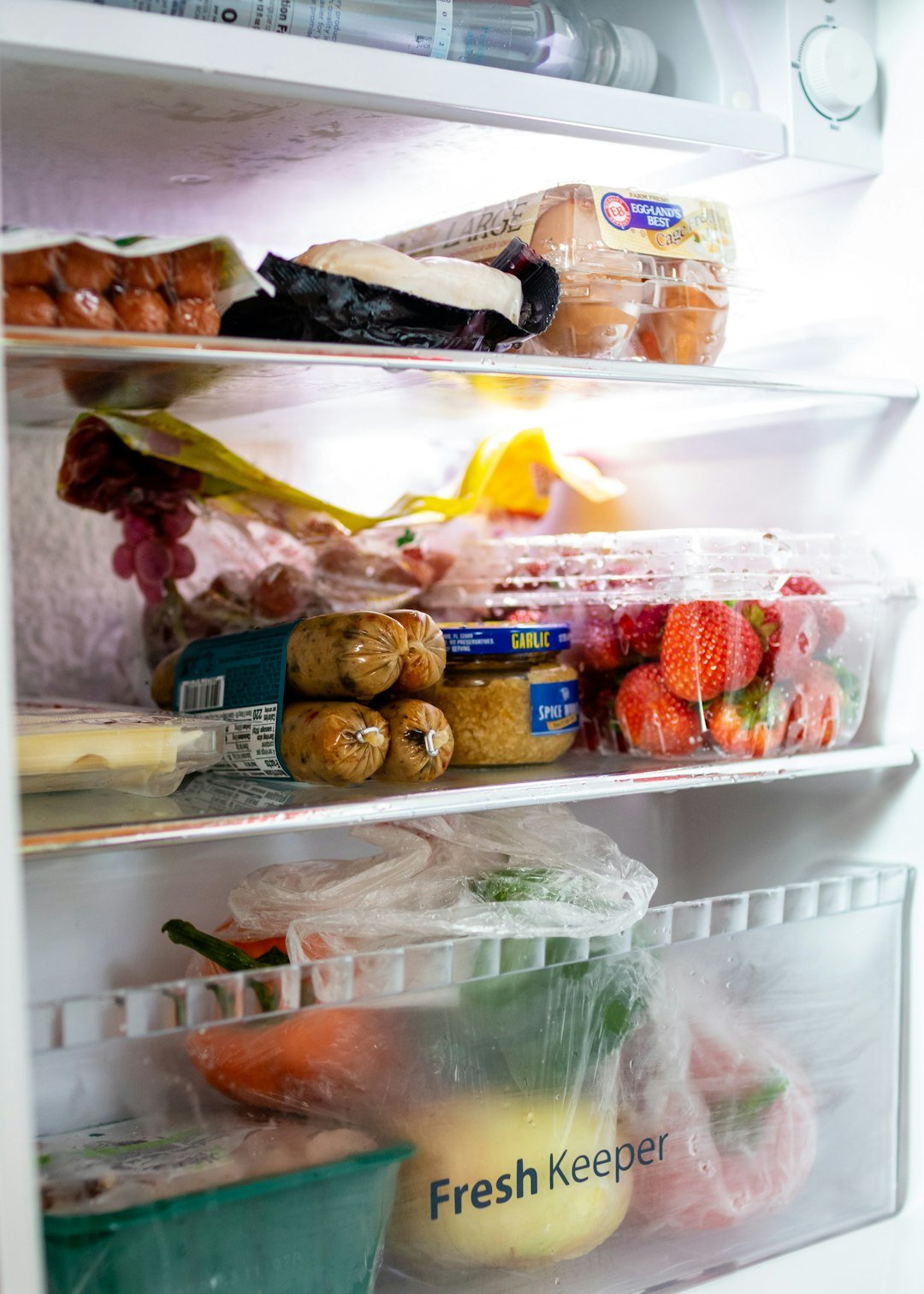
Small fridge organization is not about turning every shelf into a row of matching acrylic containers. In an apartment kitchen, the refrigerator has to stay flexible enough for leftovers, grocery-day surprises, tall bottles, fresh produce and the awkward package you did not plan for. A system that looks perfect in a photograph but leaves no room for tomorrow’s dinner is not organized; it is overfilled in a more attractive way.
The most useful approach combines four things: safe refrigeration, visibility, simple zones and enough empty space to absorb normal changes from one shopping trip to the next. That matters even more in a compact refrigerator, where one large pot or takeout box can disrupt the whole layout.
Photo: Darrien Staton / Unsplash.
Why Small Refrigerators Get Chaotic So Quickly
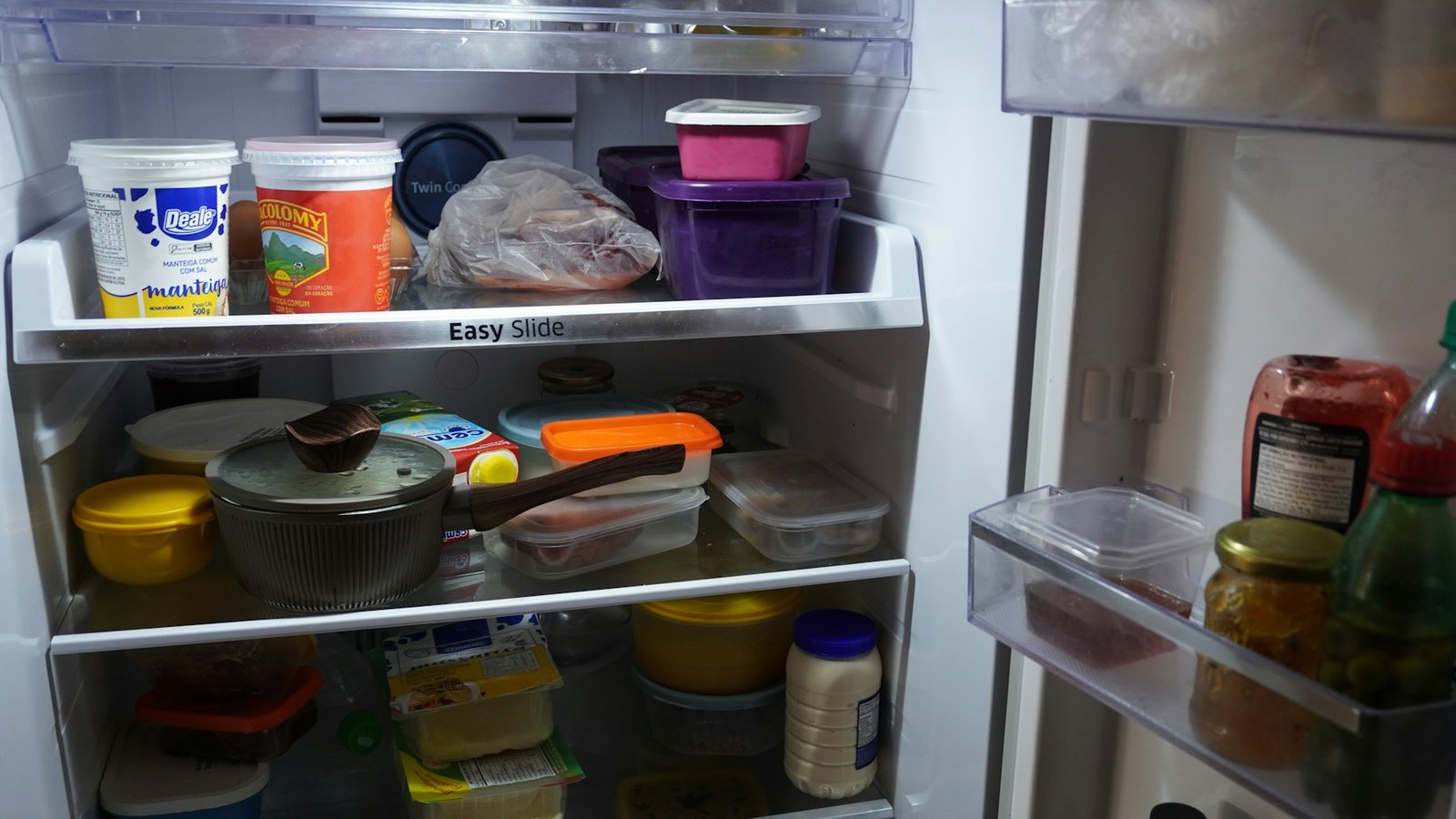
A large refrigerator can hide an inefficient system for weeks. A small one exposes every weak point immediately. A grocery order fills the front row, leftovers take the only tall shelf, produce disappears into a deep drawer and door bins become the default home for whatever happens to fit.
The problem is usually not that the refrigerator is too small. It is that every shelf is being asked to do several jobs at once. One shelf may hold breakfast food, dinner leftovers, drinks, sauces and raw ingredients. When categories overlap, visibility drops and people start buying duplicates because they cannot see what they already have.
Small-space organization works better when each area has a broad job without becoming so rigid that a new carton, cake box or meal-prep container has nowhere to go.
Start With Food Safety Before Aesthetics
The U.S. Food and Drug Administration and USDA recommend keeping a refrigerator at or below 40°F (4°C). The FDA also advises against overpacking because cold air needs to circulate around food. These rules matter more than an aesthetic layout. If a bin blocks a vent, forces food tightly against the back wall or prevents the door from closing cleanly, remove the bin. See the FDA’s food-storage guidance and USDA’s refrigeration guidance.
Use an appliance thermometer if your refrigerator does not display a dependable internal temperature. Place it according to the appliance or thermometer instructions and check it periodically. The correct temperature is a safety condition, not an organization preference.
Raw meat, poultry and seafood should be wrapped securely or placed in a leak-resistant container so juices cannot contaminate other food. Follow your refrigerator manufacturer’s guidance for drawers and special cold zones because appliance designs differ.
Measure the Refrigerator Before Buying Organizers
Interior dimensions vary widely between apartment-size refrigerators, counter-depth models and compact units. Measure the usable shelf width, depth and height instead of shopping by the external refrigerator width.
- Shelf width: measure between side walls, shelf supports and interior hardware.
- Shelf depth: stop before any rear vent or area the manual says must remain clear.
- Shelf height: measure front and back because lights, vents and controls can reduce usable space.
- Door bins: measure usable depth with the door fully closed.
- Drawers: confirm they can still open when a bin or bottle sits directly above them.
- Tall-item clearance: note the tallest regular carton, bottle or container you store.
Identify one flexible area that can accept unusually tall or wide packages. That flex zone prevents the entire system from failing on grocery day.
A Simple Five-Zone Layout for a Small Fridge
| Zone | Use it for | Main goal |
|---|---|---|
| Ready-to-eat | Leftovers, opened foods, prepared meals | Visibility and quick use |
| Ingredients | Dairy, meal-prep components, cooking ingredients | Predictable access |
| Produce | Fruit and vegetables according to appliance guidance | Moisture control and visibility |
| Leak-control | Securely contained raw meat, poultry and seafood | Prevent cross-contamination |
| Door | Appropriate bottles, sauces and items suited to the location | Easy scan without overpacking |
The exact shelf does not have to match an internet diagram. Refrigerator temperatures and special compartments vary by model. The better rule is to keep the entire unit safely cold, follow manufacturer guidance, prevent raw-food drips and make frequently used food easy to see.
17 Small Fridge Organization Ideas That Actually Work
1. Create a Small “Use First” Box or Shelf
Choose one highly visible location for items that should be eaten soon: an opened tub of yogurt, half a lemon, yesterday’s cooked vegetables, a small container of berries or leftovers that need attention. The zone should be deliberately small. If it becomes a second leftovers shelf, it loses its purpose.
A shallow open bin or simply the front-left section of one shelf is enough. Check this zone before cooking and before making a grocery list. It turns food that would normally be forgotten into the first thing you see.
2. Use Clear Bins Only for Loose Categories
Clear bins are useful when several small items behave badly on an open shelf. Yogurt cups topple, cheese packets slide behind jars and small snack containers scatter. One open-front or easy-grab bin can make the category easier to pull forward.
Do not place every product in a bin automatically. Large milk cartons, stock pots and individual leftovers usually need flexible shelf space more than another container. A useful test is simple: if removing the bin would make the items difficult to see, reach or contain, the bin is helping. If the bin only makes the shelf look uniform, it may be consuming valuable space.
3. Leave One Flexible Shelf Section Intentionally Empty
Empty refrigerator space is not wasted space. It is capacity for real life: a pizza box, birthday cake, restaurant leftovers, marinating dish or a larger grocery purchase.
Reserve part of one shelf as a flex zone. This can be half a shelf or the space created by keeping one adjustable shelf at a taller setting. The flex zone is what allows an organized fridge to survive change. Without it, every unusual item forces you to dismantle several carefully arranged containers.
4. Keep Leftovers Front-Facing and Easy to Date
Store leftovers where they can be seen, not behind ingredients that will be there all week. Use clear or transparent-lid containers when practical and label the container with the date when that helps your household manage food safely.
Do not rely on smell or appearance to decide whether food is safe. Follow reliable storage-time guidance for the specific food. A small fridge often benefits from standardized container footprints, but you do not need a full matching set. Two or three sizes that stack securely are usually more useful than ten specialty shapes.
5. Contain Raw Meat, Poultry and Seafood Against Leaks
Place raw animal proteins in sealed packaging or a leak-resistant tray or container. The goal is not merely neatness; it is preventing juices from reaching ready-to-eat food or produce.
USDA guidance specifically recommends wrapping or securely containing raw meat, poultry and seafood to prevent cross-contamination. If your appliance has a dedicated meat drawer or cold zone, follow its manual. Do not store raw-food packages in a decorative open basket above prepared food just because the arrangement looks better.
6. Give Produce Visibility Before Buying More Produce Bins
Crisper drawers are useful, but they can also become a place where vegetables disappear until they are unusable. Start by grouping produce loosely and keeping high-priority items visible.
If your crispers have humidity controls, use the appliance instructions because settings and drawer behavior differ. Avoid transferring everything into identical sealed containers without considering whether the food needs ventilation, moisture control or its original packaging. A small “eat soon” produce area can live at the front of a drawer or in the use-first zone.
7. Put Condiments in One or Two Door Groups
Door shelves can become a wall of nearly empty bottles. Divide condiments into a few broad groups—perhaps everyday sauces, spreads and cooking condiments—rather than creating a labeled slot for every bottle.
Store products according to their labels and the appliance guidance. Avoid assuming that every dairy product or perishable belongs in the door simply because it fits there. Once a month, remove empty bottles and obvious duplicates. A door with some breathing room is easier to scan than one packed two rows deep.
8. Use a Small Turntable Only for a True Back-Corner Problem
A compact turntable can help when short jars repeatedly disappear in the back corner of a deep shelf. It is less useful when the shelf is already shallow because the circular footprint can waste rectangular space.
Measure the turntable diameter and height. Place the tallest jar on it before deciding whether the organizer genuinely improves access. It is best for sauces, jars and small containers; avoid it for milk cartons, meal-prep boxes or any category that changes size constantly.
9. Use Shelf Risers When Vertical Space Is Genuinely Wasted
A shelf riser can create two levels for short containers such as yogurt, dips or small meal-prep boxes. It works only when there is unused vertical clearance.
Measure the shelf height first. Make sure you can still remove items from both levels without tilting them dangerously or pulling out the whole riser. Do not place a riser where it blocks airflow, internal lights or vents. In a very small refrigerator, an adjustable shelf may solve the same problem without another product.
10. Create a Drink Zone Instead of Letting Cans Roll Everywhere
If your household regularly stores several cans or small bottles, choose one predictable location. A narrow can organizer can work, but an ordinary bin may be more flexible if drink types change.
Do not dedicate a third of the refrigerator to beverages if you only keep a few drinks cold. The organizer should match real usage, not social-media aesthetics. A good drink zone keeps containers stable and makes the remaining shelves easier to use for food.
11. Keep Breakfast Together if Mornings Are Your Busiest Routine
A breakfast zone can include yogurt, berries, prepared oats, cheese, juice or other foods your household uses together. The point is not to create a picture-perfect “station”; it is to reduce repeated searching.
Use one shelf section or a handled bin if several small components are involved. If breakfast products are large, simple adjacency is better than forcing them into a container. Routine-based zones can be especially helpful in a small apartment where two people may need the kitchen at the same time.
12. Separate Meal-Prep Ingredients From Finished Meals
Meal-prep households often mix uncooked ingredients, prepared components and ready-to-eat meals on the same shelf. Give finished meals a visible row and place ingredients in a separate zone.
This reduces the chance that a container of cooked food disappears behind unopened groceries. It also makes it easier to see how many prepared meals remain before cooking more. Leave enough headroom to lift containers out without catching the shelf above.
13. Use the Refrigerator Exterior Carefully
The outside of a refrigerator can add storage without consuming shelf space, but it can also make a tiny kitchen feel visually crowded. Magnetic hooks or slim magnetic caddies may hold a lightweight kitchen towel, grocery list or small non-food accessory if the appliance manufacturer allows it.
Never block ventilation openings or interfere with door seals. Avoid heavy organizers that can scratch the finish or create a hazard when the door moves. For renters, magnetic accessories can be preferable to drilling nearby walls, but test the refrigerator surface first because not every finish is strongly magnetic. Our renter-friendly wall-storage guide has more no-drill decision criteria.
14. Make Grocery Day Part of the System
Before a regular grocery trip, spend five minutes scanning the use-first zone, leftovers, produce and door. Move anything that needs attention forward and discard food only according to safe-storage guidance.
When new groceries arrive, avoid automatically pushing old food to the back. Put newer duplicates behind older items when appropriate so the older product remains visible. This simple first-in, first-visible habit prevents the organized fridge from resetting to chaos every week.
15. Do Not Decant Food Just for Appearance
Decanting can help when original packaging is bulky, damaged or difficult to reseal, but it should not become a mandatory aesthetic ritual. Removing labels can hide preparation instructions, allergens, lot numbers, use-by information or storage directions.
If you transfer food, use food-safe containers suitable for refrigeration and preserve any information you may need. Some products are best left in their original packaging. A refrigerator can look calm without turning every ingredient into an unlabeled glass jar.
16. Add a Freezer Overflow Rule
Small refrigerators often have equally small freezer compartments. Decide what deserves freezer space before it fills with forgotten bags. Group frozen foods broadly and keep frequently used items visible. Flatten flexible packages when safe and practical, and avoid unstable stacks that fall when the door opens.
If the freezer is inside a compact refrigerator, follow the manufacturer’s loading and defrost instructions rather than treating it like a full-size freezer.
17. Build a Five-Minute Weekly Fridge Reset
Organization lasts when maintenance is easier than the original setup. Once a week, check leftovers, wipe small spills, move soon-to-use food forward, consolidate duplicates when safe, and make room for the next grocery trip.
The FDA recommends cleaning refrigerator spills promptly, keeping food covered and checking the refrigerator regularly. A short reset supports those habits without turning refrigerator organization into a major cleaning project.
Aesthetic Fridge Organization That Still Works in Real Life
Pinterest’s 2026 trend reporting shows strong interest in “fridge organization aesthetic.” You can use that visual inspiration without making the refrigerator harder to maintain. Pinterest reported a 375% increase in that search term in its 2026 Spring Trend Report.
Choose two or three consistent visual cues instead of twenty matching containers: clear storage where visibility matters, simple labels only where categories are genuinely confusing, and a limited color palette for reusable containers if you already own them.
The most photogenic refrigerator is not necessarily the most functional. Real groceries change shape every week. Keep the design flexible enough for a supermarket package, a leftover casserole and a large melon without reorganizing the entire appliance.
What Not to Store in the Fridge Just Because You Have Space
Do not use precious refrigerator volume for products that do not require refrigeration unless chilling them is a preference that justifies the space. Check product labels and reputable food-safety guidance.
In a small apartment kitchen with limited pantry space, the temptation is to use the refrigerator as overflow for everything. That can make the fridge too crowded for safe circulation. Our small-kitchen no-pantry guide offers cabinet, cart and wall-storage alternatives for shelf-stable food.
Which Small-Fridge Organizers Are Worth Buying?
| Organizer | Worth it when | Skip it when |
|---|---|---|
| Clear bin | Loose small items scatter or disappear | Large items already stay visible |
| Turntable | Short jars vanish in a deep corner | The shelf is shallow or mostly rectangular packages |
| Shelf riser | There is unused vertical clearance | It blocks vents or makes lower items hard to remove |
| Can organizer | Cans are a frequent recurring category | Drinks change often or occupy little space |
| Leak tray | You need containment around risky packages | It interferes with a dedicated appliance drawer |
Before buying anything, identify the specific failure. Avoid purchasing a complete refrigerator organizer set before measuring. Sets often include sizes that do not match apartment refrigerators, and unused organizers become clutter somewhere else.
Common Small Fridge Organization Mistakes
- Overfilling: FDA guidance warns against crowding because cold air needs to circulate.
- Using too many narrow categories: broad categories adapt better to changing groceries.
- Sacrificing safety for symmetry: raw food, temperature, airflow and label directions matter more than visual pattern.
- Hiding food in opaque containers: if visibility is the problem, an organizer that conceals food makes it worse.
- Leaving no flex space: an organized fridge should accept tomorrow’s groceries without a complete reset.
- Buying before measuring: a “standard” fridge bin can waste space in a narrow apartment model.
How Fridge Organization Connects With the Rest of a Small Kitchen
The refrigerator should not solve every kitchen-storage problem. Shelf-stable snacks, unopened beverages and bulk packages may belong in a cabinet, cart or another food-storage zone.
If the counters are crowded because groceries have nowhere to land, combine this refrigerator system with our small kitchen counter organization guide. If cabinets are underused, our tiny-kitchen storage guide covers shelf risers, cabinet-door storage, vertical dividers and narrow carts.
The goal is one connected kitchen system: groceries arrive on a clear counter, refrigerated food has visible zones, shelf-stable food has a predictable home, and the refrigerator keeps a little unused capacity for normal life.
Frequently Asked Questions
How do I organize a small fridge without buying bins?
Start by assigning broad zones, placing leftovers and soon-to-use food in front, grouping condiments, containing raw-food packages and leaving one flexible area open. Containers are optional.
Should milk and eggs go in the refrigerator door?
Follow the product label, your refrigerator manual and reliable food-safety guidance. Door temperatures can fluctuate more than interior shelves in some models, so do not move highly perishable food to the door simply to make the interior look organized.
How full should a refrigerator be?
There is no universal visual percentage that applies to every model. The FDA advises against overpacking so cold air can circulate. If containers are blocking vents, the door is difficult to close, or you cannot see and reach food, reduce the load.
How do I keep a small fridge organized after grocery shopping?
Keep older duplicates visible, use a small use-first zone, leave flex capacity before shopping and perform a quick weekly reset before the next grocery trip.
Are clear fridge bins necessary?
No. They are useful when they improve visibility or contain loose categories. They are unnecessary when they consume more space than the food they organize.
Strongest Takeaway
The best small fridge organization system is not the one with the most containers. It is the one that keeps food safely cold, visible and easy to use while preserving enough flexibility for changing groceries and leftovers. Start with temperature, airflow and broad zones. Add only the organizers that solve a repeated problem.
If you are organizing the entire room, continue with our guides to small kitchen counter organization, organizing a kitchen without a pantry and maximizing storage in a tiny kitchen.