
15 Renter-Friendly Bathroom Storage Ideas Without Drilling
Add practical rental-bathroom storage without drilling, with 15 measured ideas for showers, doors, vanities and floors plus honest surface, moisture and removal limits.
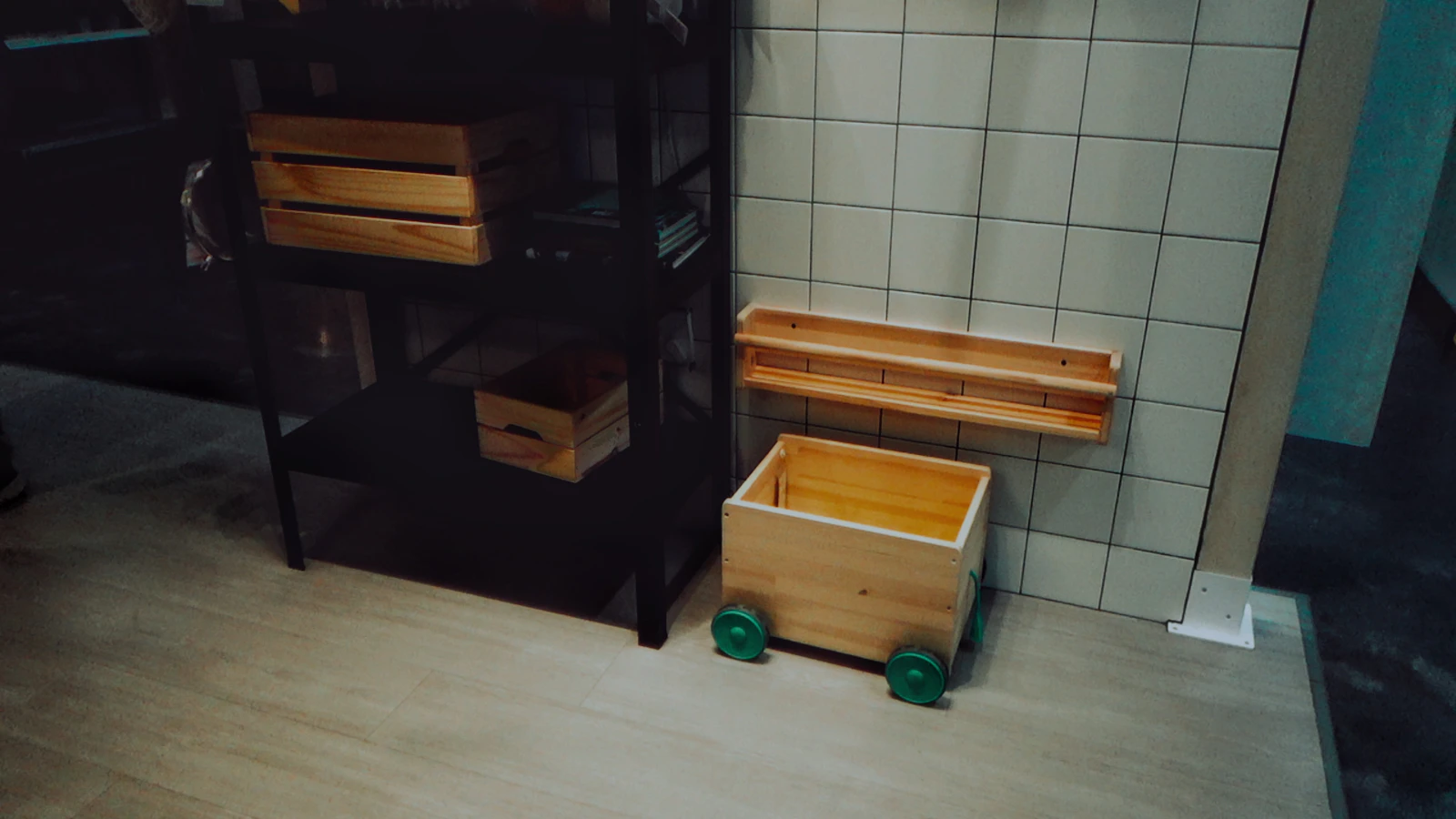
Renter-friendly bathroom storage without drilling works best when you match the organizer to the surface, moisture level, and available clearance—not when you assume every removable product is damage-free. Start with freestanding or over-door storage, then use suction or bathroom-rated adhesive products only where the manufacturer specifically permits them. The 15 ideas below add useful storage without drilling into tile, drywall, cabinetry, or doors.
A rental bathroom often has three problems at once: too few shelves, wet surfaces, and a lease that limits permanent changes. Before buying anything, check your lease, identify each surface, and measure the space. A system that works on smooth glass may fail on grout or textured tile, while a stable floor unit may be safer than an unsupported wall organizer.
Quick answer
For the lowest wall-damage risk, begin with a narrow rolling cart, freestanding over-toilet unit, towel ladder, vanity risers, or portable caddy. Suction storage belongs only on clean, flat, nonporous surfaces the maker approves. Adhesive bathroom products need an approved surface, exact preparation, curing, load, and removal steps. “No drill” describes the installation method; it does not guarantee a mark-free removal.
Before you buy: check the lease, surfaces, and measurements
Read the lease sections covering holes, adhesives, doors, cabinetry, and move-out repairs. If the wording is unclear, ask for written approval. A removable label does not override your agreement.
Identify the actual surface: glazed tile, glass, painted drywall, laminate, sealed wood, grout, wallpaper, texture, or porous stone. Do not treat them as interchangeable. IKEA, for example, limits its TISKEN suction basket to flat surfaces such as glass, mirrors, and tile and warns against wallpaper. Its measurements and load limit apply only to that model. See the manufacturer’s TISKEN instructions.
Measure an organizer’s full dimensions, mounting footprint, and clearance from people, doors, drawers, controls, and the toilet lid. For floor units, include baseboards and the narrowest point on the route into the room.
Test an inconspicuous spot when instructed, then follow the exact cleaning, curing, loading, and removal steps. Command’s bathroom directions exclude wallpaper, fabric, texture, brick, rough surfaces, and grout lines and specify a slow, straight-down removal motion. Those rules apply to the named products, not every adhesive hook. Review the official Command bathroom instructions.
Renter-Friendly No-Drill Bathroom Storage: What Works Best?
For renters searching for shelves with no drilling, the safest choice depends on location: use freestanding shelves where floor space allows, over-door storage where clearance permits it, and suction or bathroom-rated adhesive shelves only on surfaces explicitly approved by the manufacturer.
| Storage method | Surface or location required | Installation type | Moisture suitability | Best use | Main limitation | Removal or damage risk | Renter alternative |
|---|---|---|---|---|---|---|---|
| Suction basket | Maker-approved smooth, flat glass, mirror, or tile | Tool-free suction | Good only if designed for wet areas and able to drain | Shampoo and lightweight shower items | Fails on grout, texture, or uneven tile | Low when compatible and removed as directed; falling is still possible | Hanging or tension-pole caddy |
| Tension-pole caddy | Level tub or shower corner with suitable ceiling | Compression, no drilling | Choose corrosion-resistant, draining parts | Several bottles at different heights | Needs the maker’s height range and firm contact points | Can mark finishes or slip if overtightened or misfit | Portable shower caddy |
| Bathroom-rated adhesive caddy | Only a listed surface outside excluded zones | Adhesive; curing may be required | Only when rated for bathroom humidity | Light daily products | Surface and load restrictions are strict | Paint or finish damage if incompatible or removed incorrectly | Suction on approved tile or a freestanding unit |
| Over-toilet unit | Clear floor and wall area around toilet | Freestanding; some models require anchoring | Depends on material and ventilation | Towels, paper goods, closed bins | May conflict with tank access or require an anchor | Floor scuffs; tip risk if unstable | Low, wide toilet-paper stand or cart |
| Narrow rolling cart | Level floor and parking space | Freestanding | Use washable, moisture-tolerant materials | Flexible daily storage | Consumes floor space | Low; wheels can roll into the walkway | Countertop caddy or vanity riser |
| Over-door rack | A door with top, jamb, and swing clearance | Hangs over door | Good for items that can dry with airflow | Towels and robes | May stop the door closing or scrape trim | Possible paint, door, or jamb marks | Freestanding towel ladder |
| Vanity riser and bins | Existing cabinet or shelf | Freestanding inside storage | Good if leaks are monitored and items stay dry | Toiletries and cleaning supplies | Must preserve pipes and shutoff access | Low; trapped moisture can affect cabinet finishes | Portable handled caddy |
15 practical no-drill bathroom storage ideas
1. Use suction shelves only on compatible smooth surfaces
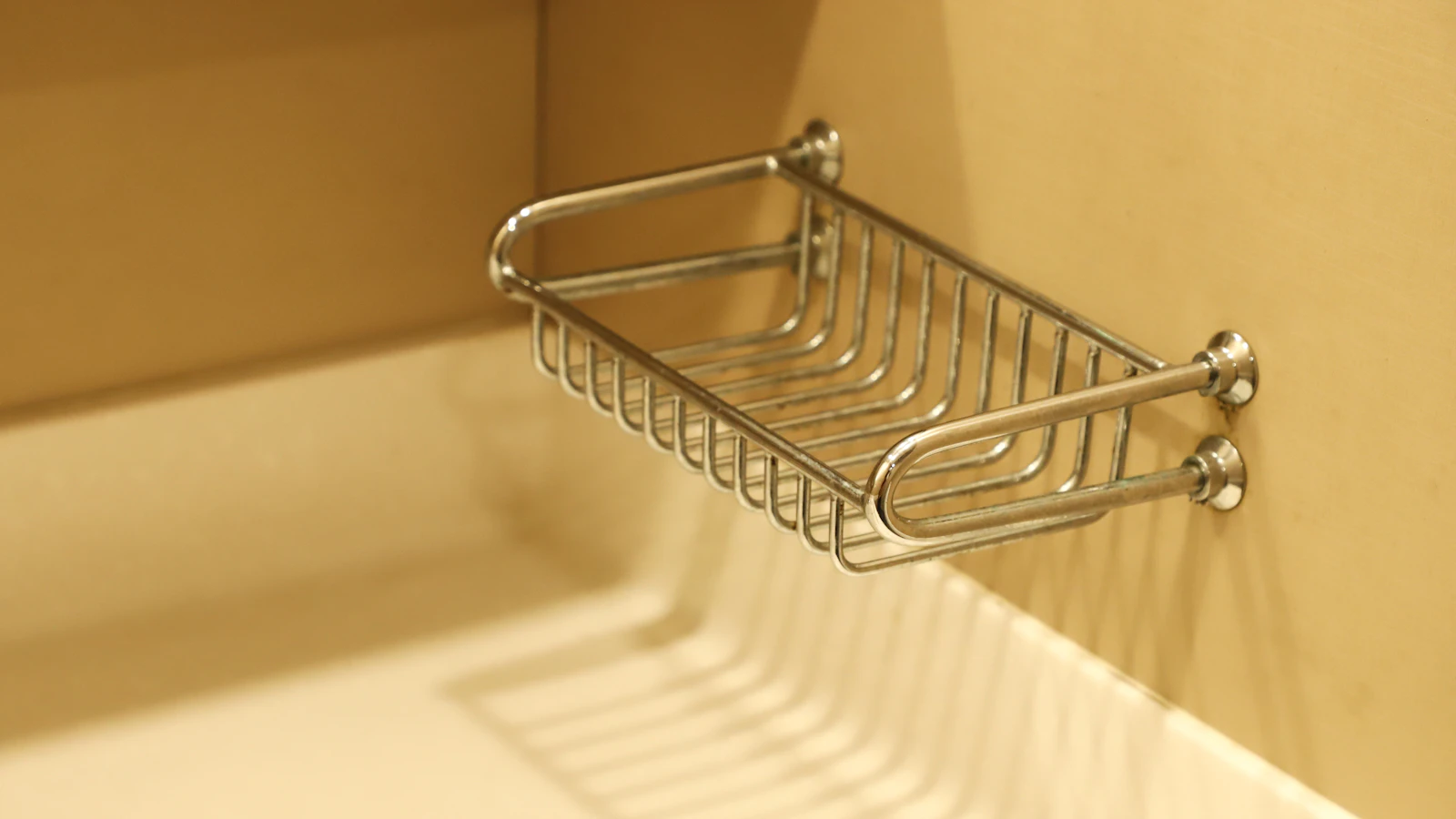
A suction shelf puts shampoo within reach but needs a flat, nonporous surface. Measure the basket and every cup’s footprint; a cup spanning grout cannot form the intended seal.
Follow the maker’s cleaning, loading, inspection, and removal steps. Choose drainage and keep glass containers elsewhere. Skip suction on mosaic or textured tile, porous stone, grout, and unlisted surfaces; use a hanging caddy instead.
2. Choose a tension-pole shower caddy for a clear corner
A tension-pole caddy compresses between the tub or shower floor and ceiling. Measure the exact corner, confirm the model’s height range, and ensure both contact points are firm, level, and permitted.
Choose draining, wet-area shelves and keep daily bottles easy to reach. Avoid poles on sloped ceilings, flexible pans, fragile finishes, or unapproved surfaces; use a portable caddy instead.
3. Consider a bathroom-rated adhesive caddy—with strict limits
An adhesive caddy needs a listed, properly prepared surface. Measure the mount and basket, keep strips off grout, and confirm the humidity, splash, weight, and curing limits.
No-drill is not damage-free. Never assume compatibility with paint, texture, wallpaper, damp surfaces, porous stone, grout, laminate, wood, or fresh paint. If uncertain, use approved suction or freestanding storage. See renter-friendly wall storage without drilling for broader method guidance.
4. Hang a draining caddy from an existing shower support
A showerhead-neck or curtain-rod caddy avoids the wall. Measure the support opening, control clearance, and loaded depth, and confirm that both the support and caddy permit the use.
Choose drainage and keep heavy bottles low. If the caddy blocks controls, moves a fixture, or swings against glass, use a handled caddy outside the shower.
5. Fit a freestanding over-toilet unit without trapping access
An over-toilet unit uses vertical space. Measure floor-to-tank height, tank width, baseboards, flush control, and tank-lid clearance. Use closed bins for paper and keep daily toiletries dry and reachable.
Check anchoring instructions before buying. The CPSC’s Anchor It guidance stresses restraining furniture with drawers, doors, and shelves. If a required anchor is not authorized, choose a low cart or toilet-paper stand.
6. Park a narrow rolling cart beside—not in—the route
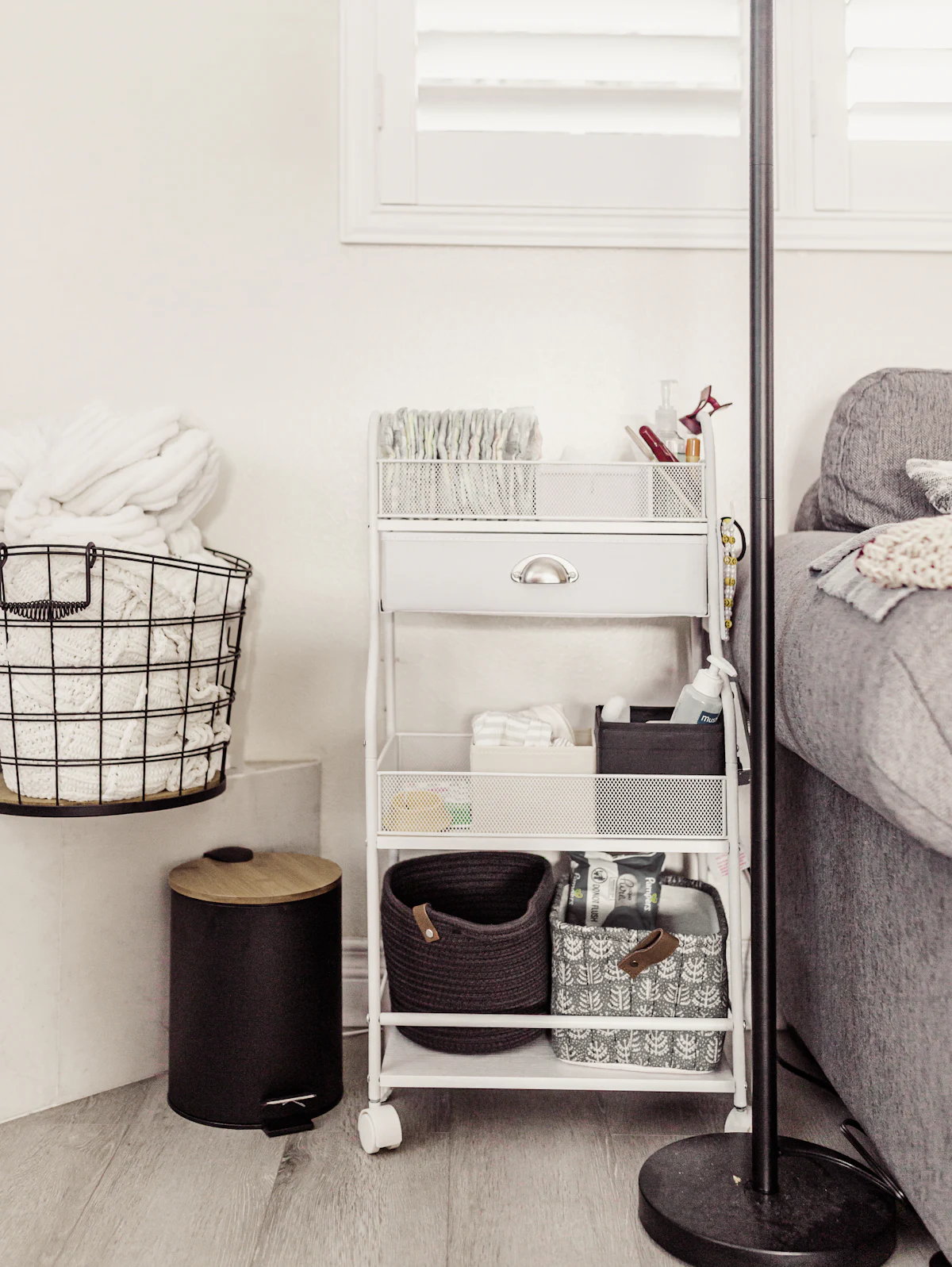
A slim cart can hold towels, paper goods, or personal bins and move for cleaning. Measure its widest point, handle, turning space, and parking gap. Use casters only as designed for the floor.
Choose wipeable materials, put heavy refills low, and keep electrical tools dry. Never narrow the exit, block a vent, or obstruct a door. Use a countertop caddy if the walkway is tight.
7. Add an over-door towel rack after checking clearance
An over-door rack holds towels or robes. Measure door thickness, top gap, casing, projection, and full swing clearance.
Use only approved pads or stabilizers. Reject a rack that makes the door bind, scrape, or slam, or burdens the hinges. With little top clearance, use a towel ladder.
8. Lean towels on a freestanding ladder
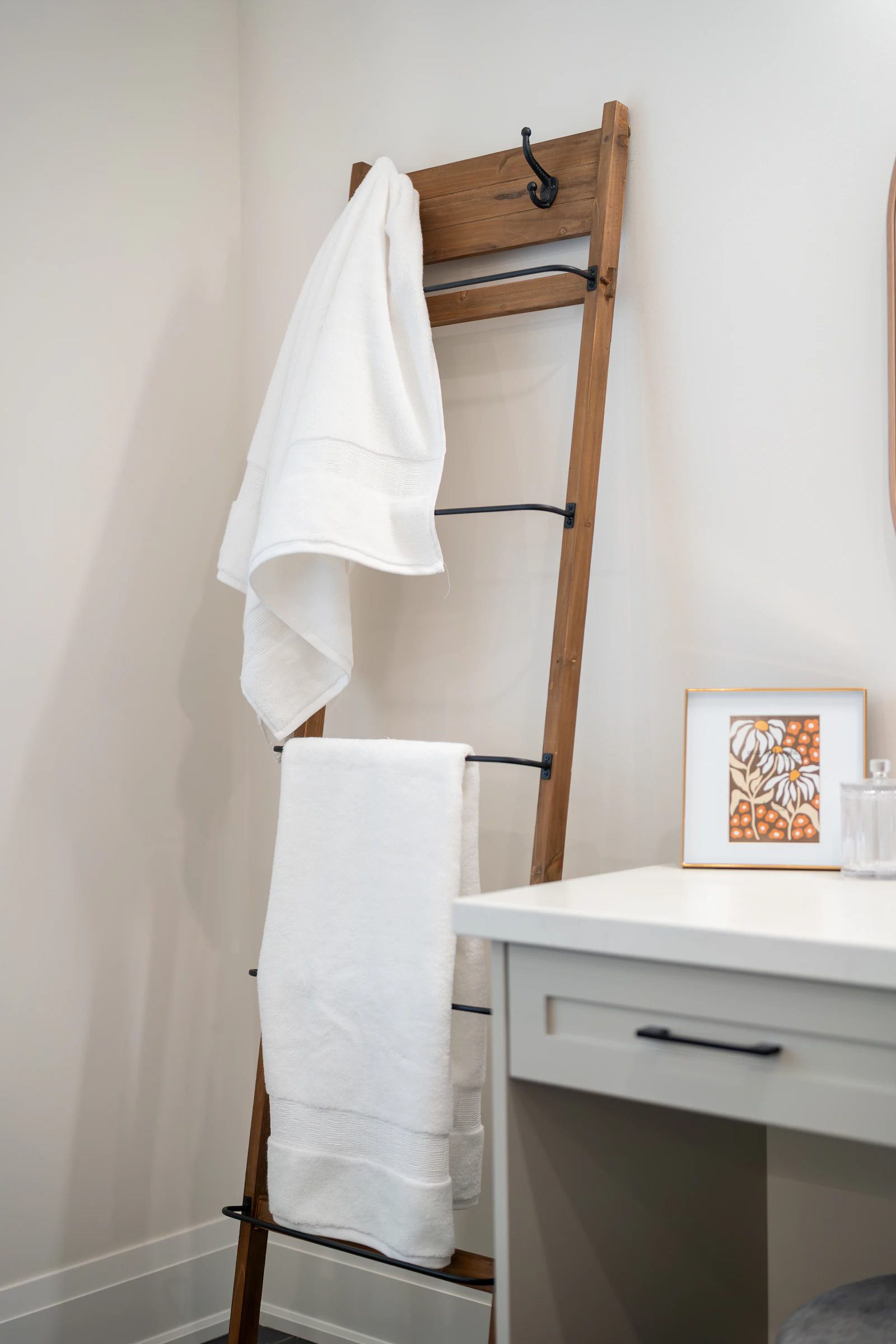
A towel ladder adds drying rails without a mounted bar. Measure its footprint, lean depth, and contact point, then place it level and outside the walkway. Use a purpose-built towel ladder, not climbing equipment.
Space towels for airflow. Skip a ladder in a narrow bath, around small children, or when wall restraint is required but unavailable; use a stable towel stand.
9. Use shower-door hooks only when the door allows them
Purpose-made shower-door hooks can hold a towel or light squeegee. Confirm the door type, thickness, top clearance, and compatible materials. Keep rollers, seals, hinges, and travel clear.
Avoid generic metal hooks that can chip glass or scratch frames. If compatibility is not explicit, use the room door or a freestanding stand.
10. Double a vanity shelf with a freestanding riser
A shelf riser divides a tall vanity opening. Measure width, depth, height, hinge swing, and items above and below it; choose a washable, level design.
Store light toiletries or washcloths, never items that press on pipes. Leave joints and shutoffs reachable. In an irregular cabinet, use removable shallow bins.
11. Arrange stackable bins around the plumbing
Stackable bins can separate supplies, but the layout must follow the pipes. Measure around the trap, lines, filters, and shutoffs. Use purpose-made components within the stated stacking limit.
Keep heavy bottles low, never rest bins on plumbing, and leave leaks visible. A tray helps inspection but does not fix a leak. Report dampness and move supplies elsewhere.
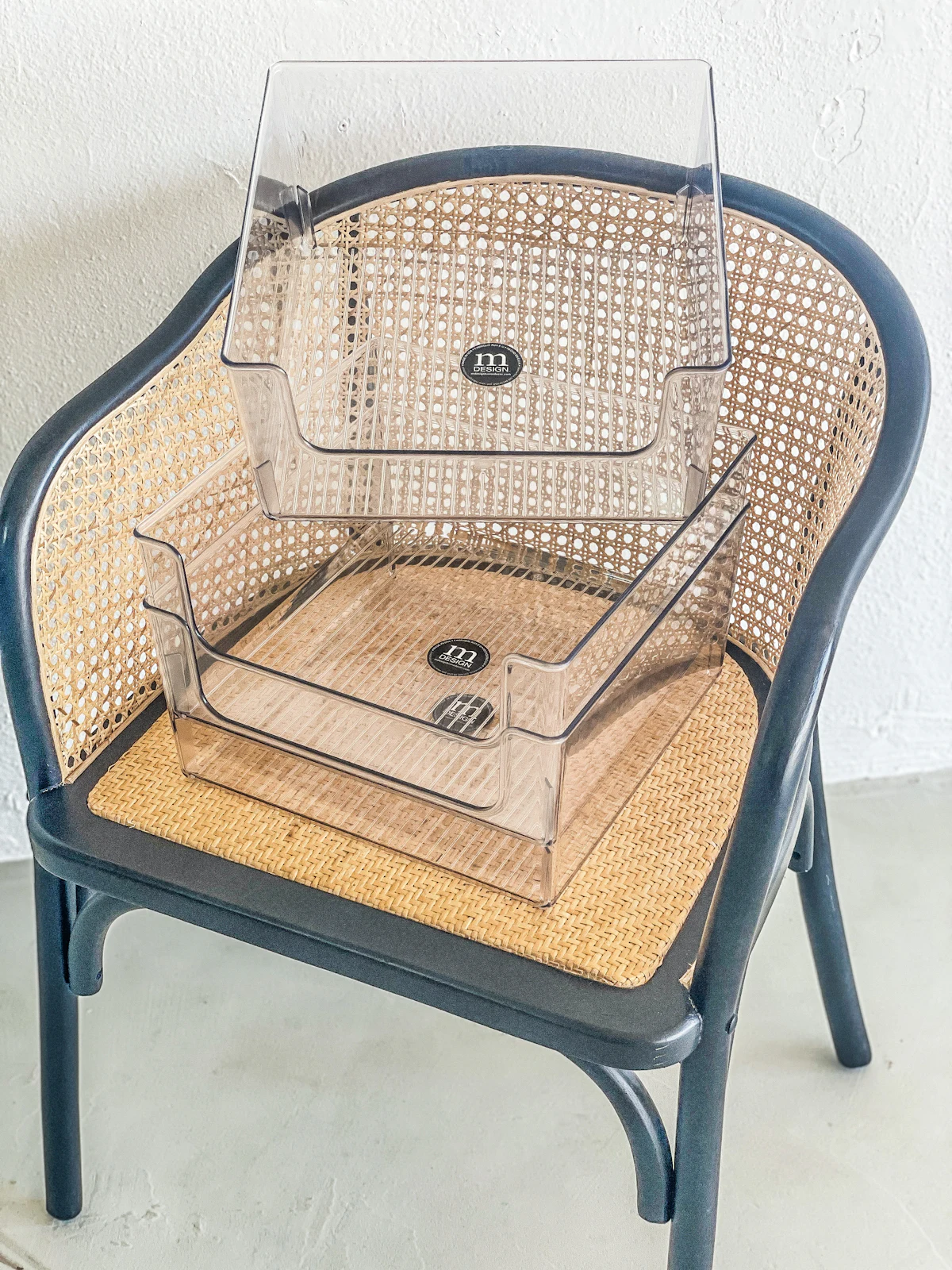
12. Corral daily items in a portable countertop organizer
A tray or divided caddy groups daily products and moves for cleaning. Measure its footprint and keep it away from the counter edge and faucet spray.
Choose a washable base and moisture-tolerant contents. The National Library of Medicine says bathroom heat and moisture can damage many medicines, so follow the label and pharmacist rather than storing them here by default. See MedlinePlus medicine-storage guidance. With little counter space, keep a handled caddy in a nearby closet.
13. Use a freestanding toilet-paper holder with reserve storage
A floor holder can carry an active roll and small reserve. Measure its base, height, reach, cleaning clearance, and effect on movement.
Choose a stable, moisture-tolerant design and keep paper from splash. Avoid a light stand that can tip into the walkway; use a low holder or shelf basket instead.
14. Put washable baskets on shelves you already have
Baskets organize an existing shelf without hardware. Measure the shelf and pullout clearance. Assign one light category per basket so a high shelf does not become heavy.
Open or washable containers are easier to dry than absorbent boxes. The EPA recommends moisture control and ventilation during showering. Keep exhaust grilles open and baskets off persistently damp walls; see the EPA’s moisture guidance.
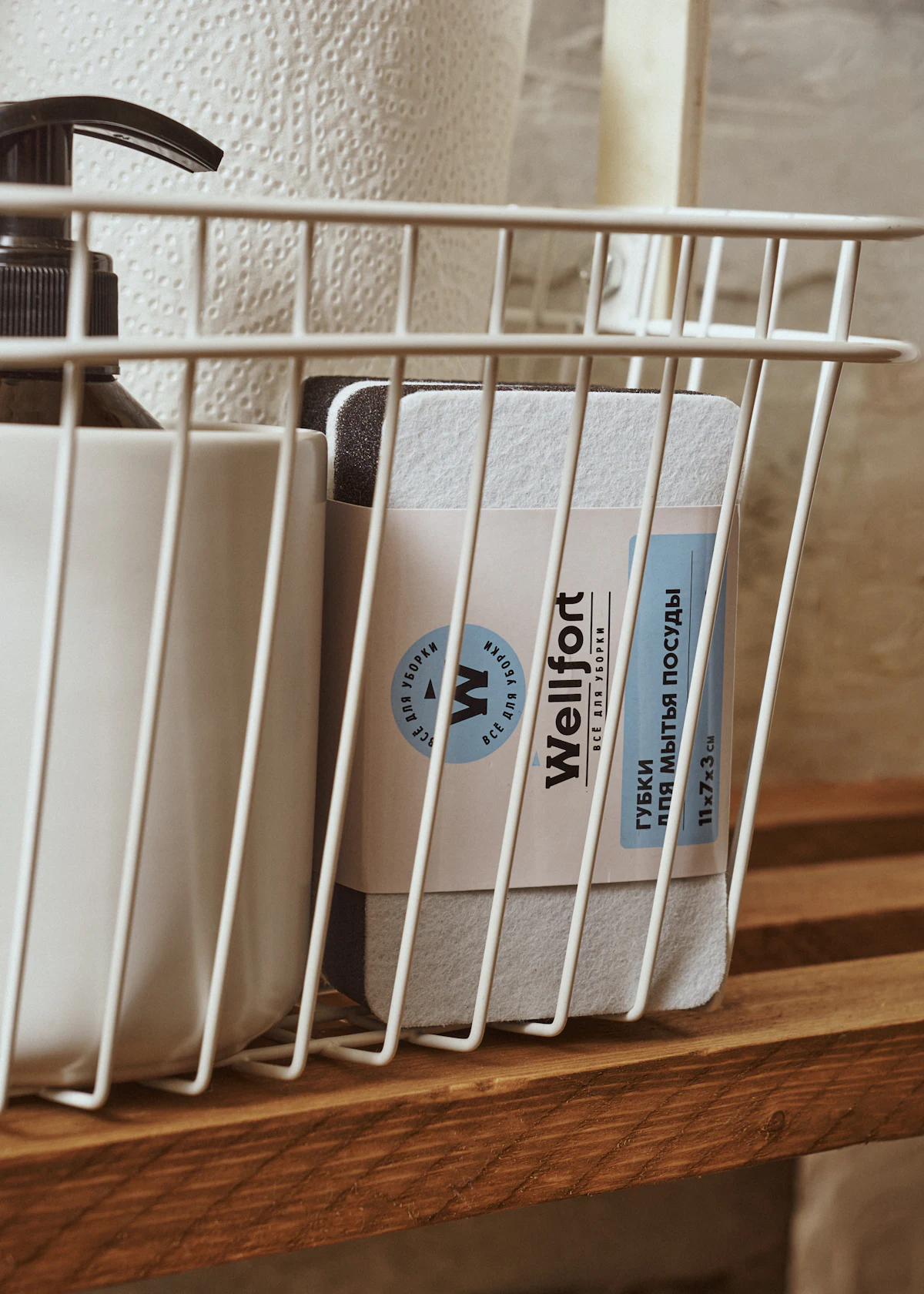
15. Give each person a portable shower caddy
In a shared bathroom, a handled caddy moves personal products in and out. Measure its parking spot and size it for the tallest bottle and doorway clearance.
Choose drainage and an appropriate handle, dry the caddy between uses, and avoid heavy glass. Alternatively, assign each person a cart bin. See general renter-friendly apartment organization for broader systems.
Three realistic rental-bathroom plans
Bathroom with a pedestal sink and no vanity
Use a narrow cart, low paper holder, and hanging or tension-pole shower caddy. If the cart constricts the exit, store a portable caddy outside. Use an over-toilet unit only when its measurements and anchoring instructions suit the lease.
Bathroom with a small vanity but no wall storage
Use a vanity riser and removable bins around the pipes. Put daily items in a small tray and towels over the door only after checking clearance. Use suction only on a compatible smooth surface.
Shared rental bathroom with limited personal storage
Assign each person a handled caddy or washable basket and drying spot. Keep daily items in the driest easy-access zone and backups elsewhere. A cart works if each tier has one owner and the exit stays clear.
For a broader room reset—including zones that are not limited to no-drill systems—use the guide to organize a small bathroom. If the room still feels crowded, the site’s small-apartment storage ideas can help relocate backstock to another room.
What renters should avoid
- Treating “removable” as a lease guarantee. Check the lease and get written approval when the mounting method is unclear.
- Attaching products to an unlisted surface. Painted drywall, texture, wallpaper, damp surfaces, porous stone, grout, laminate, wood, and fresh paint each need explicit manufacturer approval.
- Using a suction cup across grout. An interrupted seal can release without warning.
- Loading first and reading later. Use only the specific model’s stated installation, curing, and load instructions; never borrow a limit from a similar product.
- Blocking ventilation or plumbing access. Keep exhaust openings, pipes, joints, and shutoff valves visible and reachable.
- Putting heavy or breakable items near wet edges. Store them low and away from the tub, sink, and shelf edge.
- Narrowing the exit. A cart, ladder, or floor stand should not create a trip point or prevent the door from opening.
- Ignoring anchoring instructions. If a tall unit requires wall restraint and you cannot obtain permission to install it correctly, choose a lower unit.
- Ripping off adhesive mounts. Follow the maker’s removal direction and pace; stop if the surface begins to lift.
A short weekly reset keeps these systems useful: wipe wet shelves, empty standing water, check suction or adhesive components for movement, inspect beneath the sink for leaks, and return the floor path to clear. The 15-minute small-home cleaning routine can provide a simple schedule.
Frequently asked questions
What is the safest renter-friendly bathroom storage without drilling?
Freestanding options avoid wall contact but still need level placement, a clear path, and required tip restraint. A low cart, caddy, vanity riser, or stable paper holder is often a lower-risk start than adhesive storage.
Do suction shower shelves work on tile?
Only on finishes the specific maker lists. Cups usually need a flat, clean, uninterrupted area; grout, texture, limescale, chips, and uneven tile can break the seal. Inspect regularly and store breakables elsewhere.
Are adhesive bathroom hooks damage-free for renters?
Not universally. Performance depends on the product, surface, preparation, humidity, load, paint, curing, and removal. Check the lease and directions, and use freestanding storage when the finish is uncertain.
How can I store towels in a rental bathroom without a towel bar?
Use an over-door rack if the door moves freely, or a freestanding ladder or stand when floor space allows. Separate damp towels and keep the fan and walkway clear.
How do I add storage to a rental bathroom with no vanity?
Combine a narrow cart or portable caddy with compatible shower storage and a low paper holder. Buy an over-toilet unit only after measuring and confirming any required anchor is permitted.
A practical takeaway
Start with one pressure point, not every empty surface. Measure it, choose the lowest-risk system that solves that problem, and keep the receipt and instructions for removal day. Freestanding storage is the simplest first layer; suction, tension, and adhesive products are useful second layers only when the surface, moisture, clearance, lease, and manufacturer directions all agree. In humid regions or during wetter Q4 weather, leave extra airflow around towels and stored textiles and include the bathroom in your seasonal small-home cleaning reset.