
Small Living Room Storage Ideas: 11 Space-Saving Solutions
Use small living room storage ideas that protect circulation with shallow consoles, hidden ottoman storage, tall shelving, baskets, nesting tables, and cable control.
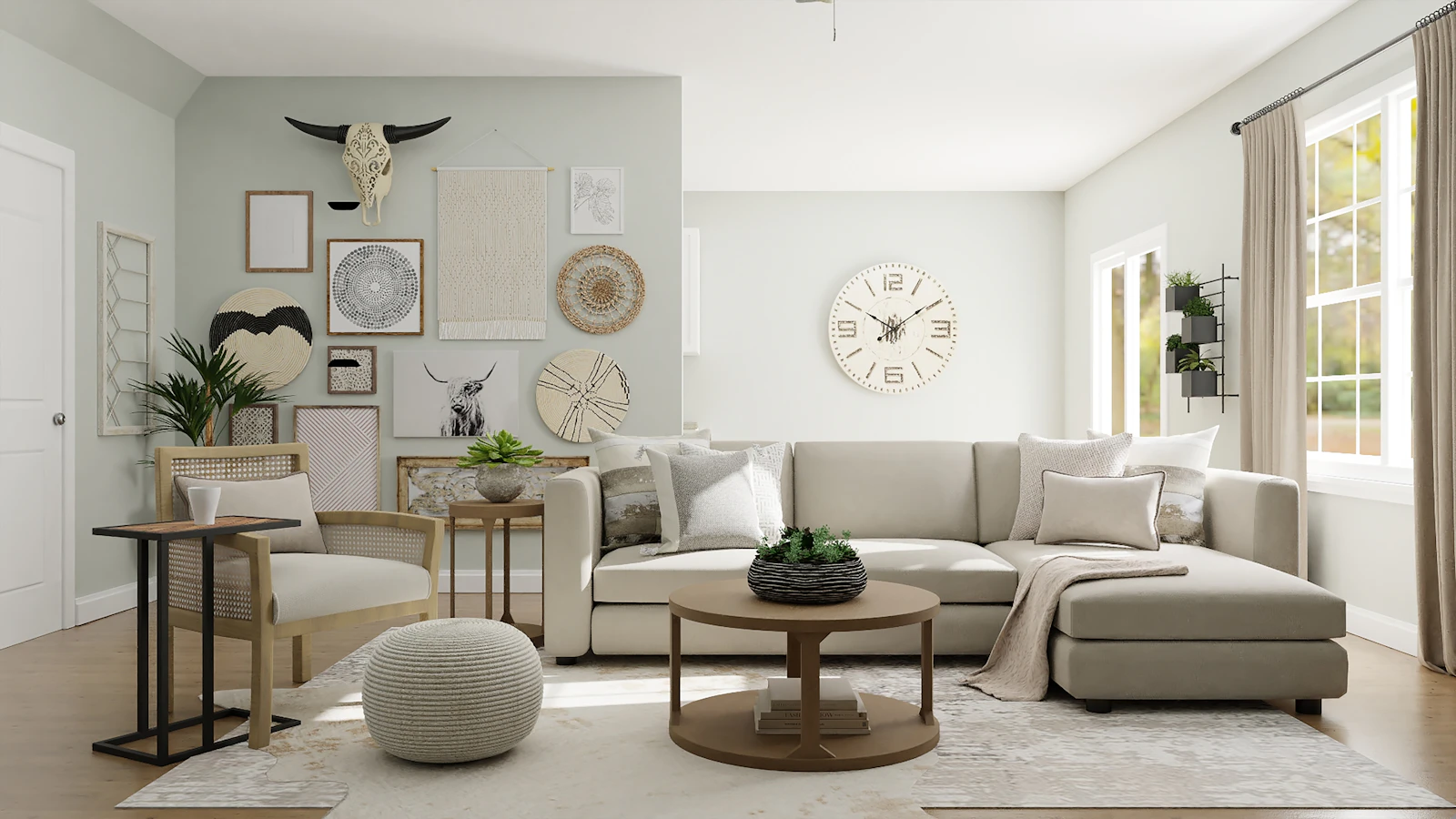
A small living room often has to work as a lounge, media room, guest area, and sometimes an office. Storage should therefore reduce visual clutter without making the room harder to walk through.
Small Living Room Storage Ideas: Measure the Circulation Path First
Before adding a console, bookcase, or ottoman, measure the route from the entrance to the sofa and any doors or windows. Aim to preserve roughly 75–90 cm (30–36 in) for a comfortable main passage where the room allows it. In very small rooms, protect the main route even if secondary gaps are narrower.
1. Use a Shallow Media Console
Wall-mounting a television can free the top of a bulky TV stand, but the real space saver is choosing a console with less depth. A shallow unit can store remotes, routers, game controllers, and cables without projecting far into the room.
If you mount a TV, follow the wall-mount manufacturer’s instructions and use hardware appropriate to the wall structure.
2. Choose Hidden Storage for Visually Busy Items
A storage ottoman or bench works well for throws, game controllers, toys, or occasional guest items. The strongest use case is when the ottoman replaces a separate coffee table or extra chair rather than simply becoming another object in the room.
3. Use Nesting Tables Instead of Multiple Permanent Surfaces
Nesting tables let you expand surface area only when needed. Measure the largest table in the set, because that determines the everyday footprint.
4. Go Tall Rather Than Wide
A tall bookcase can store books, baskets, and display objects while using less floor width than a long low unit. Put heavier items on lower shelves and secure tall furniture according to the manufacturer’s anti-tip guidance.
5. Hide Cable Clutter
Cable boxes, raceways, hook-and-loop straps, and under-console baskets can keep power cords from becoming a visual focal point. Do not tightly bundle cables that need ventilation, and keep power strips accessible rather than burying them under rugs or upholstery. If the living room also contains a desk, use the cable-management approach in our small home-office guide.
6. Use Closed Baskets on Open Shelves
Open shelving feels calmer when only a few objects are displayed and loose categories are contained. Use baskets for chargers, paperwork, toys, or hobby supplies. Label the basket category so the system remains easy to maintain. The same “everything needs a home” principle is what makes a 15-minute daily reset sustainable.
7. Make One Piece Do the Work of Two
In a room that also serves as an office, a narrow console can double as a laptop desk; a storage bench can double as guest seating; a wall shelf can replace a floor lamp table. For a dedicated workspace, see our guide to setting up a small home office.
What to Avoid
- Deep storage units that narrow the main walkway.
- Too many small tables, baskets, and carts competing for floor area.
- Heavy storage mounted above seating without appropriate fixing.
- Open shelving filled edge-to-edge with unrelated items.
Use Furniture Depth as a Decision Filter
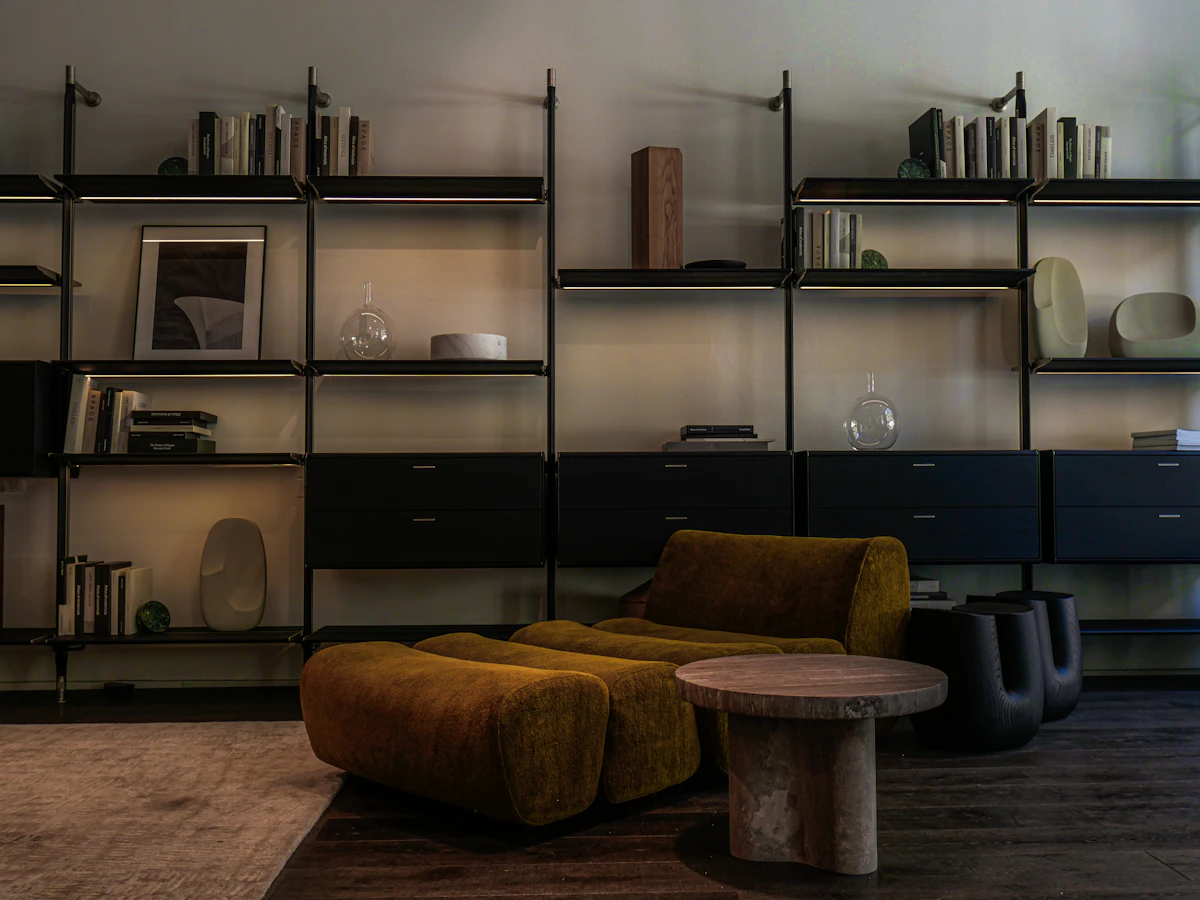
In a small living room, depth often matters more than width. A cabinet that is only 30–35 cm deep can preserve circulation better than a bulky 45–50 cm-deep unit, even when both have similar width. Before buying, mark the furniture footprint on the floor with painter’s tape and walk around it for a day.
| Storage piece | Best use | Watch for |
|---|---|---|
| Shallow console | Media, cables, small electronics | Door/drawer opening clearance |
| Storage ottoman | Throws, toys, guest items | Becoming an extra piece rather than replacing one |
| Tall bookcase | Books, baskets, display | Anti-tip requirements |
| Nesting tables | Flexible occasional surfaces | The footprint of the largest table |
Decide What Does Not Belong in the Living Room
Some clutter problems are really category-placement problems. Bulk cleaning products, seasonal clothing, rarely used paperwork, and backup toiletries usually belong elsewhere. The living room should primarily hold the things needed for relaxing, media, guests, and any secondary function the room genuinely performs.
Use a Visual-Clutter Budget
If you use open shelving, leave some breathing room. A useful rule is to keep a portion of each shelf visibly empty and contain small unrelated items in closed baskets. This gives books and decor a deliberate look instead of turning the shelving into visible overflow storage.
Strongest Takeaway
Choose storage by depth and function, not only by capacity. A shallow console and one tall bookcase can make a small room easier to live in than several medium-sized storage pieces. For more ideas, read 10 smart storage solutions for small apartments.
Image source: Unsplash, used under the Unsplash License.