
Small Entryway Organization Without a Closet: 13 Practical Ideas
Organize a small entryway without a closet with coat zones, racks, bags, mail, umbrella storage, vertical storage and renter-friendly no-drill options.
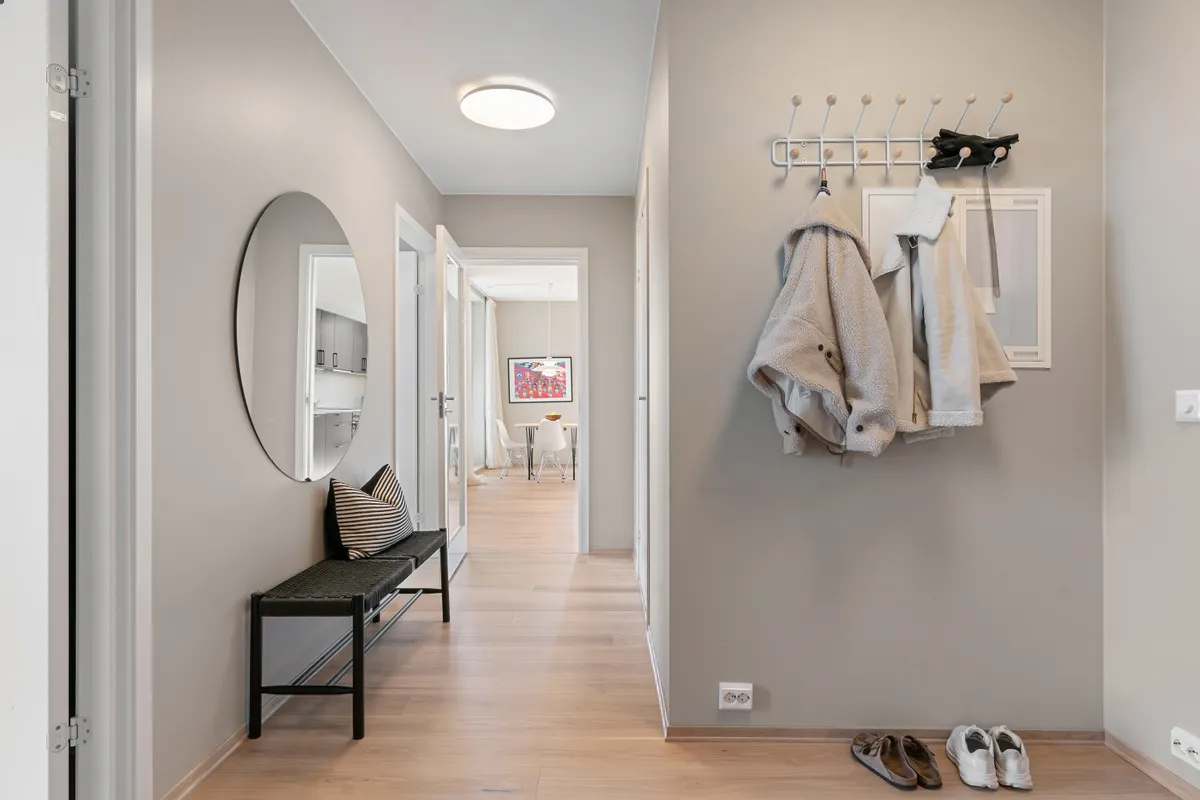
Small entryway organization without a closet is easiest when you separate daily outerwear from the rest of your wardrobe. Create one coat zone, one bag position, one landing spot for keys and mail, and one wet-weather area. Use walls only when the lease and mounting method allow; otherwise use stable freestanding furniture. The entry should hold the things your household uses this week—not every coat, bag and accessory you own.
Featured photo by Lisa Anna via Pexels.
Small Entryway Organization Without a Closet: Measure First
Before adding storage, open the door fully and measure the wall sections that remain usable. Note switches, vents, trim and radiators. Then count the objects that genuinely need to live near the door on a normal weekday: current coats, daily bags, keys, umbrellas and active accessories.
This article focuses on outerwear and daily-item organization. For detailed footwear layouts, see our small apartment shoe storage ideas. If your challenge is that the door opens into one open room, start with how to create an entryway when your apartment has none.
1. Create a Wall-Mounted Coat Zone for Current Outerwear
A short hook rail can replace a coat closet when it holds only the outerwear currently in rotation. Keep hooks away from the door handle and high-traffic corners, and space them so coats do not bury the neighboring hook.
This works when drilling is permitted and the wall can support the intended load with appropriate hardware. If it cannot, use a freestanding rack instead. For renter-specific alternatives, see our renter-friendly wall storage guide.
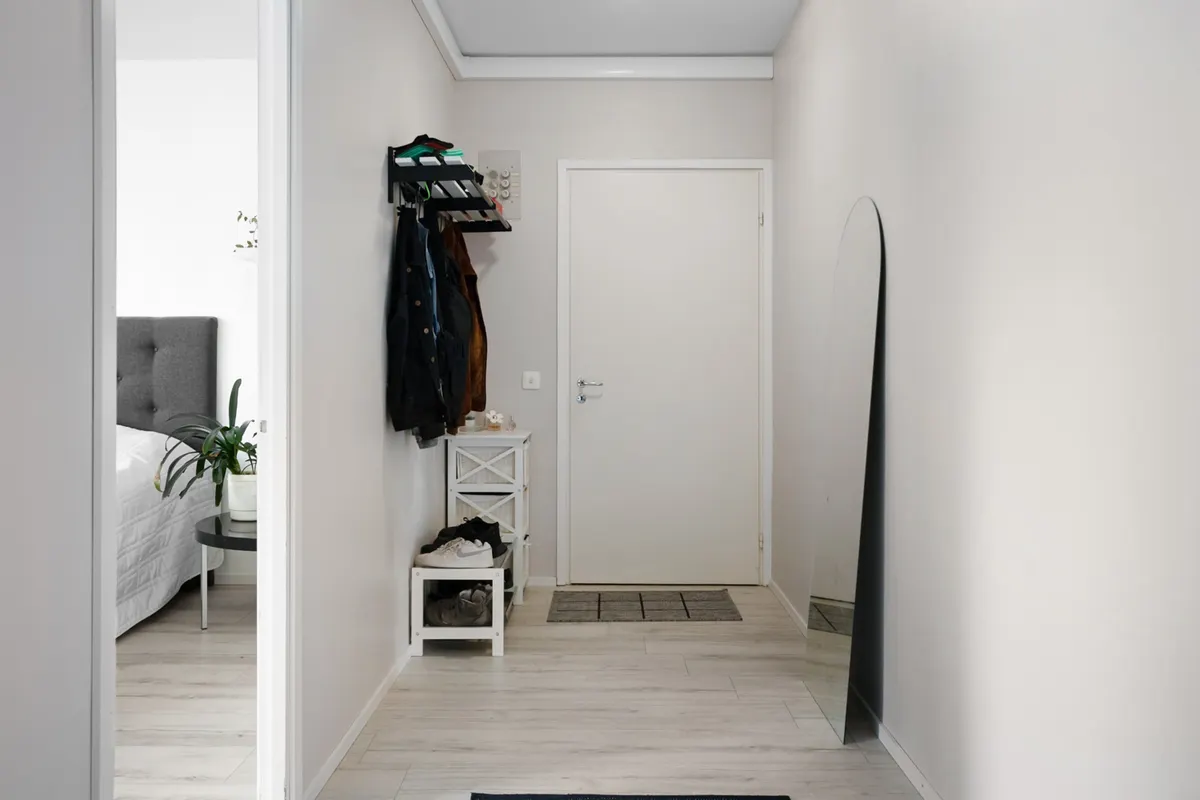
2. Use a Freestanding Garment or Coat Rack When You Cannot Drill
A compact freestanding rack is useful when the lease prohibits wall holes or the wall is unsuitable. Prioritize a stable base and keep the heaviest garments low and centered where the design allows. A rack is a daily outerwear station, not a replacement for the entire bedroom closet.
If the rack has shelves for shoes or baskets, make sure those additions do not push the unit too far into the walking route. In a very narrow entry, a simple vertical coat stand may occupy less wall width but needs an especially stable footprint.
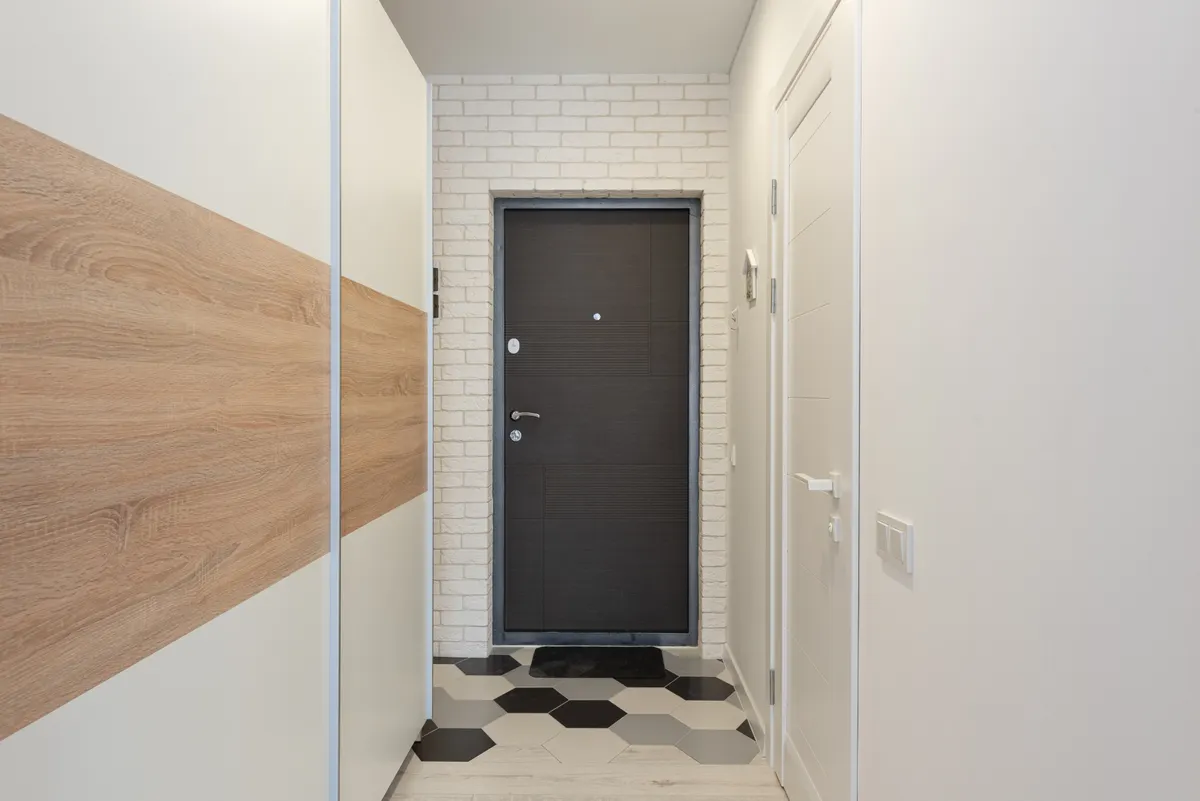
3. Add a Narrow Wardrobe Only If You Have Enough Depth
A closed wardrobe hides coats and bags, but it needs more depth than hooks and usually needs safe anchoring. Tape the footprint on the floor and test both the front-door swing and the wardrobe-door swing before buying.
Tall furniture may need anti-tip restraint. The U.S. CPSC recommends following manufacturer instructions and securing top-heavy furniture; its Anchor It guidance is particularly relevant if children live in or visit the home. If the required anchoring conflicts with your rental agreement, choose a lower or different storage solution rather than skipping a safety step.

4. Use a Peg Rail or Accordion Rack for Flexible Hanging
A peg rail gives coats, dog leashes, hats and light bags fixed positions without the visual bulk of a wardrobe. An accordion rack can spread out to use more wall width or stay compact in a short zone.
Both solutions are only as strong as their installation. Do not assume multiple hooks mean unlimited combined capacity. Follow the product’s hardware and load instructions and keep heavy backpacks separate when possible.
5. Put a Shallow Shelf Above Hooks for Light Accessories
A shelf above the coat zone uses otherwise empty vertical space for hats, folded totes or a lightweight basket. Keep frequently used items low enough to reach safely, and avoid storing heavy objects overhead near the door.
In rentals, a freestanding rack with an integrated top shelf can provide the same function without recreating a heavy shelf with adhesive strips.
6. Give Hats, Gloves and Scarves One Contained Basket
Small accessories create clutter because they do not hang neatly. One basket, bin or drawer keeps them together and gives the category a hard limit. If the basket is overflowing, remove out-of-season items instead of adding a second container to the entry.
Let damp gloves or scarves dry before closing them into a basket. Seasonal accessories belong in the active entry zone only while you are regularly using them.
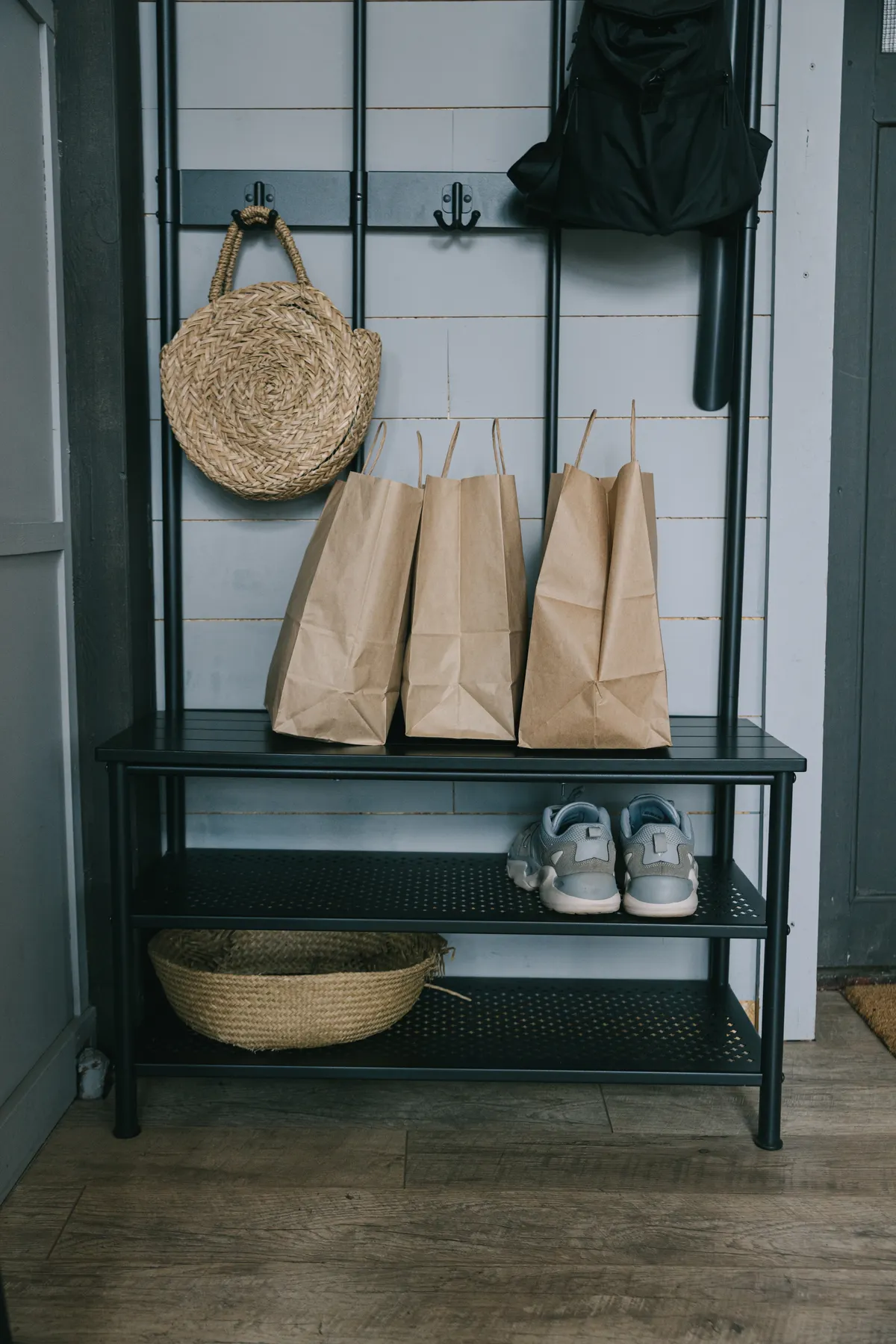
7. Assign a Dedicated Bag Zone
Daily bags should have a home that does not compete with coats. Use one sturdy hook, a lower peg, a shelf, or a floor basket that stays fully under a console. Place the zone where a loaded bag will not swing into the doorway.
For families, one labeled or visually distinct position per regular user works better than a single “bag hook” carrying several backpacks and totes.
8. Control Mail Before It Becomes Entryway Storage
Use one slim pocket, tray or vertical file for paper that genuinely needs action. Recycle obvious junk immediately and move long-term documents away from the front door. A second “outgoing” slot is useful if your household regularly returns forms or mails items.
The key is a short review cycle. Add paper clearing to the same weekly reset you use in your small-apartment cleaning schedule so the entryway does not become an archive.
9. Create a Tiny Landing Zone for Keys and Daily Items
A landing zone can be as small as a wall shelf or tray. Limit it to the objects that leave with you most days: keys, wallet, transit card, sunglasses or headphones. The smaller the surface, the less likely it is to collect unrelated clutter.
If you need a complete door-side routine, our small entryway organization guide explains how the arrival sequence can keep a tiny drop zone working.
10. Create an Umbrella and Wet-Weather Zone
Umbrellas and wet outerwear need a location that can tolerate moisture. A slim umbrella stand, drip-safe container or washable mat near the door is more useful than mixing wet items into baskets of dry accessories.
During fall, the system may need more space for boots and jackets. Our fall coat and boot storage guide covers wet-weather rotation in more detail.
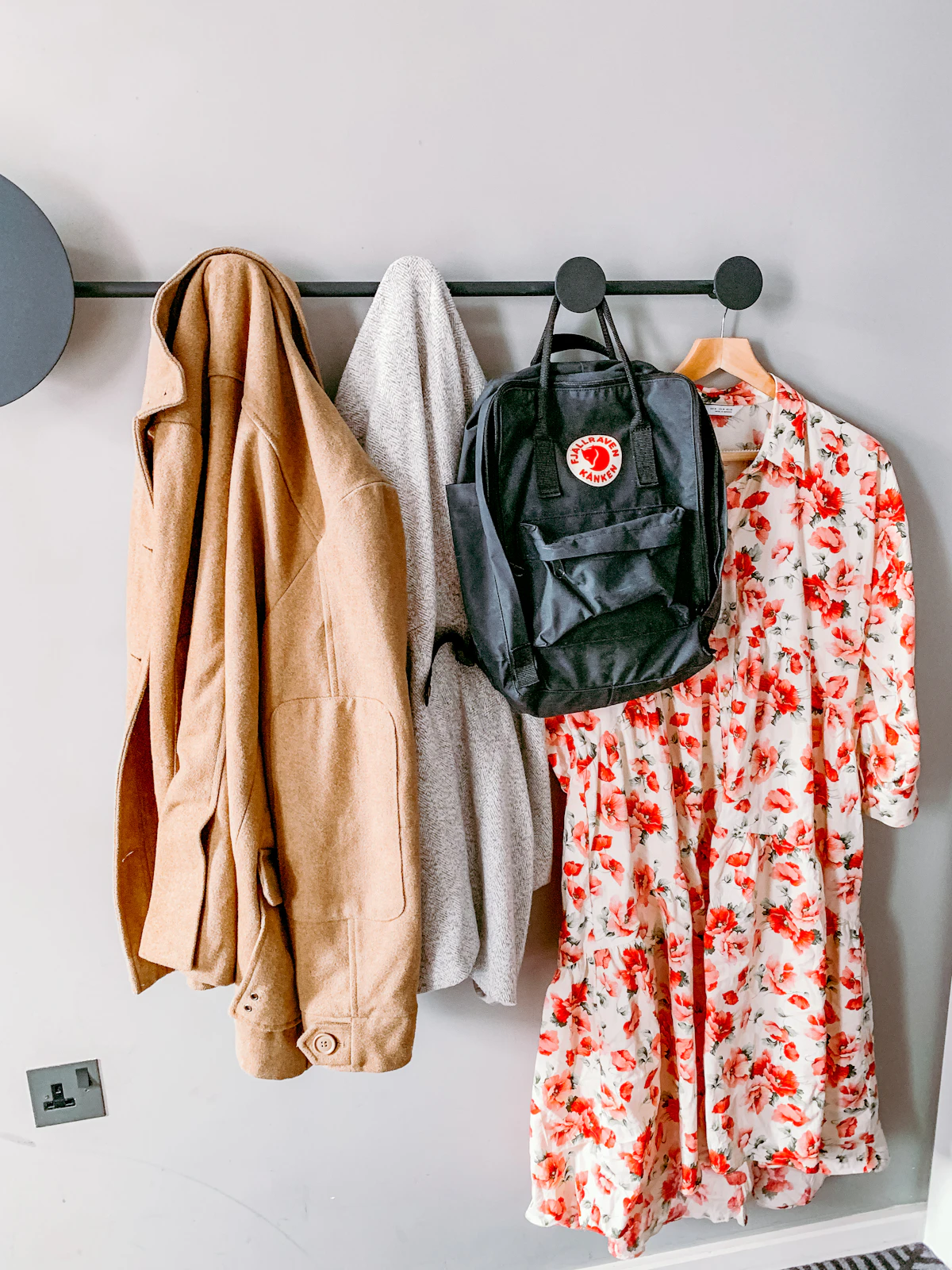
11. Use Vertical Storage, but Keep Heavy Items Low
Vertical storage is valuable when floor area is limited: hooks, shelves and a tall narrow unit can concentrate several jobs on one wall. But height adds reach and stability concerns. Put lighter, less frequently used items higher and heavier everyday items lower.
If a tall unit requires anchoring, do not substitute an improvised no-drill method. Choose furniture that can be installed safely in your home.
12. Rotate the Entryway Instead of Expanding It
A no-closet entrance stays manageable when it stores the current season. Move heavy coats out when warm weather is established; bring them back only when they are genuinely entering weekly use. Do the same with scarves, gloves and specialty bags.
Bedrooms can absorb some off-season clothing when planned carefully. If yours also lacks a closet, our small bedroom without a closet guide compares garment racks, drawers and under-bed storage.
13. Size the System for One Person, a Couple or a Family
A single person may need two or three coat positions, one bag hook and one small tray. A couple may need separate bag positions and a wider accessory basket. A family benefits from assigned hooks or zones by person, but the entryway still should not carry every coat each person owns.
The useful capacity is the number of daily objects you can store without blocking the route. If the household grows beyond that, rotate more aggressively or move secondary storage deeper into the home.

Why Overloaded Adhesive Hooks Fail
Adhesive hanging products are designed for specific surfaces, preparation steps, environments and weight limits. 3M’s Command guidance, for example, instructs users to clean the surface, follow the product-specific waiting/application steps, and stay within the listed weight limit; different products are intended for different loads and surfaces. See the manufacturer FAQ.
That means a removable hook that is appropriate for keys or a light accessory is not automatically a safe substitute for a mechanically mounted coat rail carrying wet coats or loaded backpacks. If the no-drill option is not rated for the job, move that job to stable freestanding storage.
Decision Guide: Wall-Mounted, Freestanding or No-Drill?
| Approach | Floor space | Wall change | Best for | Main limitation |
|---|---|---|---|---|
| Wall-mounted hooks/peg rail | Very low | Usually drilling/anchors | Current coats, light bags, leashes | Lease and wall-load requirements |
| Shelf + hooks | Very low | Usually drilling/anchors | Coats plus light accessory storage | Overhead projection and installation |
| Freestanding garment rack | Moderate | None unless anchoring is required | Rentals and no usable wall | Consumes floor area |
| Narrow wardrobe | Higher depth | May require anti-tip anchor | Visually closed coat/bag storage | Door swing, depth and stability |
| Over-door rack | No floor area | No holes | Light outerwear/accessories | Door/frame clearance and load |
| Adhesive hooks | No floor area | No drilled holes | Only loads/surfaces specifically rated by product | Surface, prep and weight restrictions |
A Complete Example System for a Very Small Apartment
Scenario: one short wall by the door, no coat closet, rental does not allow drilling.
- Outerwear: one stable freestanding coat rack with current jackets only.
- Bag: lower rack position or a basket tucked completely beneath a narrow console.
- Keys: one small tray on the console.
- Mail: one upright file with “action” and “outgoing” sections.
- Wet weather: slim umbrella stand and washable floor tray outside the door swing.
- Accessories: one basket on the lower console shelf.
- Overflow: off-season coats and extra bags move to bedroom or under-bed storage.
The point is not to fit every possible category at the door. It is to give the daily categories obvious positions while keeping the entrance open.
What to Avoid in an Entryway Without a Closet
- A hook for every coat you own. More hooks usually create more hanging clutter.
- Heavy backpacks on light adhesive hooks. Match the product to its rated load and surface.
- Tall narrow furniture without required anchoring. Choose another unit if you cannot install it safely.
- Wet items inside closed baskets. Give them a drying stage first.
- Deep furniture beside the door. Tape the footprint and test the swing.
- One shared pile for bags, scarves and mail. A few distinct zones are easier to maintain.
Final Takeaway
A no-closet entryway does not need more storage everywhere; it needs a small number of dependable zones. Choose one safe outerwear method, one bag position, one accessory container, one key-and-mail landing point and one wet-weather area. Keep daily items visible enough to use, rotate seasonal overflow elsewhere, and protect the door and walking path first.
Frequently Asked Questions
Where do you put coats when there is no entryway closet?
Use a properly mounted hook rail, peg rail, stable freestanding rack or narrow wardrobe, depending on wall permissions and available depth. Keep only current outerwear by the door and rotate the rest elsewhere.
What is the best renter-friendly coat storage without drilling?
A stable freestanding garment rack or coat stand is the most straightforward heavy-duty no-drill option. Over-door or adhesive products can help with lighter items only when they fit the door/surface and are used within manufacturer instructions.
Can adhesive hooks hold winter coats?
Only if the specific hook, surface and installed conditions meet the manufacturer’s stated use and weight limit. Do not assume that a removable hook intended for light objects is suitable for a heavy wet coat or loaded backpack.
How do you organize a family entryway without a closet?
Assign a small number of labeled or visually distinct positions by person—such as one daily coat hook and one bag position each—then use shared zones for keys, mail and wet-weather items. Move seasonal overflow out of the entrance.
How do you keep a no-closet entryway from looking cluttered?
Limit visible storage to current daily items, contain small accessories in one basket, control paper at the door, and choose either open hooks or a closed wardrobe based on available depth. Removing excess items matters more than adding matching containers.