
17 Small Bedroom Clothes Storage Ideas Without a Dresser
Practical dresser alternatives for folded clothes in a small bedroom, with measuring guidance, renter-friendly options, access tips and three realistic layouts.
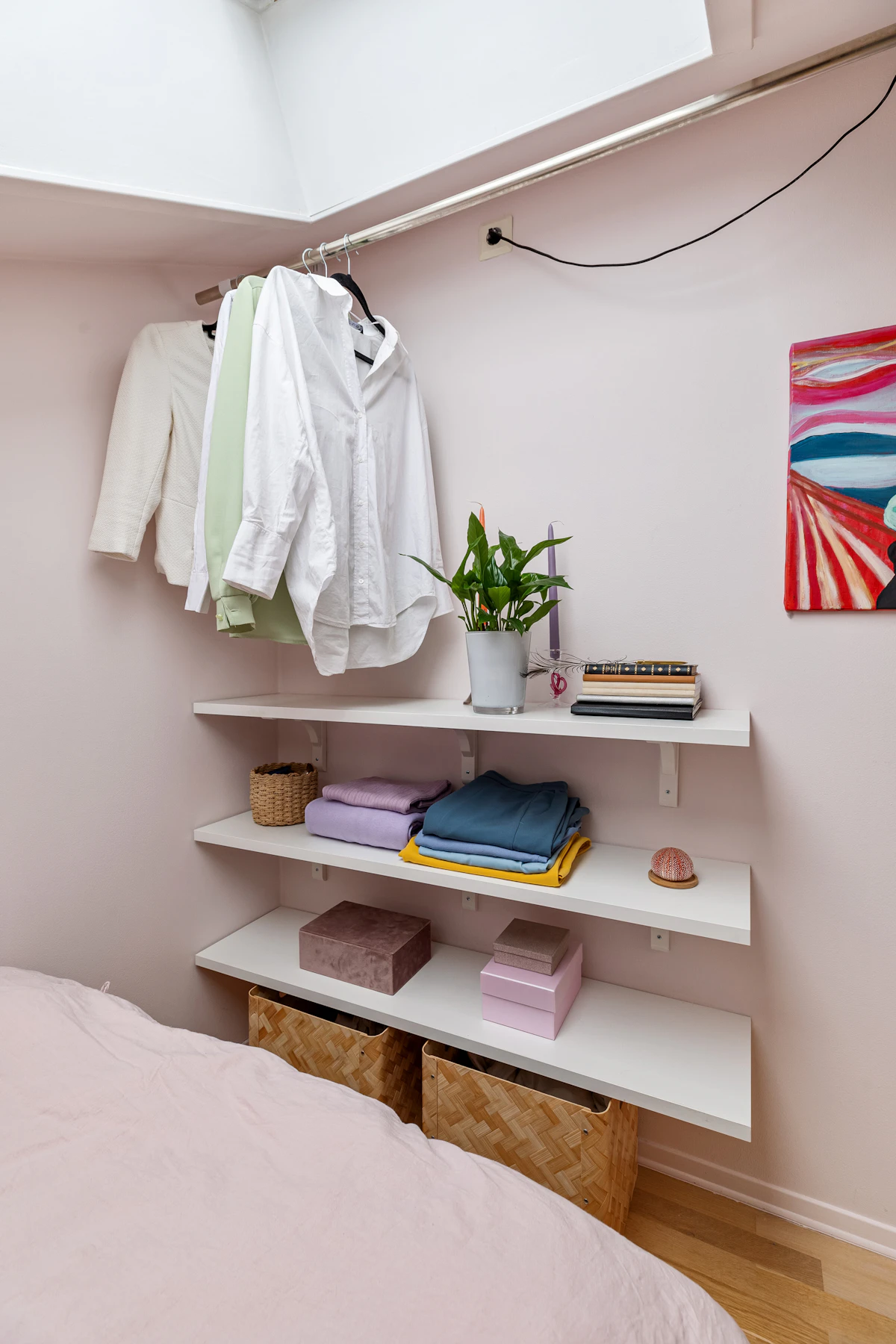
Small bedroom clothes storage ideas without a dresser work best when they separate everyday folded clothes from occasional items. Keep underwear, socks, sleepwear, T-shirts, workout clothes and one or two pairs of folded pants in shallow, easy-to-reach bins or shelves. Move bulky sweaters and off-season clothing to covered, less accessible storage. Measure first, keep categories small, and avoid deep containers that turn clean clothes into an unreachable pile.
A dresser is convenient because drawers hide several clothing categories in one footprint. When that footprint will not fit, the replacement should still provide the same functions: quick access, category separation, dust protection where needed and a realistic place for clothes to return after laundry day. This guide stays focused on clothes normally stored in drawers rather than rebuilding an entire closet system.
Decide Which Clothes Need Folding and Which Need Hanging
Do not make a dresser substitute hold every piece of clothing you own. Reserve folded storage for underwear, socks, sleepwear, T-shirts, workout clothing, casual pants, sweaters and small accessories. Hang wrinkle-prone shirts, dresses, jackets and frequently worn work clothes if you already have a closet or garment rack.
This first split prevents two common problems: using valuable shelf space for clothes that are easier to hang, and overloading a garment rack with soft basics that would fit better in bins. If the room has no built-in closet, use the separate guide to organize a small bedroom without a closet; it covers a complete hanging-and-folding system.
Measure the Storage Space You Can Actually Use
Measure the available width, depth and height, then measure the space needed to use the storage. A bin that fits under a shelf is not practical if it cannot pull forward because the bed is too close. A rolling cart needs a parking spot and a clear route; a storage bench needs room for its lid or drawers to open.
- open wall width without covering an outlet, vent, radiator or door swing;
- maximum depth that preserves the walking path;
- height beneath a window, hanging rail or sloped ceiling;
- clearance under the bed and the pull-out space beside it;
- inside dimensions of shelves, cubes and wardrobe compartments;
- door, drawer and lid opening clearance.
For tall shelves or cube units, read the manufacturer’s stability instructions before purchase. Furniture with drawers, doors or shelves can tip; the U.S. Consumer Product Safety Commission’s Anchor It guidance recommends securing furniture to reduce tip-over risk. If the required anchoring conflicts with a lease, choose a lower, wider option rather than omitting a required safety step.
Dresser Alternatives for Small Bedrooms: Decision Table
| Storage method | Floor-space requirement | Best clothing category | Daily access | Drilling or anchoring | Main disadvantage | Best renter-friendly alternative |
|---|---|---|---|---|---|---|
| Cube shelf with bins | Small to medium | Underwear, socks, tees, workout clothes | Good when bins are shallow | Tall units may require anchoring | Deep bins become mixed piles | Low horizontal cube unit |
| Open shelves | Very little if wall-mounted | Sweaters, jeans, sleepwear | Good for neat, short stacks | Wall-mounted versions require approved installation | Dust and visual clutter | Short freestanding bookcase |
| Closed boxes on shelves | Uses existing shelf space | Off-season and occasional clothing | Fair to poor | Depends on the shelf | Easy to forget contents | Labeled lidded bins on a low unit |
| Hanging shelf organizer | No extra floor space | Tees, leggings, lightweight sweaters | Good if not overfilled | No drilling; needs a suitable closet rod | Uses hanging width and may sag | Small bins on the closet shelf |
| Drawer nightstand | Replaces existing bedside footprint | Underwear, socks, sleepwear | Excellent | Usually none; follow stability instructions | Limited capacity | Bedside basket plus lidded bin |
| Rolling cart | Small, plus rolling clearance | Workout clothes, pajamas, accessories | Excellent | None | Open contents can look untidy | Handled baskets on a shelf |
| Storage bed drawers | No separate footprint | Jeans, sweaters, spare sleepwear | Good with side clearance | Assembly only; follow maker instructions | Drawers can be blocked by walls or rugs | Covered under-bed bins |
| Storage bench or trunk | Medium | Bulky sweaters and seasonal clothes | Fair | Usually none | Deep interior encourages layering | Low lidded bin under the bed |
| Garment rack with shelf | Medium | Folded shoes or bins plus hanging clothes | Good | Usually none; check stability | Can become visually crowded | Compact rack without overhead shelf |
| Wall-mounted system | Minimal floor use | Adjustable bins, shelves and rails | Excellent when planned well | Yes, unless the system specifies otherwise | Lease and wall compatibility | Freestanding modular unit |
17 Clothes Storage Ideas for a Small Bedroom Without a Dresser
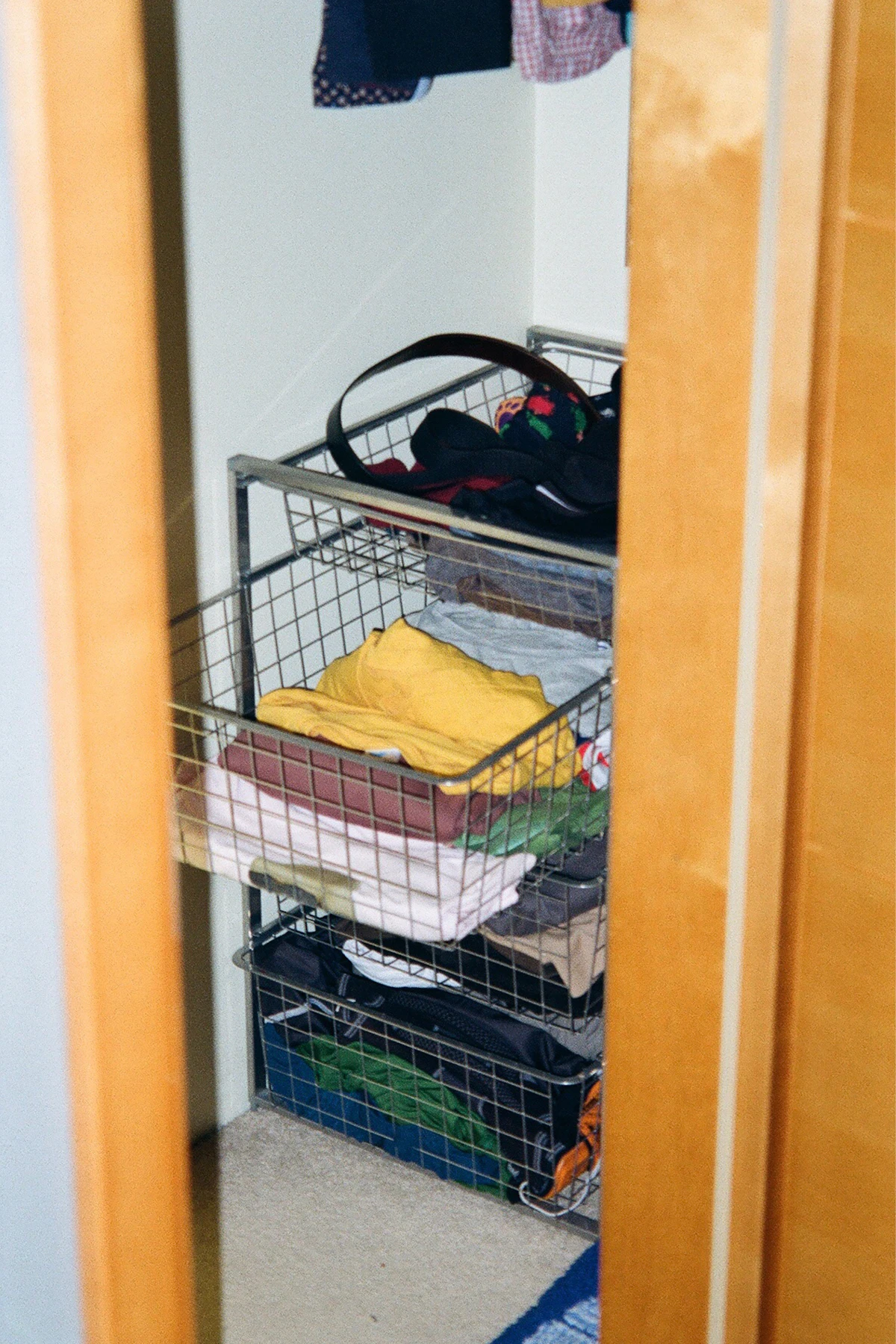
1. Give Each Cube Bin One Clothing Category
A low cube shelf works like a row of separate drawers. Assign one correctly sized bin to underwear, one to socks, one to sleepwear and one to workout clothing. The category should fit without compression; if two unrelated categories share a deep bin, the less-used items usually disappear underneath.
Choose bins that can be removed without scraping the shelf and that have handles you can reach. A low, horizontal unit is often easier for renters because it is less top-heavy, but still follow the unit’s anti-tip directions.
2. Use Shelf Dividers to Keep Open Stacks Short
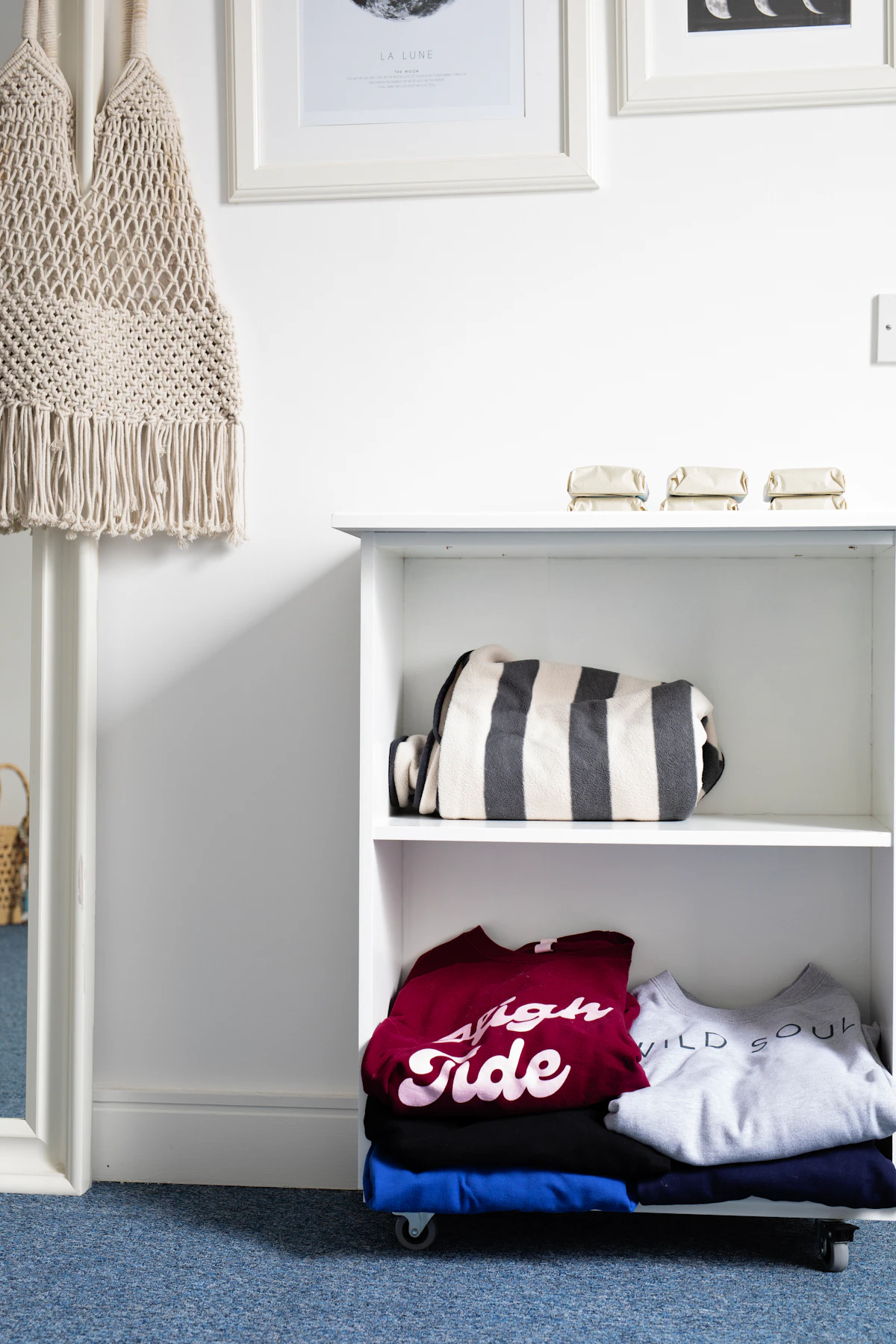
Open shelves work best for items that hold a fold, such as sweaters, jeans and sweatshirts. Use dividers to stop stacks from leaning into one another, and keep each stack short enough that removing the bottom item does not collapse the rest.
This is a poor choice for very small items or for anyone who dislikes refolding. In that case, place a shallow open bin on the shelf so the whole category can slide out.
3. Add Closed Boxes for Clothes That Need Dust Protection
Closed boxes or lidded baskets suit clean off-season clothing, sentimental shirts and rarely used accessories. Label the front with the category and season, not a vague word such as “miscellaneous.” Store daily underwear and socks elsewhere; opening lids every morning adds friction.
Use breathable storage appropriate to the fabric and room conditions. Never pack clothing while damp. The EPA explains that moisture control is central to mold prevention and recommends drying damp materials promptly and keeping indoor humidity below 60 percent when possible in its mold and moisture guide.
4. Hang a Fabric Shelf Organizer From a Closet Rod
A hanging shelf organizer turns a narrow section of rod into cubbies for T-shirts, leggings, pajamas or lightweight sweaters. It is most useful when the closet has more hanging width than you need but no drawer space.
Check the organizer and rod instructions, and do not keep adding weight when the shelves begin to bow. It also reduces space for hanging clothes, so compare that tradeoff before buying. For detailed closet capacity work, see how to make better use of a small bedroom closet.
5. Replace a Basic Nightstand With One That Has Drawers
A two- or three-drawer nightstand can act as a miniature dresser without adding a new furniture footprint. Put underwear and socks in the top drawer and sleepwear or a small workout set below. Keep charging gear in a tray rather than surrendering an entire drawer to loose cables.
This works best for a small daily capsule, not a full wardrobe. Measure the drawer interiors; a wide-looking nightstand may have shallow or narrow usable space.
6. Use a Rolling Cart for Lightweight Daily Clothes
A compact cart can hold pajamas, workout clothing, accessories or folded baby clothes in shallow tiers. Park it beside the bed or in a closet, then move it when cleaning or changing the layout.
Open tiers expose clothing to dust and make overfilling obvious. Use small bins within the cart, keep heavy objects off the top, lock casters if provided, and avoid placing it where it can roll into the walking path.
7. Choose a Storage Bed With Drawers You Can Fully Open
Built-in bed drawers are useful for folded jeans, sweaters, spare sleepwear and seasonal layers because the bed already occupies the floor area. Before buying, map the drawer’s full extension on both sides. A drawer facing a wall, nightstand or thick rug may be unusable even when the bed itself fits.
Storage beds are inconvenient in rooms that are rearranged often or reached by narrow stairs. Covered rolling bins may be a lower-cost alternative when the current bed has sufficient clearance.
8. Use Covered Under-Bed Drawers for Secondary Clothing
Under-bed drawers are best for clothes used weekly or seasonally, not the underwear needed every morning. Choose a covered container that clears the bed frame and can pull out without striking another piece of furniture.
Measure height and pull-out clearance rather than guessing from the bed’s appearance. The dedicated guide to under-bed storage based on actual clearance compares rolling bins, fabric bags, vacuum bags and bed drawers in more detail.
9. Use a Storage Bench Only When the Room Has Opening Clearance
A bench or trunk can hold bulky sweaters, extra sleepwear and off-season clothing while providing a place to sit. It makes sense at the foot of the bed only if the remaining walking path stays comfortable and the lid or drawers can open fully.
Deep trunks are poor daily storage. Use one or two lift-out baskets inside so the bottom layer remains reachable, and follow any lid-safety and hardware instructions supplied by the manufacturer.
10. Reserve a Bedside Caddy for One Tiny Category
A fabric caddy that slips under the mattress or hangs from the bed frame can hold a sleep mask, clean socks, a bonnet or other lightweight bedtime items. It should not become a second laundry pile.
Check that the attachment does not interfere with the mattress, adjustable base or bedding. This is supplemental storage, not a replacement for clothing bins.
11. Store Clean Off-Season Clothes Inside Suitcases
An empty suitcase can hold clean, completely dry off-season clothes in packing cubes or labeled fabric bags. This is useful in a studio where the suitcase already needs a home, but it is poor storage for anything needed weekly.
Keep a simple contents list in the outer pocket. Do not store damp textiles, toiletries that could leak or anything you need to unpack every time you travel.
12. Add Shallow Bins to the Wardrobe Shelf
If a wardrobe or closet has one high shelf, divide it into handled bins for sweaters, spare pajamas and seasonal accessories. Shallow containers are easier to control than one oversized tote, and a front label tells you which bin to bring down.
Keep heavy items below shoulder height. A bin that is awkward to lift safely will not function as everyday storage.
13. Combine a Garment Rack With One Lower Shelf
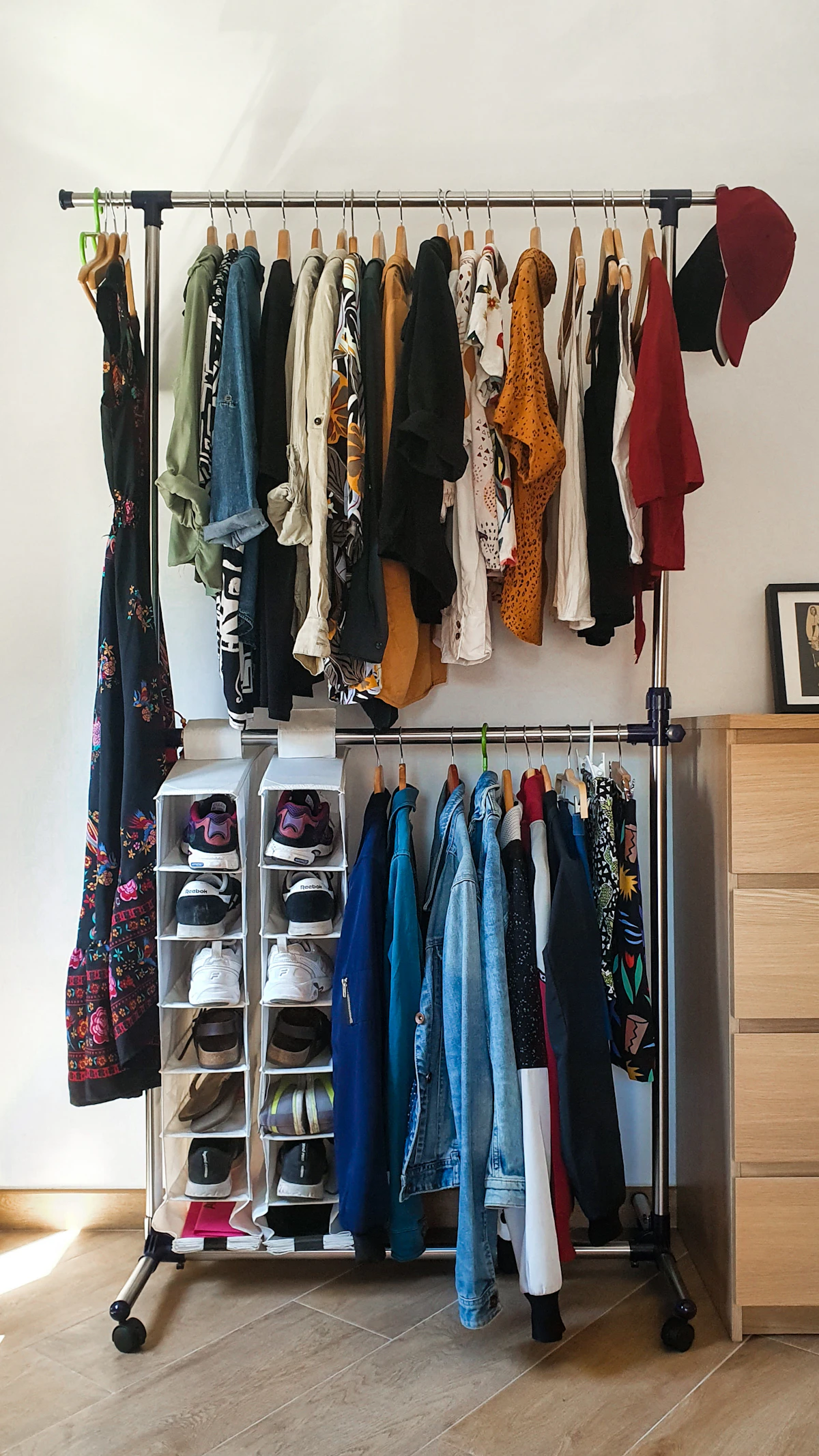
A rack with a stable lower shelf creates hanging space above and a home for two or three bins below. Use the bins for drawer-type clothing and the rail for wrinkle-prone garments. This is especially helpful when the room has neither a dresser nor enough closet capacity.
Check the manufacturer’s dimensions and load guidance, distribute weight evenly and avoid extending clothing into a doorway or heater clearance. If the rack wobbles when lightly touched, reduce the load or choose a more stable design.
14. Install an Adjustable Wall System Only When Permitted
Wall-mounted rails with shelves or baskets can place folded clothes above a desk, nightstand or low cabinet. They work well when studs, wall material, hardware and the intended load are all compatible and the lease allows installation.
Do not substitute light adhesive products for a structural shelf. Renters who cannot drill can use a low bookcase, a freestanding modular unit or the options in the renter-friendly wall storage guide.
15. Use a Narrow Bookcase as a Folded-Clothes Station
A shallow bookcase can hold baskets for underwear and socks plus open stacks of jeans or sweaters. Choose a depth that supports folded clothing without projecting too far into the room. Put the most-used categories between knee and shoulder height.
The unit should not be treated as automatically safe because it is narrow. Follow all anchoring instructions, keep heavy items low and avoid unstable stacks of containers on top.
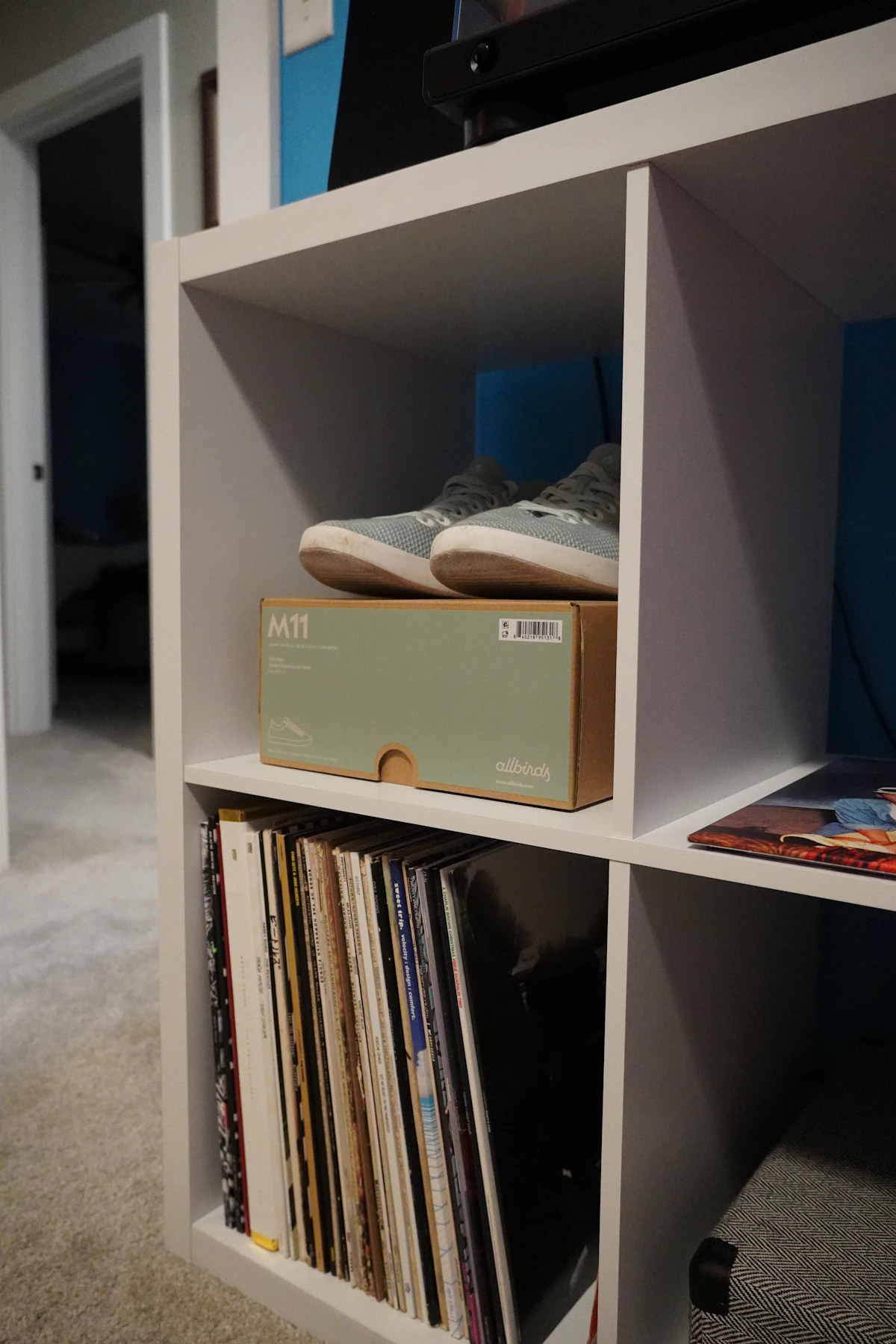
16. Rotate Bulky Seasonal Clothes Out of Prime Storage
Prime storage is the space you can reach without moving furniture, climbing or unpacking another category. Use it for the current season. Move clean, dry heavy sweaters, thermal layers or swimwear to labeled upper-shelf, suitcase or under-bed storage when they are genuinely out of rotation.
Set one calendar reminder to reverse the rotation. Without a review date, seasonal bins often become permanent forgotten storage. In colder regions, Q4 is a natural time to move lightweight summer pieces out of prime space and bring sweaters, coats, and cold-weather layers forward; use the fall closet organization guide to plan the seasonal swap.
17. Create a Small “Wear This Week” Zone
Reserve one shelf, basket or section of a cart for a few folded outfits you expect to wear during the week. This reduces rummaging and gives clean laundry a visible destination without mixing it with long-term storage.
Keep the capacity fixed. When the zone is full, return an item to its regular category instead of building a new pile on a chair.

Separate Daily Clothing From Long-Term Storage
Daily storage should open in one motion and let you see the category. Long-term storage may be covered, higher or farther away, but it still needs a label and a review date. If every item is equally accessible, the room usually sacrifices too much floor or eye-level space.
- Daily: underwear, socks, current sleepwear, workout clothes and most-used T-shirts.
- Weekly: folded pants, sweaters and special activity clothing.
- Seasonal or archival: off-season layers, keepsake clothing and rarely used accessories.
Keep clothing away from known damp areas, active leaks and containers that trap moisture. Leave enough air around stored textiles to notice a problem early, and address the moisture source rather than trying to mask odor.
If the assigned categories still exceed the room’s safe capacity, pause the storage purchases and use the step-by-step guide to organize a small bedroom with too many belongings.
Three Realistic No-Dresser Bedroom Layouts
Existing Closet, but No Dresser
Use a hanging shelf organizer for T-shirts and leggings, handled bins on the upper shelf for sweaters, and a drawer nightstand for underwear and socks. Keep under-bed space for off-season items. This preserves most of the closet rod for hanging clothes and avoids adding another full-size piece of furniture.
Neither Closet nor Dresser
Pair a stable garment rack with two lower bins for folded basics and a low cube unit for sleepwear, workout clothes and accessories. Put seasonal clothing in covered under-bed drawers. If the back of the door is the only unused surface, compare over-the-door bedroom storage ideas before adding another floor unit.
Studio Bedroom Zone With Only Under-Bed and Vertical Storage
Use a storage bed or covered under-bed drawers for weekly clothing, then add one shallow freestanding shelf beside the bed for daily categories. Avoid a tall bank of open clothing storage facing the living area; labeled matching bins can reduce visual noise without hiding items in one oversized container. For broader zoning choices, see the guide to storage solutions for small apartments.
What to Avoid When Storing Clothes Without a Dresser
- Deep mixed bins: they hide smaller items and require repeated refolding.
- Unstable stacked containers: use shelving designed for the load instead of building a leaning tower.
- Daily clothes in hard-to-reach storage: suitcases and high shelves are for occasional access.
- Open piles near a window, vent or damp wall: protect textiles from dust, moisture and direct exposure.
- Ignoring anchoring instructions: renters still need to follow the furniture maker’s safety requirements.
- Buying before measuring the access path: the unit, bin, drawer or lid must open in the furnished room.
- Turning a chair into a clothing category: create one fixed “wear again” or weekly basket instead.
Frequently Asked Questions
Where should I put underwear and socks without a dresser?
Use the easiest small storage you can reach daily: shallow cube bins, a drawer nightstand, small closet-shelf bins or two tiers of a rolling cart. Keep underwear and socks in separate containers so one category does not bury the other.
What is the best dresser alternative for a very small bedroom?
If the room already needs a nightstand, choose one with drawers first. If more capacity is required, add a low cube shelf with fitted bins or covered under-bed drawers. The best option is the one that fits both the footprint and the opening clearance.
How can I keep folded clothes neat on open shelves?
Use dividers, keep stacks short and give each section one category. If the stacks repeatedly fall, switch that category to a shallow handled bin rather than relying on more precise folding.
Can I store clothes in plastic bins long term?
Only store clean, fully dry clothing, keep the bins away from moisture and follow care guidance for delicate fabrics. A lidded bin can reduce dust, but it does not solve a damp room or an active leak.
Is a garment rack better than cube storage?
They solve different problems. A garment rack is better for clothes that wrinkle or are worn on repeat; cube bins are better for underwear, socks, sleepwear, T-shirts and workout clothing. Many no-dresser rooms need a small version of both.
Build the Daily Storage First
Start with the six or seven clothing categories you use in an ordinary week and give each one a shallow, reachable home. Measure that setup in the finished room before adding seasonal bins, a second shelf or a storage bench. If clean laundry can be put away without moving another container, the dresser-free system is doing its job.
Photo credits: Alex Tyson, Krišjānis Kazaks, Margaret Young, Sonia Sanmartin, Caleb Wright and Dan Gold on Unsplash, used under the Unsplash License.