
Storage Solutions for Small Apartments: 10 Practical Ideas
Discover smart storage solutions for small apartments, including vertical shelving, under-bed bins, door storage, slim carts, baskets, and multi-use furniture.
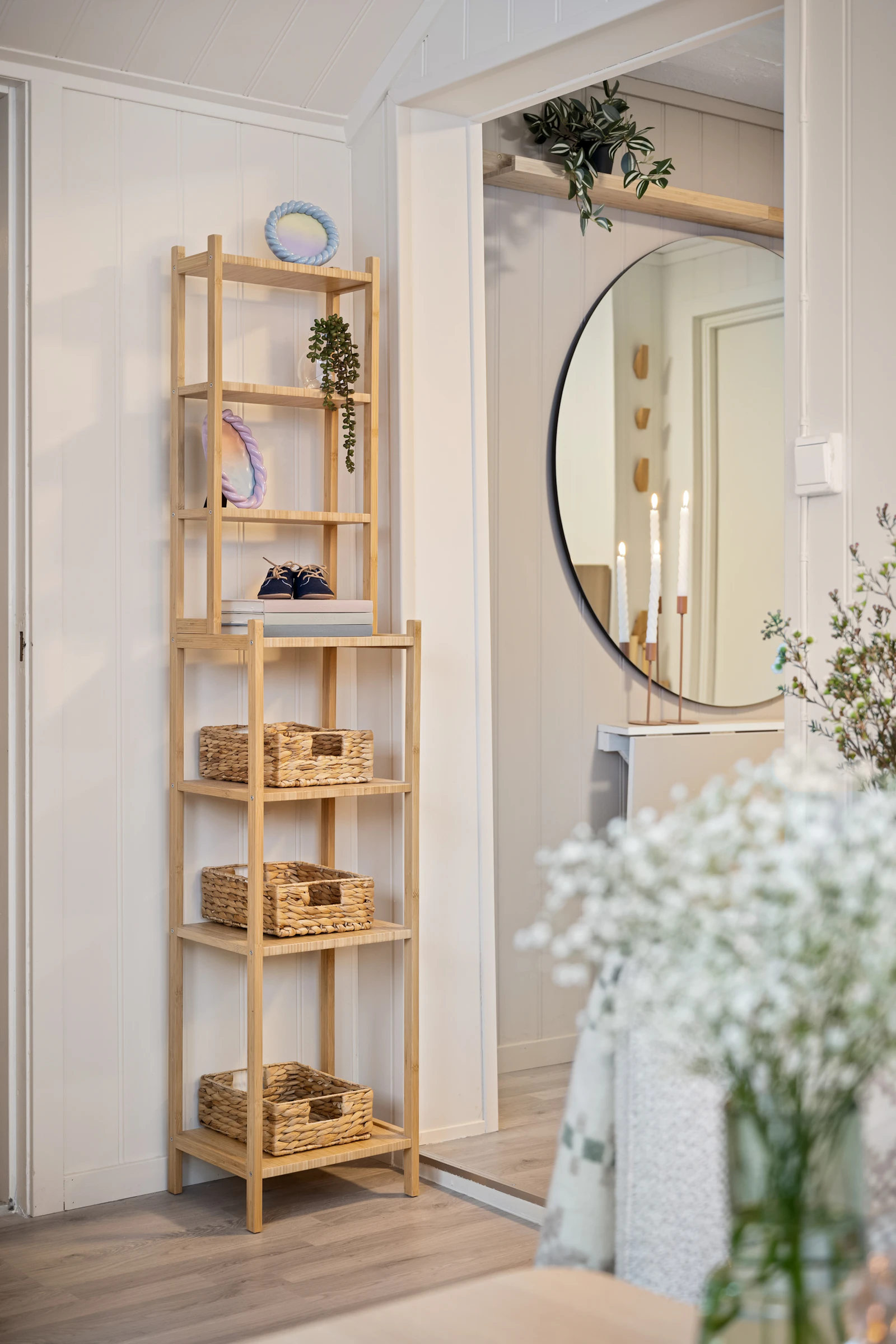
Small apartments become easier to live in when storage is planned around the space you actually have, not around generic “small-space” products. Before buying anything, measure the width, depth, and height of the target zone, then decide whether the item should be visible, concealed, mobile, or wall-mounted.
Storage Solutions for Small Apartments: Start With a Storage Audit
Walk through the apartment and identify three types of clutter: items with no home, items stored too far from where they are used, and items that should leave the home entirely. Storage products only solve the first two.
1. Choose Furniture That Performs Two Jobs
A storage ottoman can hold throws while acting as seating; a lift-top coffee table can hide chargers and provide a temporary work surface; a bed with drawers can replace a separate dresser. Multi-function furniture is especially valuable when it replaces another piece rather than simply adding storage. If the living room is doing several jobs at once, these small living-room storage ideas show how to keep that furniture from crowding circulation.
Decision rule: if a storage item needs its own footprint, ask what existing furniture it can replace.
2. Use Full Wall Height
Tall shelving uses vertical volume that short cabinets leave empty. Keep frequently used items below shoulder height and lighter, less-used items higher. Leave enough clearance near ceilings, lights, and sprinklers where applicable.
3. Use Under-Bed Storage for Low-Frequency Items
Measure the clear space beneath the frame before buying bins. Subtract a few centimetres so containers slide easily. Lidded boxes are useful for seasonal clothing and bedding; open baskets are better only for items you access frequently. For clearance-based sizing, see our under-bed storage ideas for small bedrooms.
4. Put Doors to Work
Over-door organizers are ideal for light items such as toiletries, scarves, cleaning cloths, or shoes. Check door thickness and hinge clearance before purchase.
5. Add Floating Shelves Only Where They Do Not Narrow Circulation
Good locations include above a desk, over a toilet, or over a low console. Avoid placing deep shelves in narrow walkways or where people naturally stand up from a sofa or bed.
6. Use Slim Rolling Carts for Awkward Gaps
A narrow cart can make use of a gap beside a refrigerator, washing machine, desk, or vanity. Measure both width and depth: a cart that fits the gap but projects beyond the furniture can make the room harder to navigate.
7. Use Matching Baskets to Control Visual Clutter
Open storage works best when small objects are grouped into containers. Label by category rather than by individual object: “cables,” “mail,” “cleaning,” or “craft supplies.” This keeps the system easy to maintain.
8. Add Shelf Risers and Vertical Dividers Inside Cabinets
Shelf risers are useful when there is unused vertical space above plates or mugs. Vertical dividers work well for baking sheets, cutting boards, and pan lids. In the kitchen, these simple inserts often improve access more than adding another cabinet.
9. Use Pegboards Where Needs Change Often
Pegboards work well in offices, craft zones, or entryways because hooks and bins can move as your storage needs change. In rentals, use a freestanding or furniture-backed version if drilling is restricted.
10. Use Magnetic Storage Only Where It Is Truly Secure
Magnetic racks are useful on suitable metal surfaces such as some refrigerators. Check the manufacturer’s load rating and make sure the object cannot slide when a door is opened or closed. Keep knives and sharp tools out of reach of children.
Quick Buying Checklist
- Measure width, depth, height, and door/drawer swing.
- Protect the main walking path.
- Prefer storage that replaces furniture rather than adds more.
- Put daily-use items between waist and shoulder height.
- Keep heavy items low and secure tall furniture as instructed.
- Choose closed storage for visually busy categories.

Choose Storage by Access Frequency
One of the easiest ways to make a small home feel overfilled is to give prime storage space to things you rarely use. A better system puts daily items at hand height, weekly items in drawers or lower shelves, and seasonal items in high or hidden zones. This is why under-bed bins can be excellent for spare bedding but frustrating for clothes you wear every morning.
| Access frequency | Best zone | Typical examples |
|---|---|---|
| Daily | Waist-to-shoulder height, easy drawers | Keys, chargers, everyday clothes |
| Weekly | Lower shelves, cabinets, rolling carts | Cleaning tools, hobby items, spare towels |
| Seasonal | Under-bed, upper shelves, deep storage | Winter bedding, luggage, seasonal decor |
Know When More Storage Is the Wrong Answer
Adding another basket or cabinet is not always an improvement. If a room already has multiple small organizers, the better move may be to consolidate categories into one larger, calmer storage zone. Before buying a new product, ask whether it replaces something, uses genuinely dead space, or makes an existing category easier to reach. If the answer is no, it may simply add another object to manage.
For bedrooms specifically, the dedicated under-bed storage guide includes clearance ranges and container choices by bed height.
A 10-Minute Storage Audit
- Walk through one room with a basket.
- Collect anything that has no obvious home.
- Group the basket by category rather than by room.
- Choose one category with the highest daily friction.
- Fix that category using an existing drawer, shelf, door, or hidden zone before buying new furniture.
This small audit is more useful than purchasing a complete organizer set first because it starts with the actual storage failure in the room.
Where to Go Next
For room-specific planning, continue with tiny-kitchen storage, small-bathroom organization, or entryway drop-zone ideas. If you rent, use the renter-friendly storage guide to choose lower-risk mounting and storage methods.
Image source: Unsplash, used under the Unsplash License.