Living Room Toy Storage Ideas: 15 Smart Solutions for Small Spaces
15 living room toy storage ideas for small spaces: baskets, shelves, cabinets, toy rotation, and practical child-safety tips for shared family rooms.
Living room toy storage ideas work best when they make it easy for children to find their toys and easy for adults to put everything away before dinner. In a small apartment, the sofa, television, homework spot and play area may all share one room. You do not need a separate playroom or a wall of matching bins to make that arrangement work. You need a clear place for play, a realistic limit on what stays out, and containers that suit the people using them.
This guide shares 15 practical ways to store toys in a shared living room, including ideas for renters and families with babies or toddlers. You will also find a step-by-step reset routine, a useful shopping checklist and important safety considerations. Choose just two or three changes to begin with: a complicated organizing system is usually harder to maintain than a simple one.
15 living room toy storage ideas that actually work
1. Start with one low, accessible toy shelf
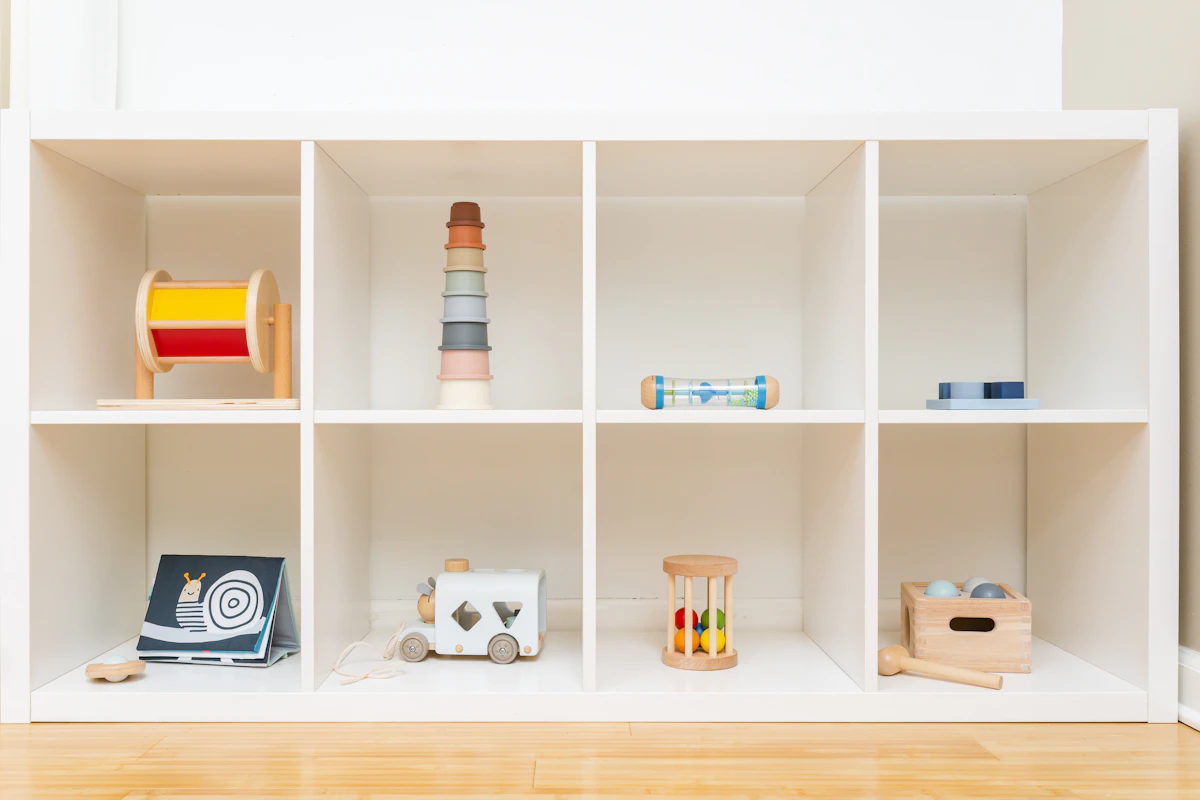
A low shelf creates a recognizable home for toys without dominating the room. Look for shallow, stable furniture with a few broad compartments instead of many tiny cubbies. Place everyday activities at a height your child can comfortably reach, and put fewer-used items in adult-managed storage. Leave breathing room around each basket so it can be lifted out without knocking everything else over. In a rental, choose a compact shelf that fits the room even after you move, but remember that furniture meant to be anchored should be secured according to its manufacturer’s instructions. Do not assume a short bookcase cannot tip. Anchor suitable units to the wall, keep heavier items low and avoid displaying tempting objects high above children.
2. Give stuffed animals one roomy basket
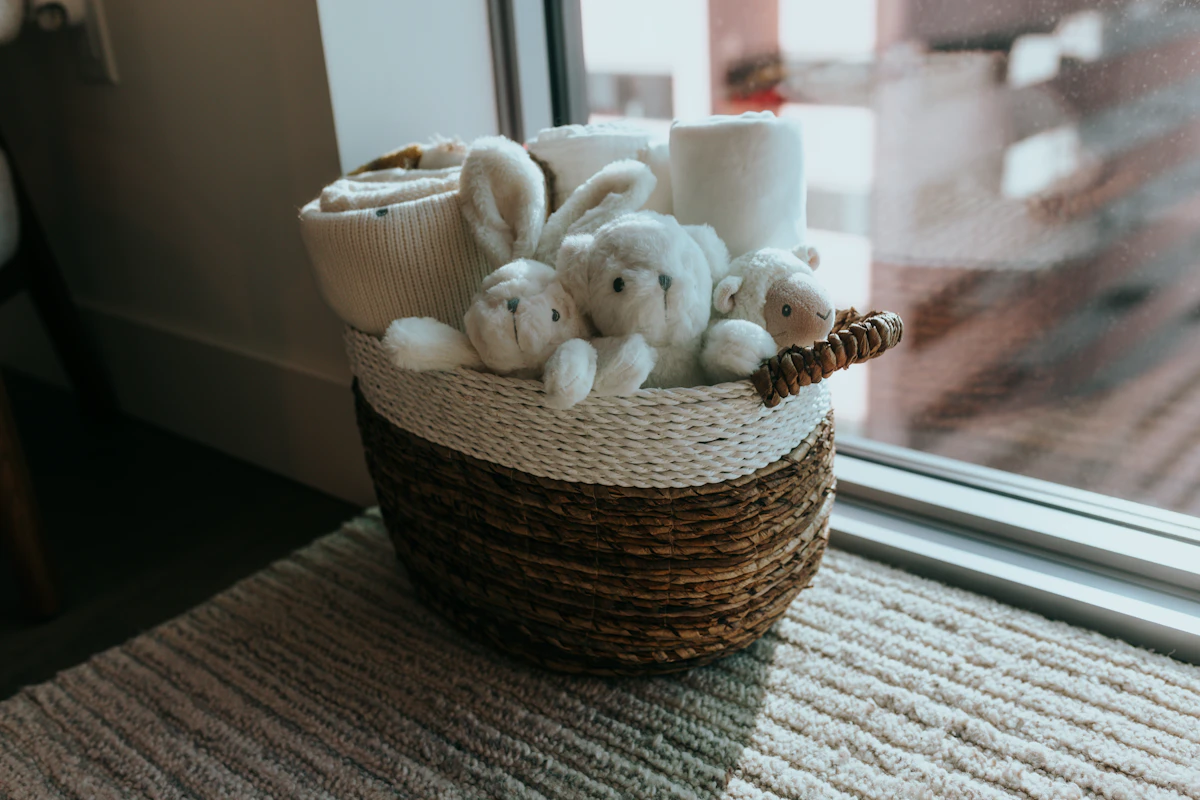
Stuffed animals expand to fill any available corner. Instead of trying to arrange every plush toy on the couch, pick one soft, open basket for the favorites currently in use. A fabric basket or flexible woven-looking bin can be easier to move than a rigid box; check for sharp edges, loose pieces and snagging handles. Set a simple rule: when the basket fills, choose which toys stay accessible and which move to a separate storage location. Skip hanging nets and overhead displays in areas used by very young children unless the product and installation are age-appropriate and positioned safely. A basket next to a reading chair doubles as a cozy invitation to play without turning the whole sofa into a toy shelf.
3. Use a closed cabinet for visual calm
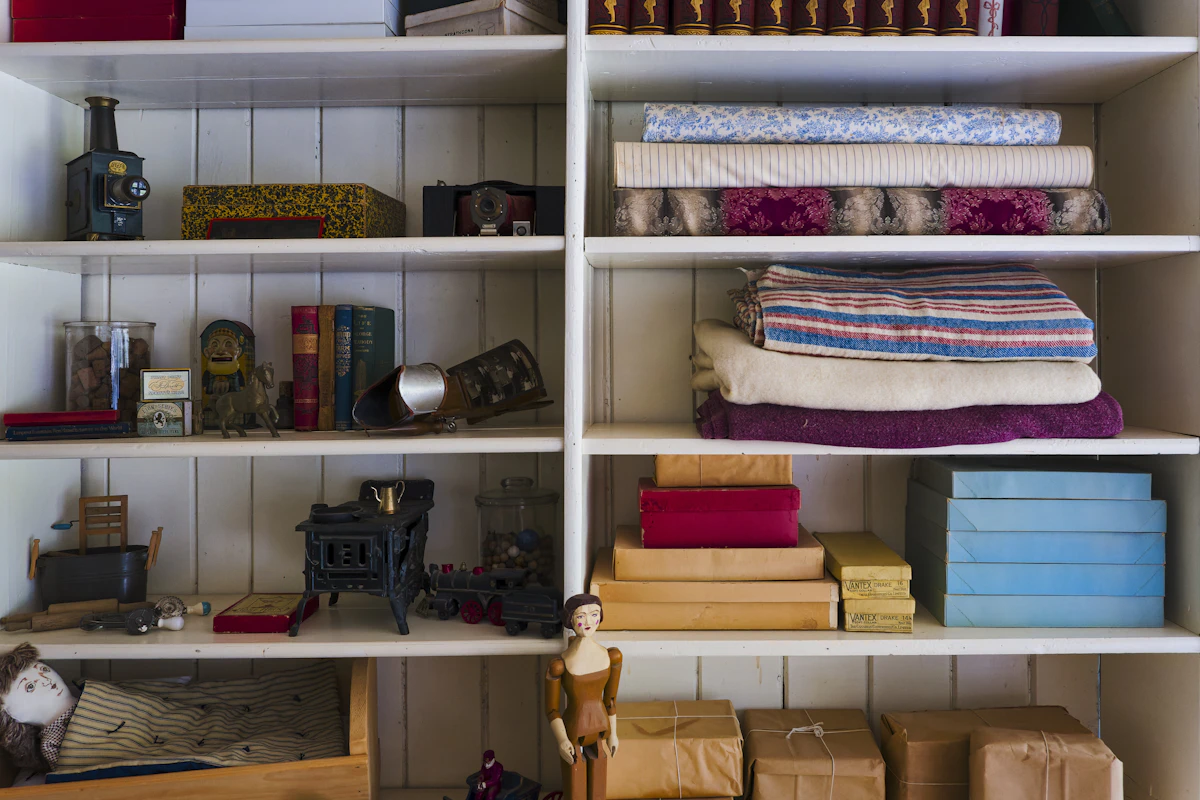
Open storage makes toys easy to find, but it also makes every toy visible. A compact cabinet with doors can help a multipurpose room feel like a living room in the evening. Inside, use one or two easy-to-remove bins rather than stacking dozens of containers. Keep the children’s daily-choice toys low and reserve higher compartments for adult-managed supplies. If buying new furniture, check that doors and hinges do not pinch little fingers, and follow the anchoring instructions. Avoid overly deep cabinets that encourage toys to be buried behind each other. An ordinary sideboard may do the job just as well as furniture labeled “playroom storage,” provided it is safe for the household.
4. Turn an empty corner into a mini play zone
A tiny corner can work harder when it has clear boundaries. Put a washable mat on the floor, set a low basket next to it and add a small shelf if space allows. The goal is not to build a second room; it is to create a recognizable zone where blocks, dolls or pretend-play items are welcome. Keep routes to doors, windows and seating open. A mat can signal the play area without installing dividers, which is especially useful in rented homes. If the furniture must be moved for guests, choose lightweight portable bins, not a heavy setup you will resent resetting every night. A designated place for play also helps everyone know where scattered toys belong.
5. Try under-sofa storage only when it is safe
Some sofas have enough clearance for flat containers holding puzzles, large building pieces or spare activity sets. Measure the gap carefully, including the height of the container handles and the sofa’s support rails. Choose bins that slide without scratching the floor, and keep anything containing small parts inaccessible to children who might put them in their mouths. Under-sofa storage works best for occasional activities, not toys children constantly ask for. Never obstruct a reclining mechanism, electrical components or ventilation around powered furniture. If the clearance is tight or you cannot see what is underneath, skip this idea rather than turning the sofa into a hard-to-clean hiding place.
6. Choose an ottoman with practical interior storage
A storage ottoman can earn its floor space twice: a place to rest your feet and a hiding spot for toys. Prioritize one with a child-safe opening mechanism, no entrapment hazard, appropriate ventilation where required by the design, and no heavy free-falling lid. A removable soft top may suit some households better than a hinged lid, but examine the actual product instructions. Store larger soft toys, dress-up fabrics or adult-supervised games inside, rather than tiny mixed pieces. Before buying, tape out the ottoman’s footprint on the floor and test whether the walking route still feels comfortable. A beautiful ottoman is not a storage win if everyone trips over it.
7. Sort toys by activity instead of by size
Many toy systems fail because categories are too specific. Try broad groups children can recognize: building, pretend play, vehicles, art, books and plush toys. Put each group in a separate, easy-to-carry container. When a child wants to build, they take out one bin and can return it to the same location. For younger children, use a picture label showing the contents. For older kids, pair words with pictures so they can help independently. Avoid assigning a separate bin to every small set; that usually creates more sorting for adults. A few clearly defined activity categories make it easier to spot what is missing and prevent duplicates from collecting unnoticed.
8. Keep picture books in a small front-facing display
Books can live in the living room without forming a leaning stack on the coffee table. A low front-facing rack helps children spot covers, while a sturdy basket beside the couch can hold a short rotating selection. Pick one main book spot and keep it within the reading area so books are returned naturally after use. Make sure any display is stable, appropriately secured, and free of climbable hazards. If floor space is precious, use an existing lower shelf rather than adding another unit. Library books can have their own clearly labeled location so they do not disappear among the permanent collection. A small selection is easier to browse than an overfilled rack.
9. Keep art supplies in a portable caddy
Crayons, paper, stickers and drawing tools can spread through a living room faster than large toys. A portable caddy gives them one address. Choose a handled container with a compartment for paper and another for age-appropriate tools. Store scissors, glue, batteries, magnets and other potentially hazardous materials where children cannot access them without supervision. Let the caddy travel to the dining table during an activity and return to a cabinet afterward. Check markers and crayons for suitability for your child’s age and follow product labeling. Avoid open cups of supplies on low tables if younger siblings can reach them. This approach turns art time into a contained activity instead of a permanent pile.
10. Make baskets match the room—not every toy
For families who want a calmer-looking space, the trick is often not buying expensive furniture but choosing consistent storage containers. Two similar baskets on the bottom of an existing bookcase look intentional, even when their contents are colorful. Select washable or wipe-clean materials that suit daily use, and avoid delicate textures that snag easily. Resist the temptation to choose tiny decorative baskets simply because they photograph well; they will not hold the real volume of toys. Measure your shelf opening and leave space above the bin for little hands. Neutral exteriors can blend into a living room, while labels inside or on the front still tell children what belongs where.
11. Try a toy rotation bin outside the living room
If children have more toys than your shared room can reasonably hold, do not solve everything with more furniture. Keep a manageable selection accessible and move the rest to a secure closet or another adult-controlled storage area. Every week or two, swap a few items according to your child’s interests. Rotation is an organizational option, not a developmental requirement, and there is no magic number of toys you must display. Keep favorites and comfort objects available. Before putting items away, check for missing parts, recalls or damage; discard or repair unsafe items according to manufacturer guidance. A rotation bin helps reduce visual clutter without pressuring families to throw away useful belongings.
12. Give puzzles and small sets a dedicated container
Missing pieces create frustration, especially when puzzles share a giant mixed-toy basket. Give each age-appropriate puzzle a labeled pouch or original box, and gather several pouches in one tray. Keep sets with small pieces secured away from babies and toddlers; an older sibling’s toy can be a choking hazard for a younger child. Avoid relying on flimsy plastic bags that can become unsafe around children. Check individual toy packaging for age guidance, and inspect pieces regularly for breakage. A single tray also makes it easier to move a puzzle to a table and put the whole activity away when finished.
13. Use a slim rolling cart for supervised activities
A narrow cart can be useful when the room has no permanent play corner. Fill it with adult-supervised art activities, games and a few books, then park it in a secure spot when finished. Choose a sturdy model with suitable brakes or wheel locks, and check the risk of tipping or children climbing it. Rolling carts are generally better for supplies an adult manages than for toddlers to pull independently. Measure doorway and furniture clearance before buying. In a particularly narrow living room, a handled basket may be safer and simpler than a cart. Mobility is useful only when the organizer remains stable and does not block the path through the home.
14. Create a simple five-minute evening reset
The most useful storage system is the one that works on tired evenings. Decide on a consistent stopping point—before dinner, before bedtime, or just before the room switches to adult use. Invite children to return one category at a time: blocks to the block bin, books to the shelf, plush toys to the basket. Use a song or a visual checklist if that suits your family, but do not make cleanup a complicated performance. For younger children, an adult will need to help. Focus first on clearing walkways and removing tripping hazards, then put back easy-to-reach items. A short reset repeated often is usually more realistic than waiting for a dramatic weekend organization project.
15. Audit your setup before buying more storage
Before ordering another basket, take ten minutes to ask what is actually causing the mess. Are there too many toys in active circulation? Are the bins too heavy or tall for your child? Do multiple categories end up in one container? Are toys stored too far from where they are used? Try moving existing furniture and adjusting categories before spending money. Take measurements of shelf widths, cabinet depths, door swings and walking routes. Plan for children’s changing interests rather than buying custom organizers for one temporary phase. When a product genuinely solves a recurring problem, buy it with a clear job in mind; otherwise, leave that space free.
How to organize toys in a living room: a practical weekend plan
Step 1: Collect everything in one place. Bring together the toys that normally end up in the living room. Check behind cushions, under tables and next to the television. Do not drag every toy from the rest of the house into the project; the goal is to understand this room’s actual storage needs. Set aside items that are broken, incomplete or potentially unsafe for later inspection.
Step 2: Decide what belongs here. Keep activities that children really use in this room. Return bedroom toys to their regular homes if that makes sense, and store seasonal or rarely used activities elsewhere. Consider the ages of all children who share the room, not just the child who owns a particular toy.
Step 3: Choose three to five broad categories. For example: pretend play, building, soft toys, books and family games. Category names should describe how your children use items. If everything ends up in the wrong bin, simplify again rather than introducing more rules.
Step 4: Match the containers to the toys. Long train tracks require a different container from stuffed animals. A good bin should be easy to carry when loaded and easy to put back. Transparent bins help adults see contents; opaque baskets can reduce visual clutter. Neither option is universally better.
Step 5: Set the room back up and test it. Sit on the sofa, walk to the doorway and imagine picking up toys while holding groceries or a baby. Does a basket block your path? Can your child return a toy without climbing? Is anything likely to tip? Make changes before calling the system finished.
The safest way to store kids’ toys in shared spaces
Organization should never introduce a new hazard. The U.S. Consumer Product Safety Commission advises anchoring furniture and televisions to prevent tip-over incidents. Follow installation instructions for shelving and cabinets, keep heavy objects low, and do not treat storage furniture as playground equipment. Check toy age labels and keep small parts from older children’s sets away from children who might mouth objects. The American Academy of Pediatrics’ HealthyChildren resources provide additional guidance about selecting toys and avoiding hazards.
Be particularly careful with storage chests and hinged lids: select products designed to avoid entrapment and lid injuries, and supervise children appropriately. Avoid storing toys near heaters, blocking exit routes, or creating climbable stacks. Always check manufacturer instructions and current product recalls before reusing secondhand storage furniture or toys.
Best toy storage options for different living-room layouts
| Living room situation | Try first | Watch for |
|---|---|---|
| One-room studio or tiny apartment | Two baskets inside an existing cabinet | Doors and walkways staying clear |
| Long, narrow living room | Shallow anchored shelving | Depth and tip-over risk |
| Living room with toddler | Low open bins with large age-appropriate toys | Small parts, sharp edges and unstable furniture |
| Shared space with older children | Activity trays and secure games cabinet | Pieces accessible to younger siblings |
| Rental with limited storage | Portable baskets and existing furniture | Safe anchoring and lease requirements |
What to measure before choosing a toy organizer
Measure the clear width of the wall, the available depth, and the usable height of any existing shelf. Add space to lift a bin out and to open doors. Check that furniture does not interfere with outlets, vents, floor registers, windows or passageways. If you are considering an ottoman, outline its footprint with painter’s tape, then walk through the room normally. If the proposed piece makes the space awkward, choose smaller storage or reduce how many toys live there.
Think about cleaning, too. A bin that is difficult to wipe down will not age well in a family room. Durable, lightweight containers are often more helpful than matching sets. If you already own a storage ottoman or narrow console, look for a way to organize its interior before adding a new piece.
Common living room toy storage mistakes
- Too many tiny categories: elaborate sorting looks good in photos but takes too long to maintain.
- Overfilling containers: a basket you must compress is hard for children to use.
- Storing daily toys too high: children may climb to reach favorites.
- Buying before measuring: a deep shelf can make a small living room feel cramped.
- Ignoring other rooms: a renter-friendly organizing strategy can free up space throughout the home without creating a new furniture problem.
Frequently asked questions
How do you hide toys in a small living room?
Use existing cabinets, a safe storage ottoman or matching opaque baskets on low shelves. Keep one small selection available and put rarely used toys elsewhere. Concealing clutter works better when every toy also has a defined home.
What is the best toy storage for a living room without a playroom?
For many homes, a low anchored shelf plus two or three baskets is enough. Choose according to the number and age of children, the room’s walking routes and whether children can independently return items.
How can I store toys without buying furniture?
Reuse an existing lower cabinet shelf, designate one sturdy basket, sort toys into fewer categories and rotate some activities out of the room. New furniture should be the last step, not the first.
Are toy chests safe for toddlers?
Safety depends on the chest’s design, the lid, ventilation, the child’s age and how it is used. Heavy freely closing lids and entrapment hazards need special attention. Follow current safety guidance and manufacturer instructions, and consider open soft-sided baskets for frequently used toddler toys.
How often should I rotate toys?
There is no required schedule. Rotate when the visible selection becomes overwhelming or children seem interested in other stored activities. Keep comfort items accessible and inspect stored toys for safety before bringing them back.
A calmer living room begins with one easy change
You do not need picture-perfect shelves to make a family room functional. The best living room toy storage ideas fit your real floor plan, make cleanup obvious and let children enjoy their belongings. Choose one toy basket or one low shelf today, try it for a week, and refine it based on what your household actually does. For more ways to keep a compact home functional, explore our guide to smart storage solutions for small apartments.
Photo credits: Carrie Allen, Nathan Dumlao and Eric Prouzet via Unsplash. Images illustrate storage approaches; always evaluate your own furniture and products for safety.