15 Small Living Room Layout Ideas With a TV and Sofa
Explore 15 small living room layouts with a TV and sofa, including narrow rooms, corner TVs, sectionals and practical apartment arrangements.

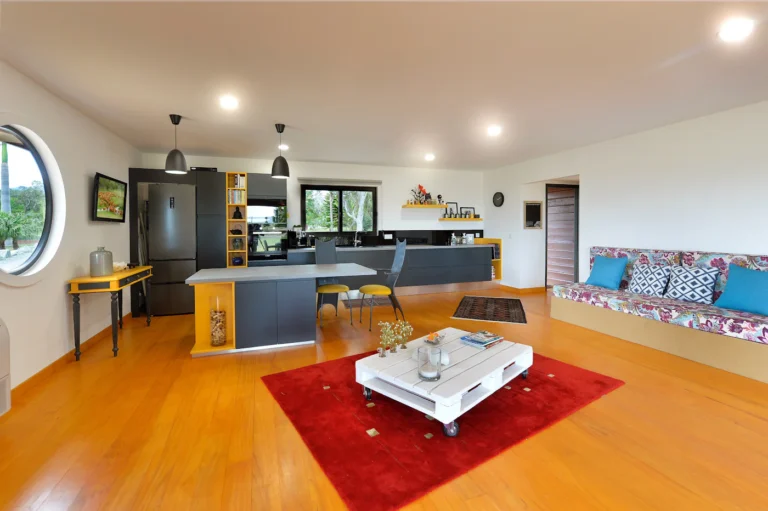
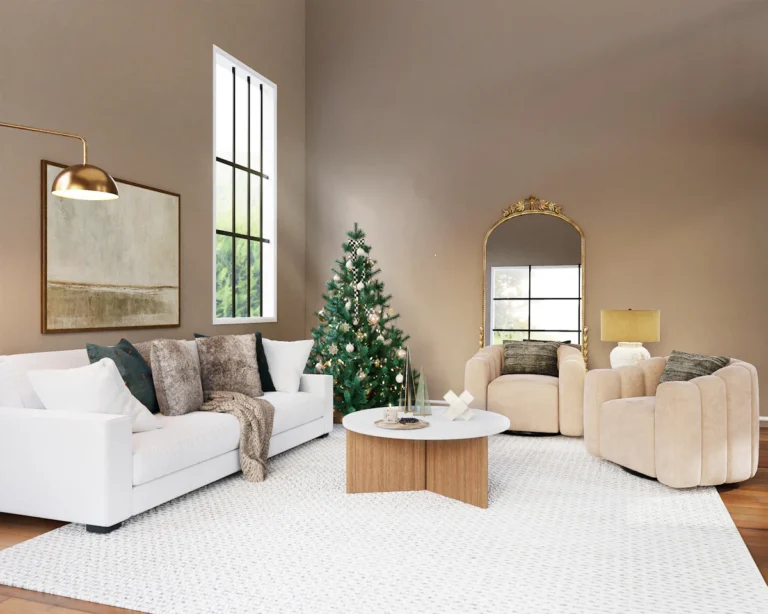
Small living room layout with TV and sofa arrangements are often tricky because a compact room needs to support more than screen time. A door may interrupt the ideal television wall, a big window creates reflections, and even a modest coffee table can eat into the main walkway. The solution is usually thoughtful furniture positioning rather than buying a whole new set.
Below are 15 practical ways to arrange the screen and sofa in a compact apartment, from long and narrow floor plans to square rooms, studio layouts and awkward corners. Each idea explains when it works, what to measure and what to avoid. Use the examples as a starting point rather than exact rules: your door swings, existing furniture, light and household routines should determine the result.
15 small living room layouts with a TV and sofa
1. Face the sofa toward the shortest usable wall
A narrow rectangular room often works with the TV on the short wall and a compact sofa opposite. Measure first: doors, radiators and windows may make that wall unsuitable. Test daylight reflections and ensure the console does not project into the walkway. Use painter’s tape to mark furniture dimensions. If the room feels like a corridor, leave one side clear for movement rather than lining both sides with extra seats. A low TV unit can help visually, but it must be stable and secured appropriately.
2. Float the sofa to define an open-plan space
In a studio, the back of a sofa can mark the boundary between the lounge and dining zone. Position it so the main route passes comfortably behind it and the TV stays visible from normal sitting positions. A narrow table behind the sofa may add useful surface area, but skip it when clearance is tight. Try the layout before buying furniture: move existing pieces, mark their footprints and walk through the room several times to see whether it feels natural.
3. Try a sofa with one perpendicular armchair
A square room can support a sofa facing the television and a lightweight chair placed at ninety degrees. The second seat supports conversation rather than creating a strict mini theater. Pick furniture with open legs or compact proportions to make the floor feel less crowded. Avoid positioning the chair where it interferes with a door or blocks the view. A movable chair also offers flexibility when guests visit or when the room is used for reading and family activities.
4. Put a TV in the corner only when the walls demand it
Corner TVs can solve awkward door and window placement. A corner-friendly stand or appropriately installed swivel mount may angle the screen toward the main sofa, but remember that corners can waste space behind a large cabinet. Check the wall material and bracket rating before mounting. Mark the entire setup on the floor, not just the width of the screen. Sit on the sofa to check the angle before deciding that the corner really is the best spot.
5. Choose a shallow TV console
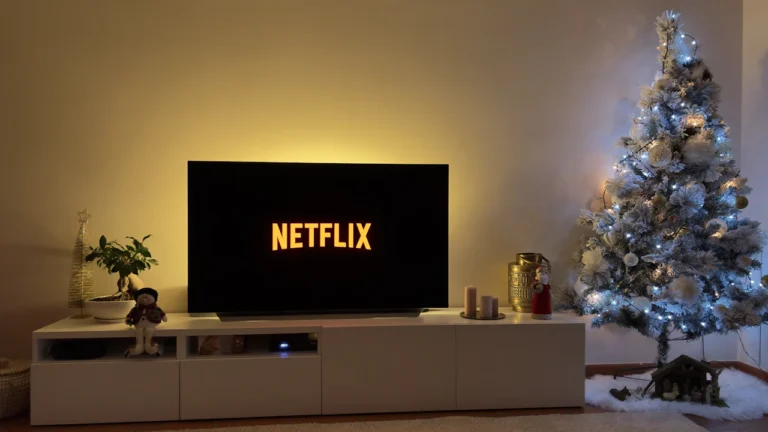
A low media cabinet with a modest depth can hold equipment and hide remotes without swallowing a tight room. Measure your devices and ventilation requirements: a cabinet that is too shallow may not accommodate cables or cooling. Closed drawers help limit visual clutter, while open compartments suit equipment that needs airflow. Avoid overloaded shelving or top-heavy furniture. Anchor the television and stand using the manufacturer’s recommended methods, especially in a home with small children.
6. Position the screen perpendicular to a bright window
Glare matters more than strict decorative symmetry. If the only available sofa position faces a bright window behind the screen, test an adjacent wall instead. A screen perpendicular to the window can sometimes reduce reflections while preserving daylight. Check at several times of day before moving furniture permanently. Curtains or blinds can help, but they should not be your only solution when the basic furniture layout makes ordinary daytime use frustrating.

7. Use a wall-mounted screen with safe cable management
A mounted television frees the top of a media console, but it requires suitable wall construction, approved hardware, correct fasteners and appropriate installation. Check lease restrictions for rented apartments. A wall-mount does not automatically eliminate the need for storage; a slim cabinet underneath can hide equipment and accessories. Never run extension cords under rugs or across entrances, and keep loose power leads away from toddlers. When mounting is not feasible, choose a stable anchored stand.
8. Fit a compact sectional without blocking circulation
A modest sectional may offer more useful seating than a full sofa and separate chairs, but its chaise must not extend into the main route. Lay tape on the floor to test its exact size, including the extended chaise. Reversible-chaise designs can be helpful for renters whose next home may have a different configuration. Check how furniture will enter the home, too. A piece that fits on the plan but not through the doorway is not a practical choice.
9. Replace a big coffee table with nesting tables
Large coffee tables occupy the space families need to move between the sofa and screen. Two nesting tables or a small round table can provide a surface for drinks while leaving flexible floor area. Choose stable pieces with edges suitable for your household. Tables that tuck together are useful when children want to play on the rug or guests require an extra seat. The goal is not to eliminate tables automatically, but to avoid buying a larger one than daily use requires.
10. Offset the TV to match actual seating
A centered television looks orderly in photographs, but real rooms often have off-center doors and windows. Position the screen where the primary viewers can sit comfortably without repeatedly rotating their necks. Check the sightline from each common seat. A modest asymmetrical layout can feel more natural than forcing a perfectly centered cabinet into an awkward wall. Keep any decorative balancing objects modest and safely secured rather than surrounding the television with unstable towers of accessories.
11. Add a reading chair near the window
A television-centered room can still support another activity. If there is a clear corner, put a compact reading chair and task lamp near natural light, with the main sofa facing the screen. Keep the route to the window and curtains open. If there is not enough floor area for an armchair, a comfortable movable cushion or pouf may be a more realistic secondary seat. The best small-space layout serves multiple routines instead of existing solely for watching shows.
12. Keep remotes and consoles in one zone
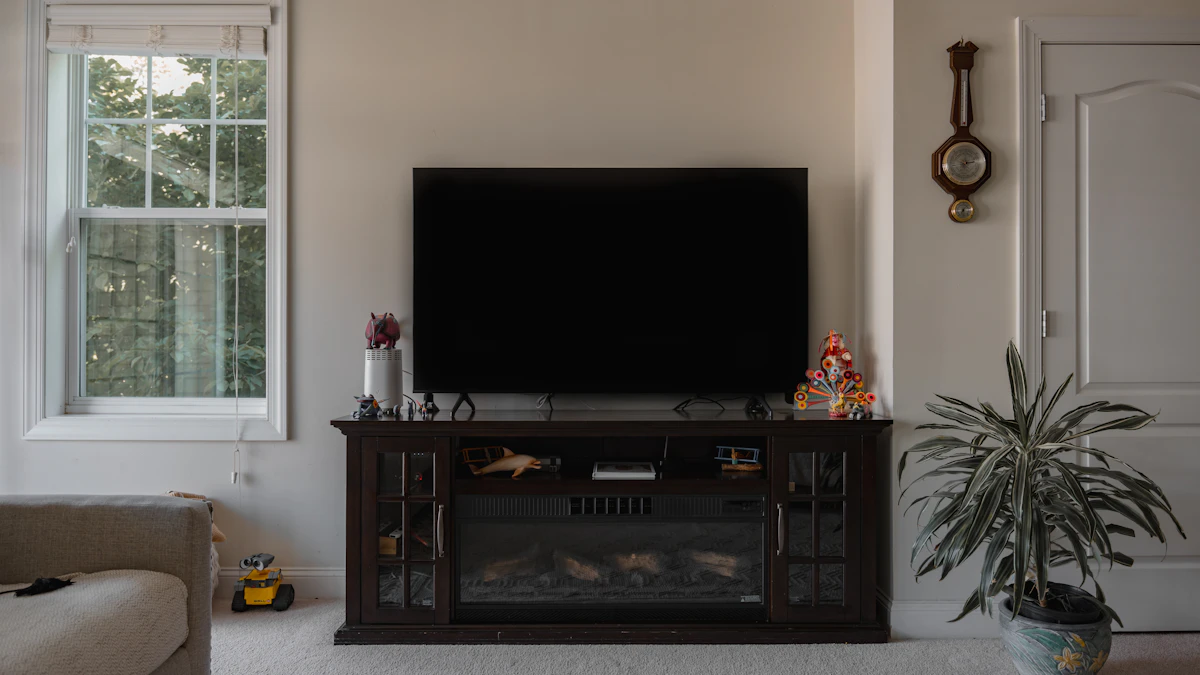
Media clutter can undermine an otherwise successful layout. Gather controllers, cables, chargers and remotes in one cabinet or designated drawer. Check that equipment can ventilate as recommended and avoid overloading sockets. Keep button batteries and small detachable components inaccessible to young children. Use labels on cables when there are several devices, and arrange wires so they do not cross paths or become trip hazards. Simple storage is easier to sustain than an elaborate hidden cable system.
13. Use vertical storage carefully
Shallow shelves around the TV may hold books or decor, but excessive shelving can make a small living room feel busy. Add only what is necessary and install shelves using appropriate fixings for the wall. Heavy objects should be kept low, and furniture should not invite children to climb. In a rental where wall drilling is restricted, a correctly anchored freestanding cabinet can be a practical alternative. Empty wall space helps the layout feel calmer and should not be treated as something that must be filled.
14. Divide a studio without building a wall
An open apartment can be zoned with a sofa, a rug and the placement of a compact television rather than physical partitions. Face the main sofa toward the screen and use its back to distinguish the lounge from a dining or sleeping area. Avoid obstructing the shortest practical path to the entry, bathroom or kitchen. A flexible side table can move between zones. This method works best when furniture earns its place through daily use rather than simply making the floor plan appear symmetrical.
15. Keep part of the floor free for everyday life
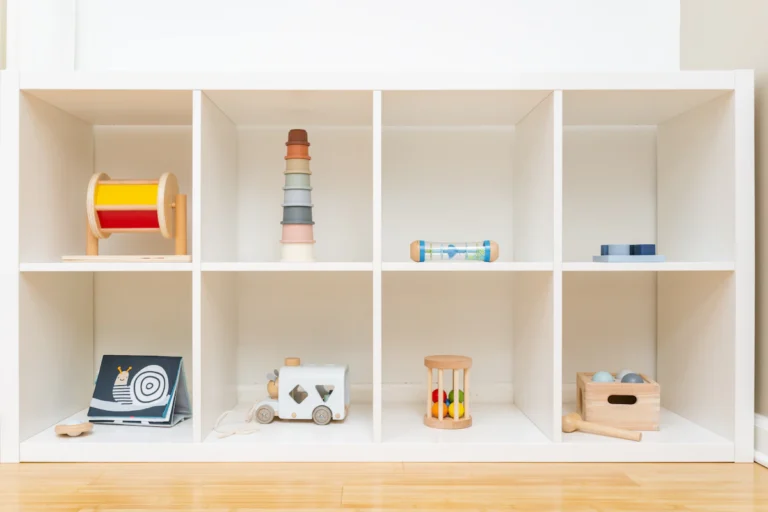
A living room is more than a TV viewing area. Families may need room for toys, stretching, folding laundry or hosting friends. Rather than furnishing every corner, preserve one clear area that supports changing activities. A storage ottoman, portable table or accessible basket may serve better than another fixed cabinet. If children share the space, see our living room toy storage guide for practical ways to keep playthings contained.
How to plan your TV and sofa layout step by step
Step 1: Measure the usable space
Start with the width and depth of the living room, then mark windows, doors, electrical outlets, floor registers and any radiators. Measure the actual sofa depth, including cushions, and the complete width of any TV unit. Leave space for opening drawers or cabinet doors. It is easy to focus on floor dimensions and overlook the way people move through the room. Record those pathways before deciding where furniture belongs.
Step 2: Choose the main walking route
Trace how someone walks from the entry to the sofa and onward to other rooms. Avoid creating pinch points with armchairs, tables or cabinet corners. There is no universal clearance that suits all households: a home with mobility aids, a stroller or several people moving around may require more space than a tiny studio occupied by one adult. Test routes with existing furniture or taped outlines.
Step 3: Test the television wall
Think about glare, sockets, cable routes, comfortable sightlines and the safe placement of the television. Try sitting where the sofa will go and looking toward a temporary marker at the intended screen position. Make sure the proposed unit does not block a window, a door swing or equipment that needs ventilation. If you intend to mount the TV, first verify the wall construction and the hardware’s compatibility with the television.
Step 4: Find the right sofa position
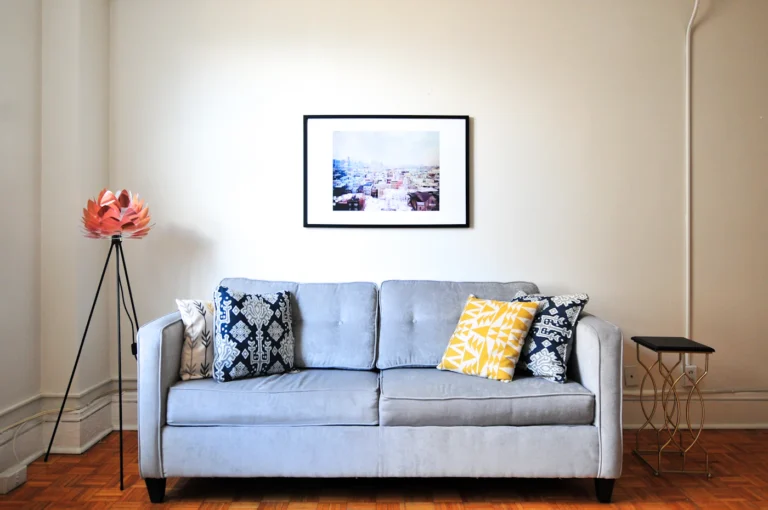
Move the sofa before buying an entirely new one. Test whether it works flat against the wall, partially floated or angled toward a corner screen. Keep the longest uninterrupted walking route usable. A deeper sofa may require a smaller coffee table. A modular or reversible-chaise piece offers flexibility, but make sure its configuration does not create a tripping obstacle.
Step 5: Add only storage you really need
After the major pieces are located, consider whether you need drawers for remotes, a basket for blankets or a home for game controllers. A single practical cabinet may look calmer than several small storage pieces. For more detailed advice, read our small living room storage ideas.
Best layouts for different room shapes
| Room shape | Layout to try | Main consideration |
|---|---|---|
| Long narrow rectangle | TV on usable short wall, sofa opposite | Side passage and viewing distance |
| Almost square | TV and sofa facing, one side chair | Door swings and sightlines |
| Open-plan studio | Float sofa to create a lounge zone | Keep routes behind sofa open |
| Many doorways | Offset TV or carefully selected corner | Avoid blocking access |
| Room with bright windows | TV perpendicular to window | Check reflections at several hours |
| Family living room | Low secured media unit and flexible floor | TV tip-over and toy safety |
How high should a TV be in a small living room?
Seated eye level is a useful starting point for the screen’s middle, but comfort depends on the height of the sofa, display size and usual viewing posture. Before drilling holes, sit naturally and imagine watching for an hour. If you must look upward for a long time, the proposed position may be uncomfortable. Mounting over a fireplace requires extra attention to heat and manufacturer installation guidance. A low, securely positioned television is often simpler than a high dramatic feature wall.
How far should the sofa sit from the television?
There is no universally perfect distance. TV size, resolution, eyesight and preference all affect the experience. Consult the television maker’s guidelines, then test actual programs and subtitles from the intended sofa position. If you feel the need to scan the screen with your head, or if text is difficult to read, adjust the arrangement. Do not sacrifice a safe route to a doorway merely to meet an online formula. Comfort and clear access are more important than a number.
Safety before style: TV mounts and furniture
The U.S. Consumer Product Safety Commission recommends securing televisions and furniture to prevent dangerous tip-overs. Use appropriate anchoring devices, check weight limits and follow the manufacturer’s instructions. Verify that the wall can take the intended mounting hardware; consult a qualified installer where needed. In a rental, confirm permission before drilling. Never leave cables where children can pull them or people can trip, and keep potentially hazardous batteries out of reach.
Common mistakes to avoid
- Buying furniture before measuring: even a stylish console is a poor choice if it blocks circulation.
- Ignoring reflections: test bright daylight before committing to a television wall.
- Centering everything automatically: a slight offset may improve everyday comfort.
- Using too many small pieces: tables, stools and shelves can eat up the free floor area.
- Blocking air circulation: electronic equipment needs the clearance its maker specifies.
- Leaving TV furniture unsecured: anchoring and safe installation matter more than appearance.
Frequently asked questions
Where should I put the TV in a small living room?
Choose a clear wall that supports comfortable seating, safe installation and a practical cable route. A short wall is a useful starting point for narrow rooms, but a side wall may work better if it has less glare.
Should my sofa face the TV directly?
A direct view is often most comfortable for regular television watching, but slight offsets can work. Test your head and neck position from the seat you actually use.
Can I put a TV in the corner?
Yes, if the corner can accommodate a stable stand or appropriately installed mount without projecting into a walkway. Check the viewing angle and the actual depth.
Is wall mounting best for a small apartment?
Not necessarily. It can free up console space but requires proper construction and permission where applicable. A secure, shallow stand may be simpler and safer.
What furniture helps a narrow living room?
A compact sofa, shallow media cabinet and movable side tables often preserve more usable space than bulky matching sets. Prioritize a clear route over extra decorative furniture.
How can I fit toys into a TV-focused living room?
Reserve one low safe storage area, use two or three broad toy categories, and avoid building storage into the main path. Our toy storage guide offers options for shared family spaces.
Make the space work for life beyond the screen
The best small living room layout with TV and sofa is comfortable, easy to navigate and adaptable when you are not watching television. Preserve daylight, avoid oversized pieces and keep storage focused on what your household actually uses. Move one item at a time, live with the arrangement for a few days and refine it before spending money. For more compact-home strategies, visit our small-apartment storage guide.