
Double Closet Space in a Small Bedroom: 9 Practical Ways
Double usable closet space in a small bedroom with two-level hanging, slim hangers, shelf bins, better shoe storage, and an access-first closet layout.
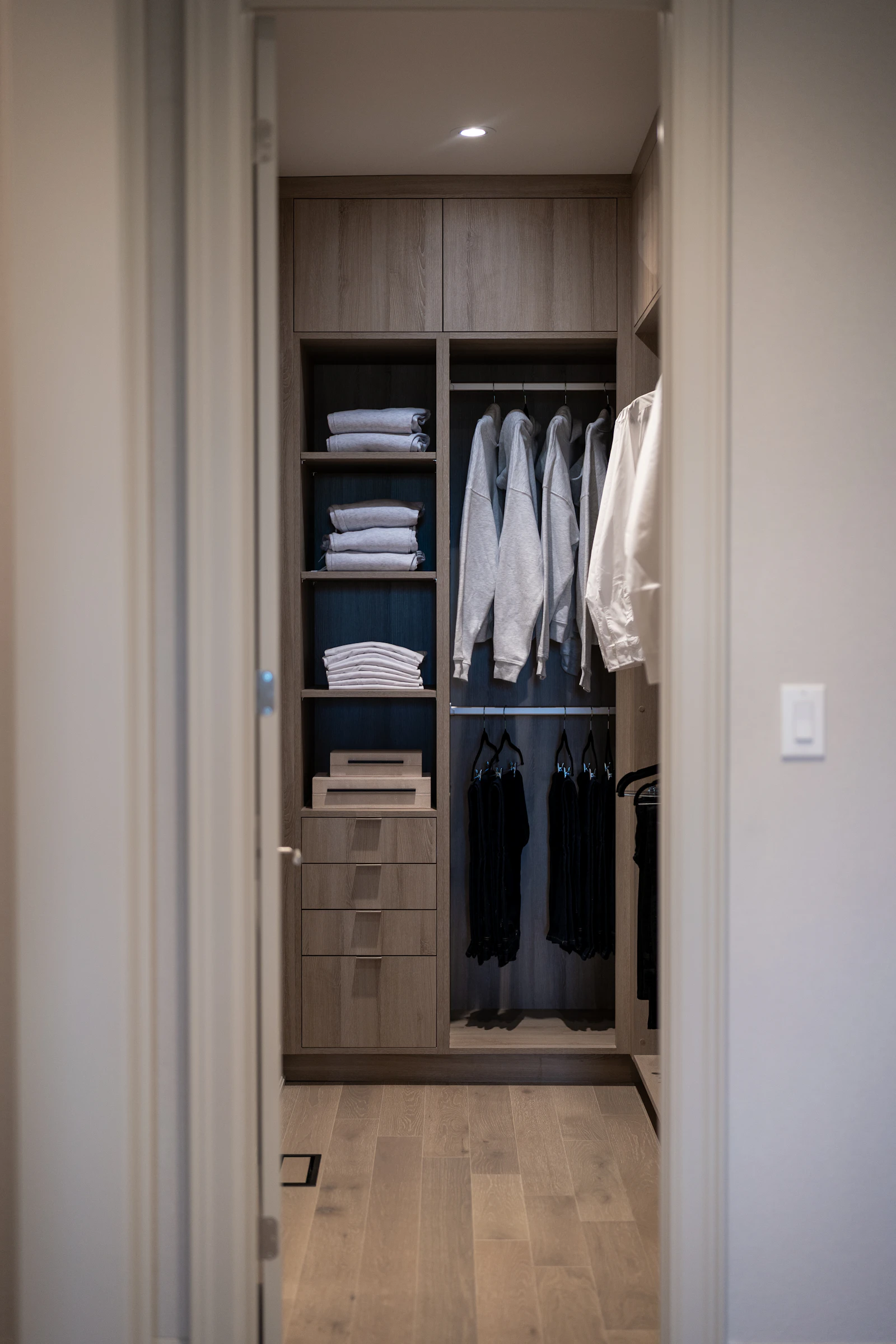
A small closet usually has more unused vertical space than unused width. The most effective upgrades therefore reorganize the space above and below the main rail rather than simply squeezing more clothes onto it.
Double Closet Space: First, Measure the Closet
Record the usable interior width, depth, top-shelf height, rail height, and the longest garment you regularly hang. A standard adult hanger often needs roughly 45–50 cm (18–20 in) of depth, so shallow closets may need angled or front-facing solutions instead.
1. Replace Bulky Hangers Where It Actually Helps
Slim hangers can free horizontal rail space, especially when a closet contains many shirts and lightweight garments. They will not literally double every closet, and they are less suitable for heavy coats or structured jackets that benefit from wider support.
2. Add a Second Rail for Short Garments
Double hanging is one of the highest-impact changes when most of your wardrobe consists of shirts, skirts, trousers folded over hangers, or short jackets. Before installing a lower rail, hang your longest short garment and leave several centimetres of clearance below it.
Decision rule: use double hanging on one side and keep a full-height section for dresses, coats, or long garments.
3. Use Cascading Hangers Selectively
Cascading connectors save rail width but create a dense vertical stack. They work best for lightweight items you do not need every day. If you constantly remove the top garment to reach one below, the system is too compressed for your routine.
4. Turn the Top Shelf Into Labeled Categories
Use bins for categories such as seasonal knitwear, travel items, handbags, or spare linens. Measure shelf depth and height first; oversized baskets waste space and can be difficult to lift safely. Keep heavier boxes lower.
5. Add Hanging Shelves for Folded Knitwear
Fabric cubbies can be useful when you have rail space but little shelving. They are best for sweaters, jeans, and soft accessories. Avoid overloading them with dense, heavy items because fabric shelves can sag.
6. Store Shoes Vertically Only When It Improves Access
Stackable shoe boxes, a narrow floor rack, or an over-door organizer can all work. Choose based on your shoe count and door clearance. Keep everyday pairs at hand and move off-season boots or formal shoes to higher or under-bed storage. If shoes tend to migrate toward the front door, a simple entryway drop zone can keep daily pairs out of the bedroom altogether.
A Better Definition of “Double Your Closet Space”
You may not literally double the physical volume of the closet. The real goal is to increase usable access: fewer dead zones, less stacking, and less time moving one item to reach another. A closet that holds 20% more but is difficult to use is not an improvement.
Quick Layout Example
- Left 60%: two rails for shirts and trousers.
- Right 40%: one full-height rail for long garments.
- Top shelf: 3–4 labeled seasonal bins.
- Floor: one low shoe rack, leaving the centre easy to clean.
Do a 10-Minute Closet Audit Before Buying Organizers
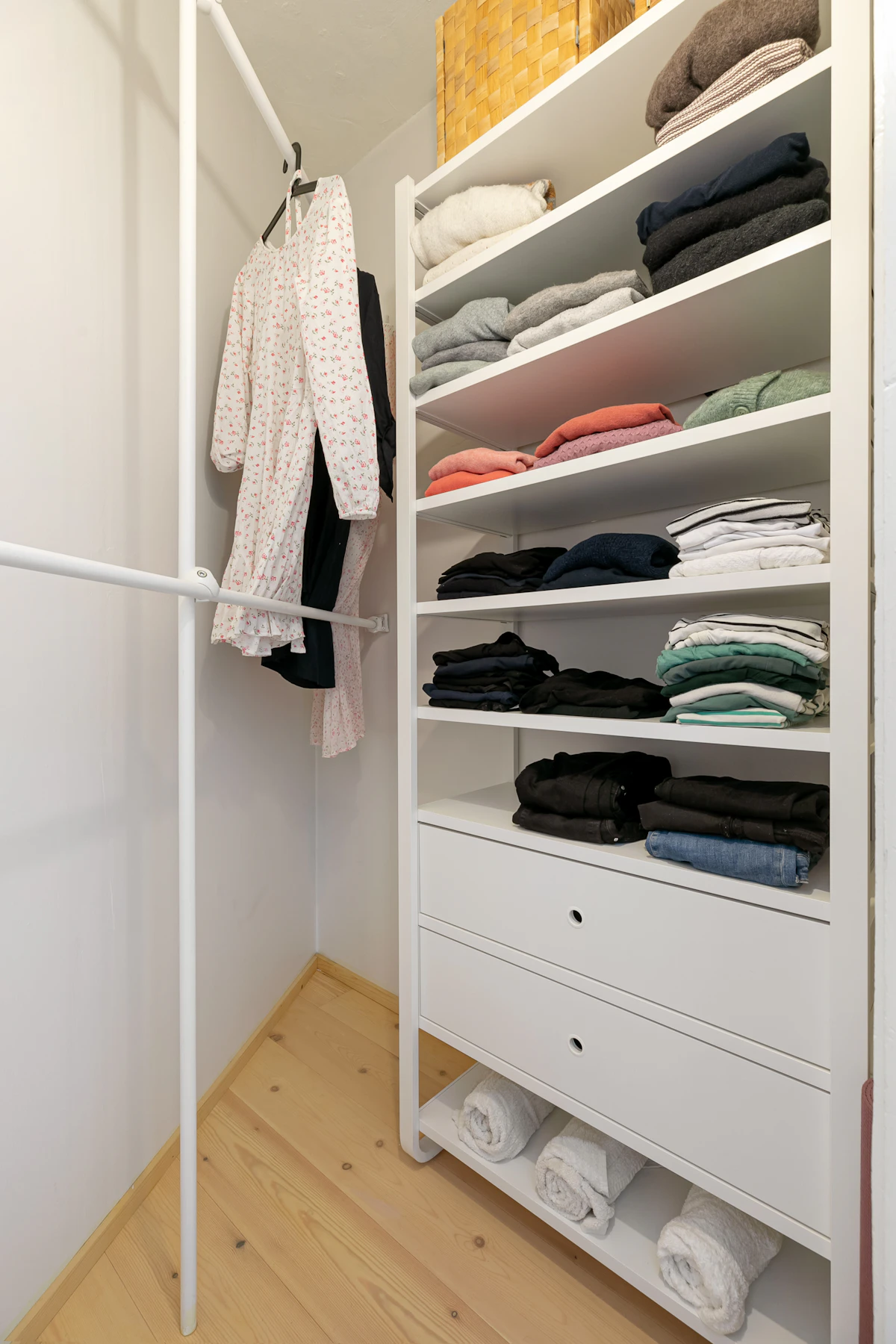
Take everything off the floor and top shelf, then separate the hanging rail into short garments and long garments. That quick audit tells you whether double hanging, shelf bins, or a shoe rack will make the biggest difference. It also reveals categories that are occupying prime space despite being rarely worn.
Plan Capacity by Garment Type
| Garment type | Best zone | Useful rule |
|---|---|---|
| Shirts/blouses | Upper or lower short-hang rail | Group together so rail height can be optimized |
| Trousers/skirts | Short-hang rail or drawers | Use the method that keeps them easiest to see |
| Dresses/coats | Full-height section | Do not sacrifice all full-height space for a second rail |
| Knitwear | Shelves or drawers | Fold rather than hang pieces that may stretch |
Closet Mistakes That Reduce Usable Space
- Overpacking the rail: if hangers are compressed so tightly that clothes are difficult to remove, the closet has exceeded practical capacity.
- Using identical bins for everything: large bins can hide small categories and create unnecessary searching.
- Keeping the floor full: crowded floor storage makes cleaning difficult and often blocks access to hanging clothes.
- Putting daily items on the top shelf: prime storage should match frequency of use, not just where an item physically fits.
- Ignoring the bedroom around the closet: seasonal categories may work better in under-bed storage than inside the closet.
Strongest Takeaway
Start by separating short hanging items from long ones. If you are reorganizing for colder weather, use our fall closet organization guide to decide what should stay active and what can move to seasonal storage. That single decision tells you whether double hanging will actually help. If you have no built-in closet at all, see our bedroom-without-a-closet guide. For more whole-home ideas, read smart storage for small apartments.
Image source: Unsplash, used under the Unsplash License.