
7 Practical Ways to Keep Laundry Supplies Secure in Apartments
Choose safe, practical places to store detergent and laundry tools in apartments with in-unit machines, shared laundry rooms, or no dedicated laundry space.
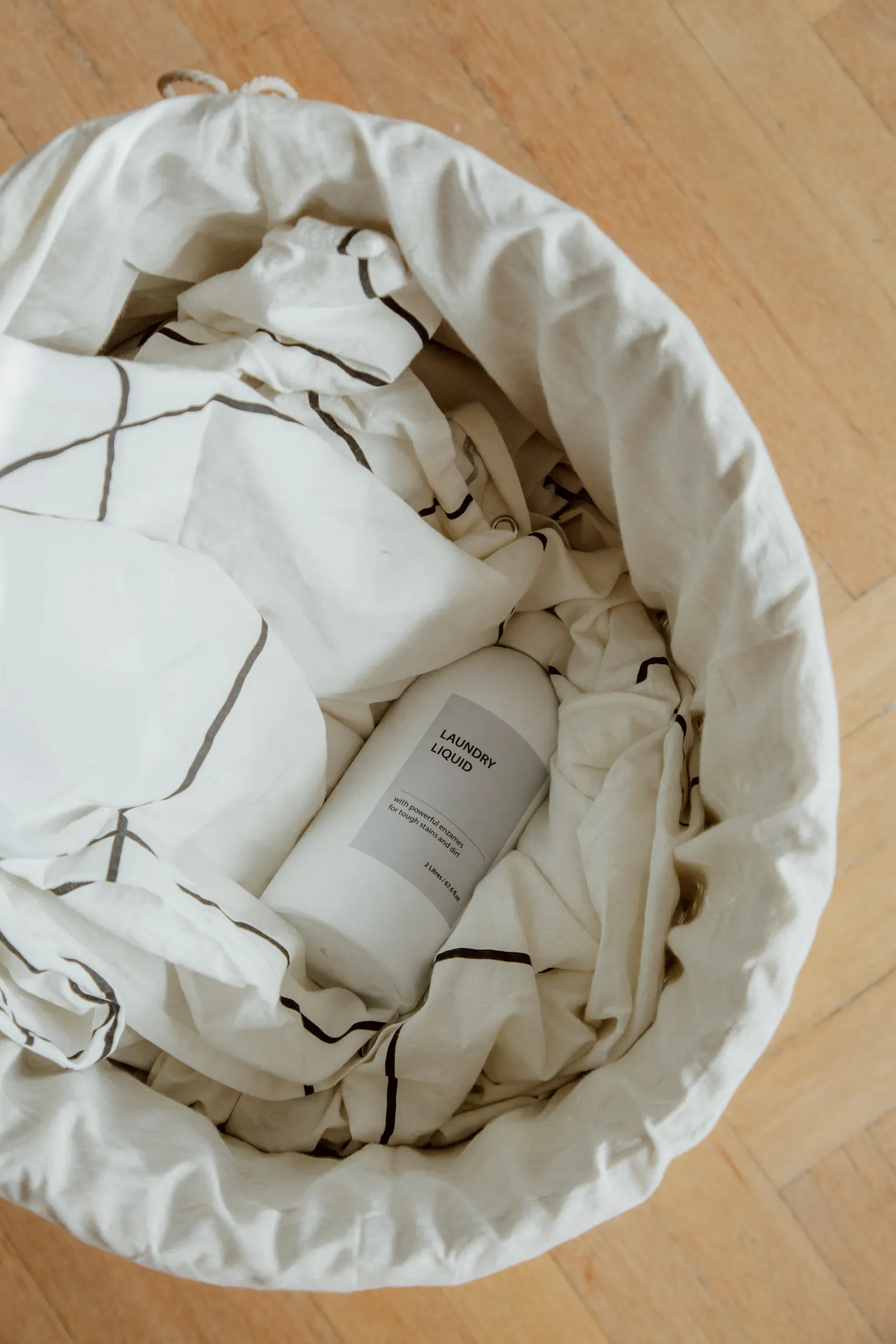
When deciding where to store laundry supplies in a small apartment, choose a secure, dry location close to the laundry routine but inaccessible to children and pets. Keep the current detergent in its original labeled container, group small tools in a handled caddy, and store bulky backstock separately. With in-unit laundry, use an adult-reach shelf or removable cart that does not block connections. For shared laundry rooms or laundromats, keep a compact kit inside the apartment and carry only what you need for the trip.
When an apartment has no dedicated laundry room, the best storage location may be a hall closet, utility shelf, or secured cabinet in another room. Proximity matters, but safety, humidity, leak risk, and portability matter more. This guide helps you decide what belongs near the washer, what should live elsewhere, and how to keep a shared-laundry kit simple.
Use five rules to decide where to store laundry supplies
1. Frequency: keep the current product easier to reach than refills
The bottle, box, or packet container used for each load should have the simplest safe location. Extra detergent, specialty products, and unopened refills can live farther away. Separating active products from backstock prevents a tiny laundry area from becoming bulk storage.
2. Safety: make access appropriate for the household
Laundry detergent is not a decorative item, and single-load packets are particularly important to secure. The U.S. Consumer Product Safety Commission advises keeping liquid laundry packets out of a child’s sight and reach and keeping containers closed. A high shelf is not enough if a child can climb nearby furniture; use storage that suits the people and pets in the home.
3. Moisture: choose a dry, stable location
Powders can clump and cardboard packaging can weaken in a damp bathroom or near a leaking utility connection. Store products as their labels direct, keep containers closed, and avoid a shelf where shower steam or condensation routinely collects. If a location feels damp or shows staining, address the moisture problem rather than putting a bin over it.
4. Portability: match the container to the trip
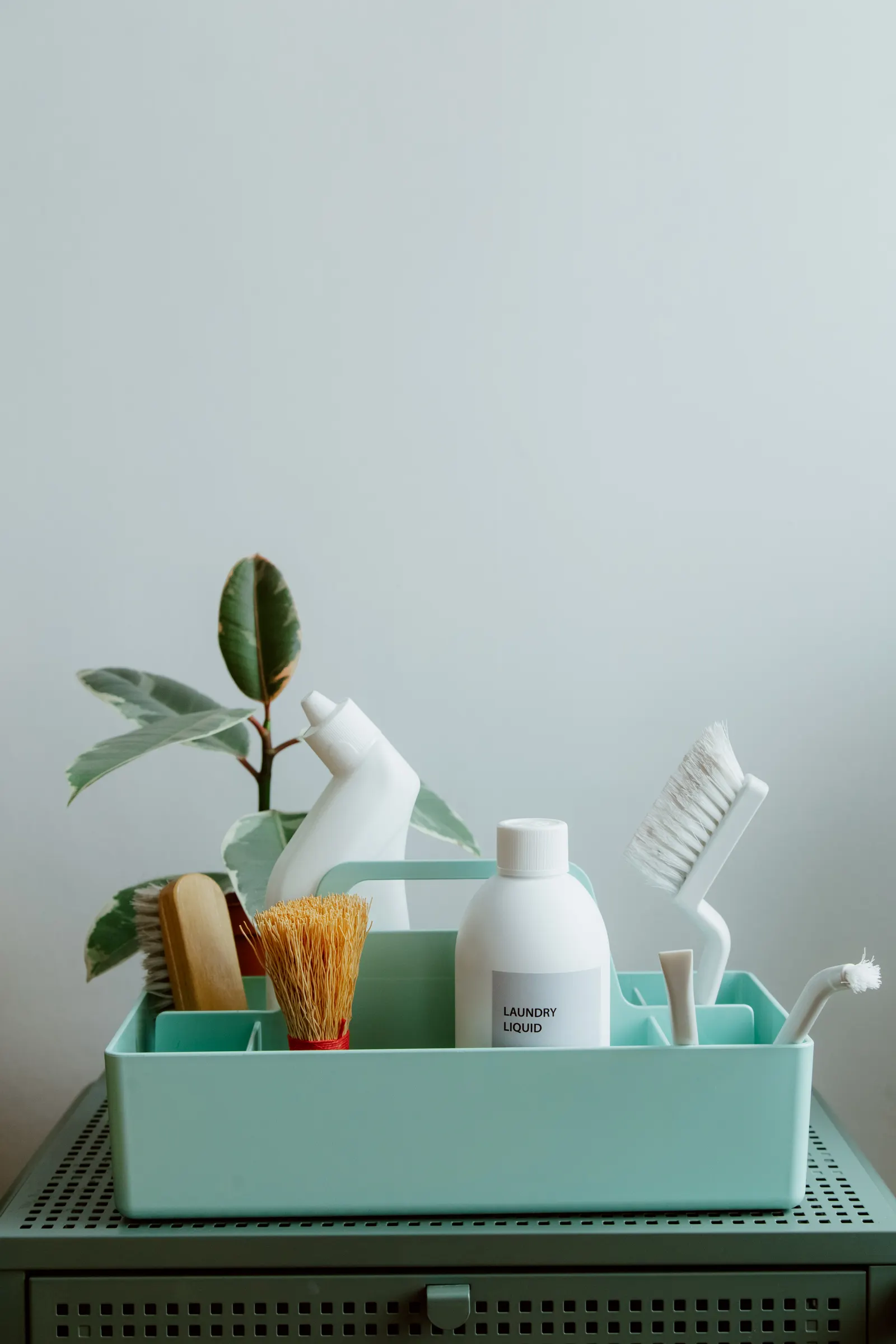
For shared machines, a handled caddy or zippered tote should carry detergent, stain treatment, dryer sheets or balls if used, and a small mesh bag. It should fit inside the laundry basket or sit securely on top. The best kit is light enough to carry while one hand remains free for doors or railings.
5. Separation: keep laundry products away from food and medications
A kitchen may have the only available cabinet, but avoid placing laundry chemicals beside food, dishes, or anything that could be mistaken for a consumable. A hall or utility closet is usually a clearer category match. If the kitchen is the only secure option, use a dedicated contained zone separated from food and follow every product label.
Compare laundry supply storage locations in a small apartment
| Location | Best use | Advantages | Watch for | Best for |
|---|---|---|---|---|
| Adult-reach shelf near washer | Current detergent and stain care | Convenient; products stay visible | Child access, spills, blocked ventilation | In-unit laundry |
| Narrow removable cart | Daily products and small tools | Moves for service and cleaning | Hoses, valves, door swing, stability | Closets with a real side gap |
| Secured hall or utility closet | Active kit plus backstock | Dry, separate, adaptable | Keep away from linens if leaks are possible | Shared laundry or no laundry room |
| Bathroom cabinet | Small active kit only | Often near dirty-clothes storage | Humidity, leaks, medicines, child access | Only when dry and secure |
| Bedroom wardrobe shelf | Portable kit in a contained bin | Useful when other storage is limited | Keep chemicals separate from clothing and out of reach | Laundromat users |
| Entry closet | Grab-and-go laundry tote | Convenient for leaving the apartment | Do not mix with food bags or crowd exits | Shared laundry or laundromat |
Store supplies around in-unit laundry without blocking the machines
With an in-unit laundry closet, keep the active products where an adult can reach them without leaning across the machine. A shallow wall shelf, small side cart, or handled bin on an existing shelf can work. Test appliance doors, detergent drawers, lint filters, and the closet door before committing to the location.
Leave water shutoffs, drains, electrical connections, gas connections if present, and dryer venting accessible. Do not pack supplies behind the machines or wedge bottles into the utility side gap. That hidden space needs to stay visible enough to notice a leak and open enough for service.
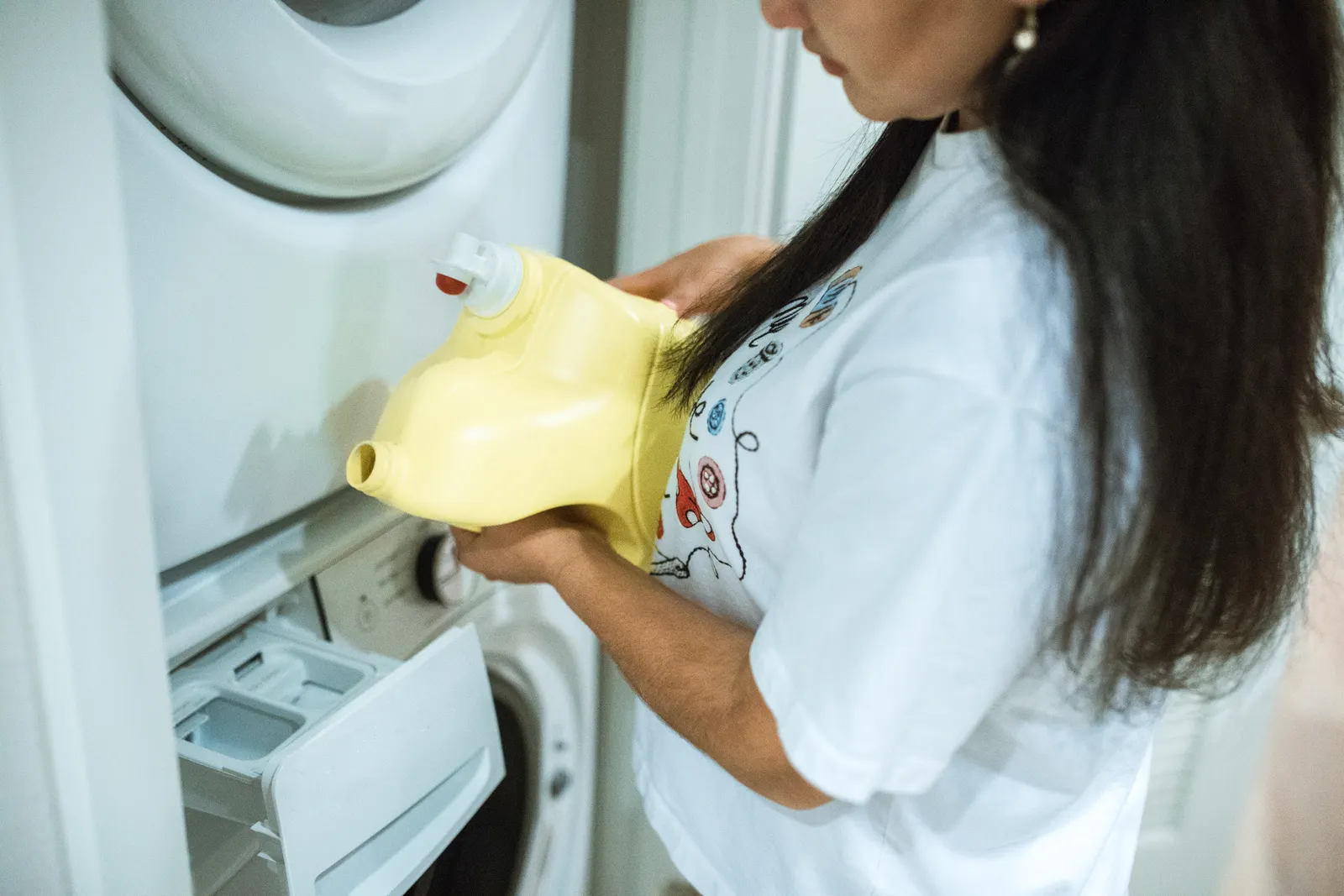
For a stacked washer and dryer
Put daily supplies beside the lower washer rather than above the dryer whenever the layout allows. The area over a stacked pair is often too high for a heavy bottle and may have model-specific clearance or ventilation requirements. The detailed guide to organizing a small laundry closet with stacked machines explains how to protect the service zone.
For side-by-side machines with no cabinets
Use one correctly supported shelf or a removable cart instead of scattering products across both machine tops. A low-sided tray contains small drips and lets you lift the active group away for cleaning. The companion guide to laundry room organization without cabinets compares drilling and no-drill systems.
Build a compact kit for a shared laundry room
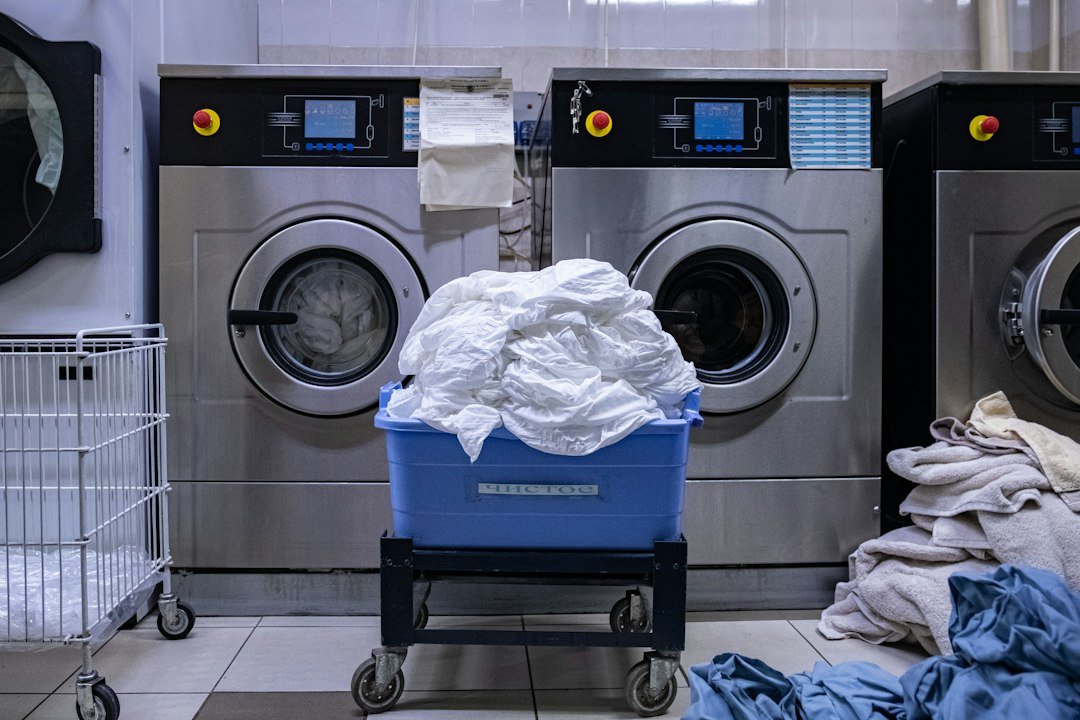
Do not assume a shared laundry room is secure storage. Unless the building provides an assigned, lockable space and explicitly allows supplies to remain there, keep products inside the apartment. Shared shelves can expose items to children, spills, heat, moisture, removal, or mix-ups.
Create a kit around the loads you actually wash. Include one closed original detergent container, one stain product if routinely used, mesh bags, payment card or coins if needed, and a small clean bag for stray items. Skip bulk refills and rarely used additives.
Make the kit easy to carry
A compact tote with an upright base prevents bottles from rolling. Keep it separate from groceries and food containers. If stairs are involved, favor a lidded caddy that fits inside a backpack-style laundry bag or a wheeled basket appropriate for the route.
Store the complete kit on one secure shelf near the apartment exit, provided it does not obstruct the doorway. The small entryway organization guide can help create a defined drop zone without allowing the tote to spread into the walking path.
Store laundry supplies when there is no dedicated laundry room
If the apartment relies on a laundromat, treat laundry supplies as a portable household kit rather than a room category. The best home base is usually a secured hall closet, a high wardrobe shelf in a contained bin, or a dry utility cabinet. Choose one location so products do not migrate between the bathroom, bedroom, and entryway.
Hall or utility closet
This is usually the strongest option because it is separate from food and easy to organize by frequency. Put the active caddy at adult reach and backstock above or behind it. Keep liquids in a washable tray, away from linens and paper goods that could be damaged by a leak.
Bedroom wardrobe
Use a wardrobe only when the products can be secured and fully separated from clothing. Place the kit in a rigid leak-resistant tray or bin, not loose on a fabric shelf. Avoid the floor if children or pets can enter, and do not store products above bedding that would absorb a spill.
Bathroom storage
A bathroom can work for a very small kit if the cabinet is dry, secure, and not crowded with medicine or personal-care products. Avoid the space beneath a sink if it is prone to leaks or accessible to children. Powdered products and cardboard packages are a poor fit for a room with persistent humidity.
Entry closet
An entry closet makes a laundromat kit easy to grab, but keep it off the walking path and distinct from reusable grocery bags. Assign one shelf or bin and return the kit there immediately after each trip. More general ideas are available in the site’s guide to storage solutions for small apartments.
Separate active supplies from laundry backstock
A small apartment rarely needs every product at the point of use. Divide supplies into three groups:
- Every load: the current detergent, measuring cap or scoop if supplied, and mesh bags.
- Occasional: stain treatment, delicates product, color catcher, or washer cleaner actually used in the household.
- Backstock: unopened refills and bulk packages stored in a secure, dry secondary location.
Review the occasional group every few months. Dispose of unwanted household products according to their labels and local guidance rather than pouring them together or improvising a use. Buying a refill only when the active container is nearly finished is often the simplest space-saving system.
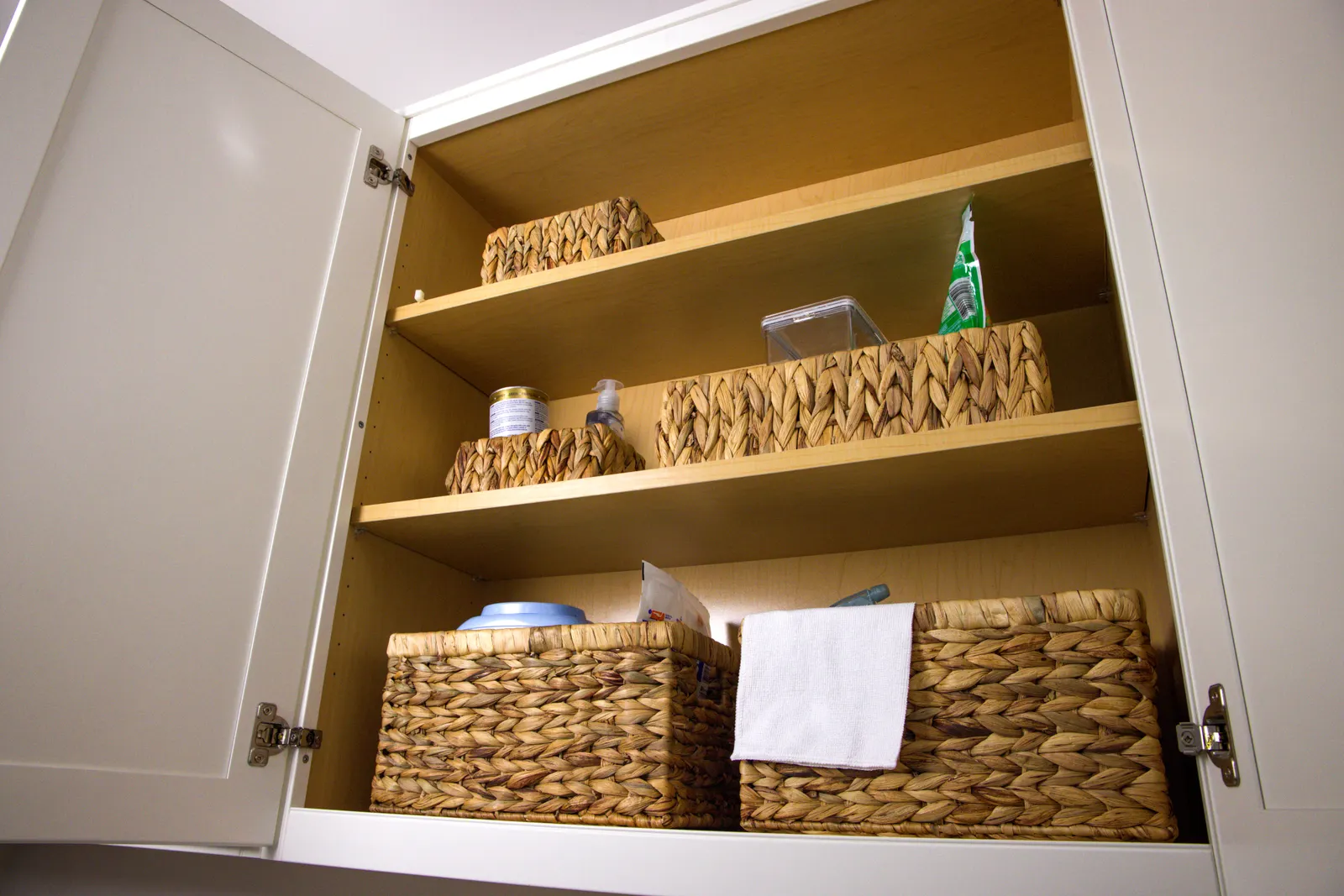
Keep detergent in the original labeled container
Original packaging carries the product identity, directions, dosing information, first-aid statements, and warnings. Keep the closure working and the label readable. Never pour detergent, bleach, scent boosters, or another laundry chemical into a food or beverage container, even temporarily.
The National Capital Poison Center explains that highly concentrated laundry packets can cause serious effects if swallowed or exposed to the eyes. If an exposure occurs, use the product label and contact Poison Control in the United States at 1-800-222-1222 or through Poison.org; call emergency services for severe symptoms.
Decorative decanting may look orderly, but it removes essential context and can make a chemical resemble food. If visual calm matters, place the closed original container inside an opaque handled bin. The bin is the visual layer; the manufacturer’s container remains the safety layer.
What to avoid when storing laundry supplies
- Food and drink containers: never use them for detergent or other chemicals.
- Unsecured open baskets within child or pet reach: use a safer location or suitable secure storage.
- Humid shelves: avoid persistent bathroom steam, condensation, and damp cardboard.
- Direct heat or sunlight: follow the storage conditions on each product label.
- Behind-appliance gaps: keep connections visible and serviceable.
- Shared-room shelves without permission: carry products back to the apartment.
- Mixing products: keep cleaners in their original containers and never combine chemicals.
- Oversized backstock: buy only what the apartment can store safely.
Frequently asked questions
Where should I store laundry detergent in an apartment?
Use a secure, dry adult-reach shelf or cabinet close to the laundry routine, while keeping the original container closed and inaccessible to children and pets. If there is no safe space near the washer, store it in a contained caddy in a hall or utility closet.
Can I store laundry detergent in the bathroom?
Only if the location stays dry, is secure, and does not mix detergent with medicines or personal-care products. Avoid a steamy open shelf and any under-sink cabinet prone to leaks or accessible to children. Follow the product label’s storage instructions.
Should I leave detergent in a shared laundry room?
Usually not. Keep it inside the apartment unless the building supplies an assigned secure space and allows storage there. Carry a small original container or another manufacturer-labeled size in a dedicated laundry caddy.
How do I carry laundry supplies to a laundromat?
Use a compact, upright caddy or zippered tote that fits securely with the laundry basket. Pack only the products needed for the trip, keep lids closed, and keep the laundry kit separate from food and drink.
Is it safe to put detergent in decorative jars?
Keeping detergent in its original labeled container is safer because the package provides identification, directions, warnings, and first-aid information. Never put laundry chemicals in food containers. For a cleaner look, place the closed original package inside an opaque bin.
Choose one safe home base for the whole routine
Pick the driest secure location that fits the household, keep one active set of products in a handled caddy or tray, and move bulk refills out of the immediate laundry zone. Whether the machine is in a closet, down the hall, or at a laundromat, one consistent home base makes supplies easier to find, safer to store, and simpler to carry.