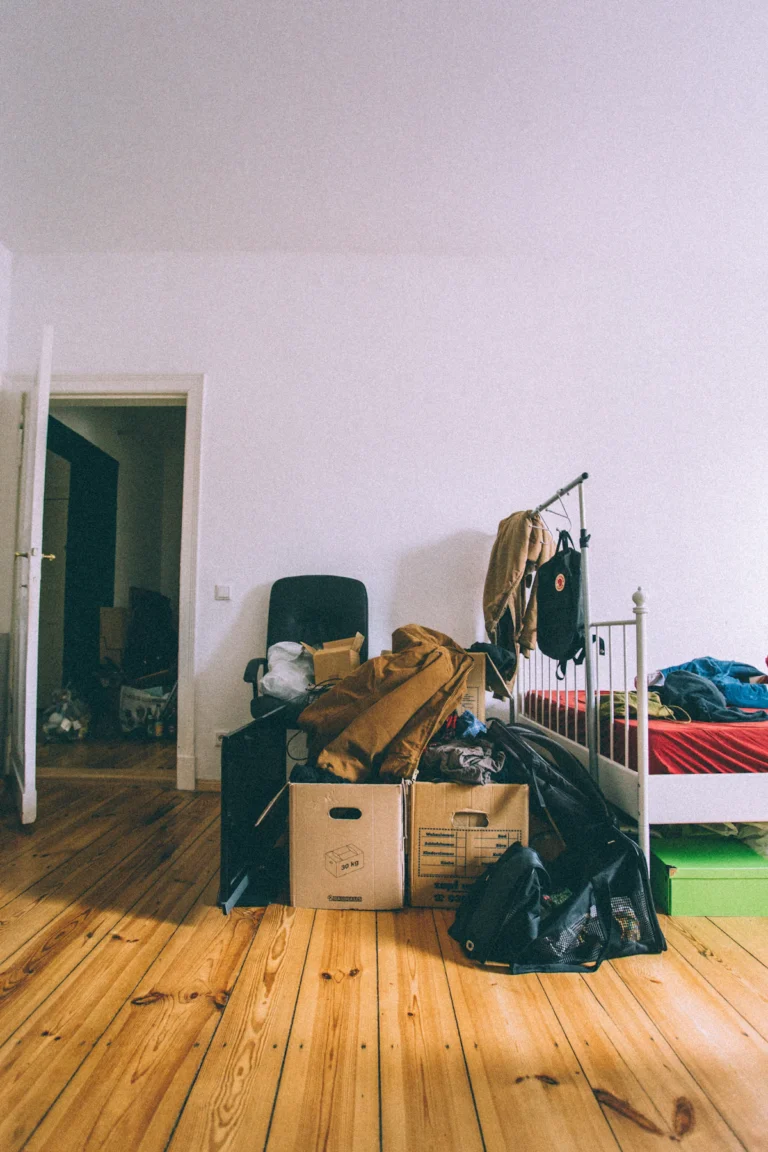
15 Bedroom Office Ideas for Small Spaces That Still Feel Calm
Bedroom office ideas for small spaces, including slim desks, window layouts, corner workspaces, closet offices, closed storage and calmer work-from-home setups.
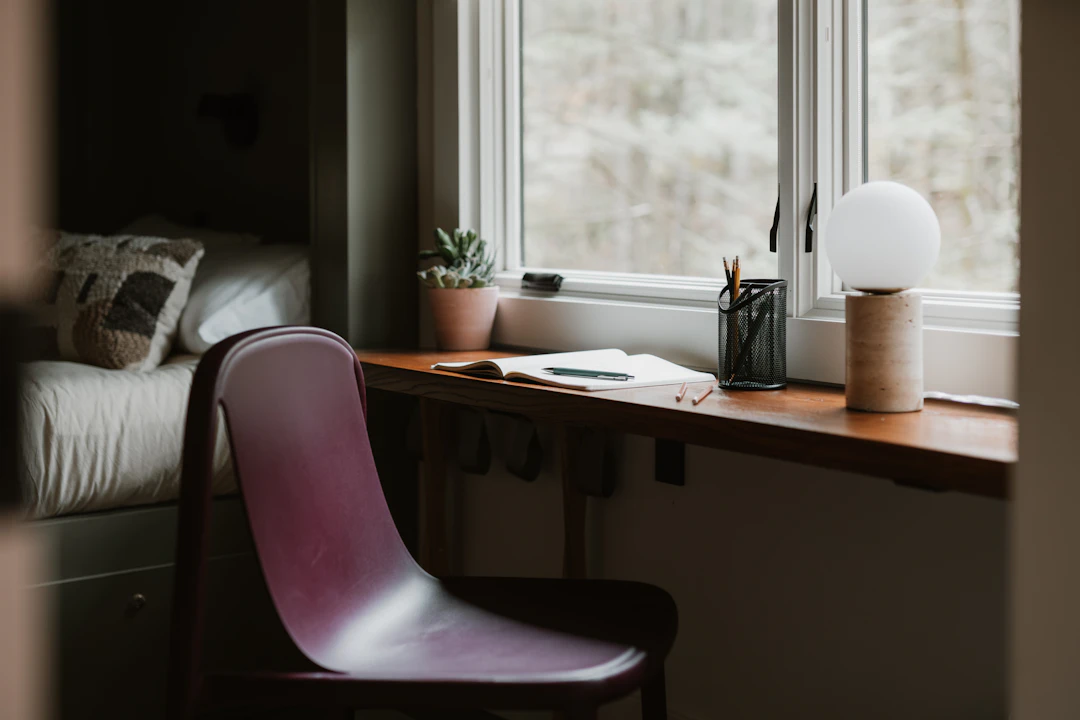
Small-space workspace ideas
Bedroom office ideas work best when the desk feels like part of the room—not a workstation that accidentally landed beside the bed. In a small bedroom, every inch already has a job. The bed needs breathing room, drawers need to open, wardrobes need clearance, and the walkway cannot disappear just because you now work from home.
The good news? You do not need a spare room to create a home office that looks intentional. A slim desk by the window, a tucked-away corner, a closet nook, or even a desk that doubles as a nightstand can give you a proper place to work without making the bedroom feel like a cubicle.
Below are 15 bedroom office ideas for small spaces that balance focus, storage, and style. Each one is designed around a simple principle: protect the room first, then make the workspace fit.
Before You Choose a Bedroom Office Layout
Do one thing before buying a desk: map the room with the chair pulled out. A desk can look perfect against the wall and still fail the moment you try to sit down, open a dresser, or walk around the bed.
- Protect the sleep zone: you should still be able to get in and out of bed comfortably.
- Protect storage access: wardrobe doors and drawers need to open fully.
- Protect the walkway: the chair should not become a daily obstacle.
- Check power and light: avoid stretching cables across the room just to reach an outlet.
- Decide what really lives at the desk: laptop-only work needs far less space than dual monitors, files, and a printer.
Bedroom Office Ideas: Quick Layout Guide
| Layout | Best for | Main advantage |
|---|---|---|
| Desk by the window | Daytime work | Natural light and a defined zone |
| Slim desk on an empty wall | Narrow bedrooms | Low visual and floor footprint |
| Corner workspace | Unused corners | Turns dead space into a work zone |
| Desk as nightstand | Very small rooms | One piece of furniture does two jobs |
| Closet office | Rooms with spare wardrobe space | Can visually disappear after work |
| Fold-down desk | Occasional work | Reclaims floor space when closed |
1. Put a Slim Desk Beside the Window
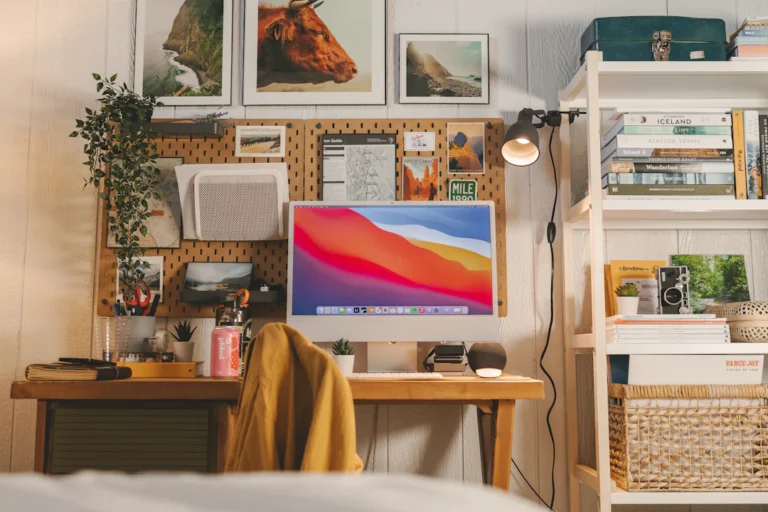
A desk near a window is one of the easiest ways to make a bedroom workspace feel deliberate. Daylight gives the work zone energy, while the window naturally creates a visual boundary between the desk and the rest of the room.
Keep the desk shallow enough that it does not push the chair into the main walkway. If the window creates glare on your screen, shift the desk slightly to the side rather than placing the monitor directly in front of the glass. A light-filtering blind can soften strong daylight without making the corner feel closed in.
Best for: laptop work, writing, study, and rooms where one wall already has a clear window zone.
2. Choose a Console-Style Desk for a Narrow Bedroom
When floor space is tight, desk depth matters more than people expect. A slim console-style desk can create a real work surface without projecting too far into the room.
The trick is to match the desk to your actual equipment. If you work from a laptop, you may not need the depth of a traditional office desk. Keep bulky supplies elsewhere and let the desk do one job well: give you a clear place to sit and focus.
If your bedroom already feels overfilled, start with our guide on how to organize a small bedroom with too much stuff before adding another piece of furniture.
3. Turn an Empty Corner Into a Dedicated Workspace
An unused bedroom corner can become a surprisingly strong home-office zone because it already feels separate from the bed. A compact rectangular desk often works better than a bulky L-shaped model, which can swallow floor space and make the corner feel heavier.
Use one vertical element—such as a narrow shelf, pinboard, or task lamp—to visually frame the work area. That small cue tells the eye, “this is the office,” without needing a divider or renovation.
4. Let the Desk Double as a Nightstand
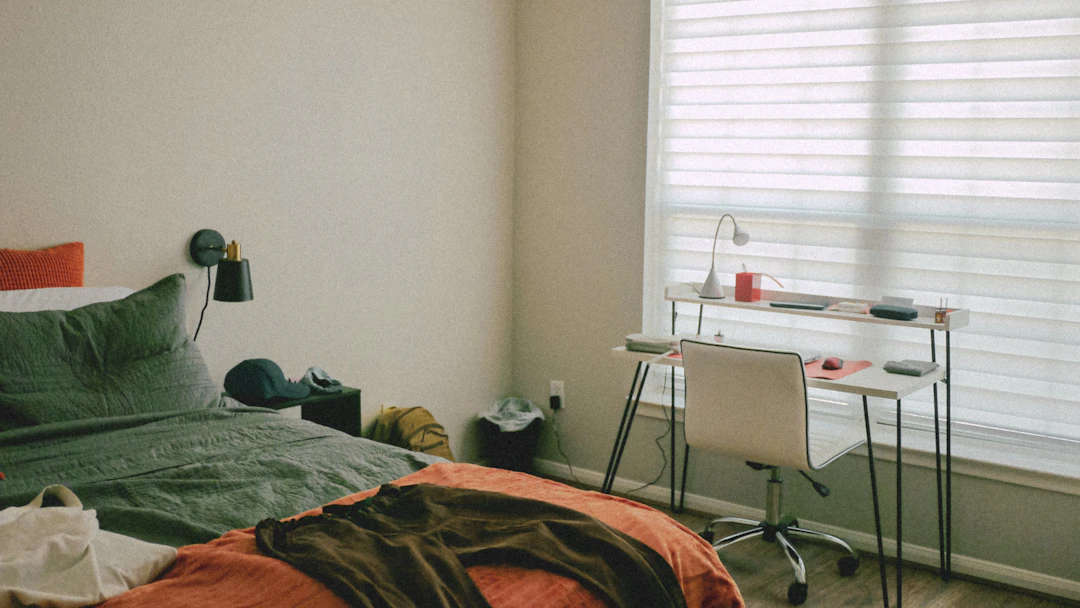
In a very small bedroom, the smartest move may be replacing furniture instead of adding it. A compact desk beside the bed can take over the role of a nightstand while still providing enough surface for a laptop during the day.
Keep nighttime essentials contained to one side: a small lamp, phone, and perhaps a book. Work tools should disappear into a drawer or caddy when you finish. The idea works only if the desk can switch roles quickly; otherwise, you end up sleeping beside a pile of office supplies.
Copywriter’s shortcut to a calmer room: one surface, two functions, one strict reset at the end of the day.
5. Create a Closet Office If You Can Spare the Storage
A closet-office—or “cloffice”—can make a bedroom workspace feel almost invisible. Remove a shelf or hanging section, add a compact desk surface, then use the upper area for light office storage.
This works best when sacrificing closet capacity will not create another clutter problem. If clothes are already overflowing, solve that first. Our guide to small-bedroom clothes storage without a dresser can help you decide whether the closet has enough spare capacity to give up.
Good task lighting is essential in a closet nook, and you should keep ventilation and electrical access in mind before placing electronics inside a tight space.
6. Use a Floating or Wall-Mounted Desk to Keep the Floor Open
A floating desk can make a tiny bedroom feel lighter because there are no bulky legs or drawer units breaking up the floor. The open space underneath also makes cleaning easier and can allow the chair to tuck away neatly.
The trade-off is installation. The desk and wall must be suitable for the load, and renters should check their lease before drilling. If permanent mounting is not practical, use a slim freestanding desk and borrow vertical storage ideas from our renter-friendly wall storage guide.
7. Place the Desk at the Foot of the Bed—Only If the Room Is Wide Enough
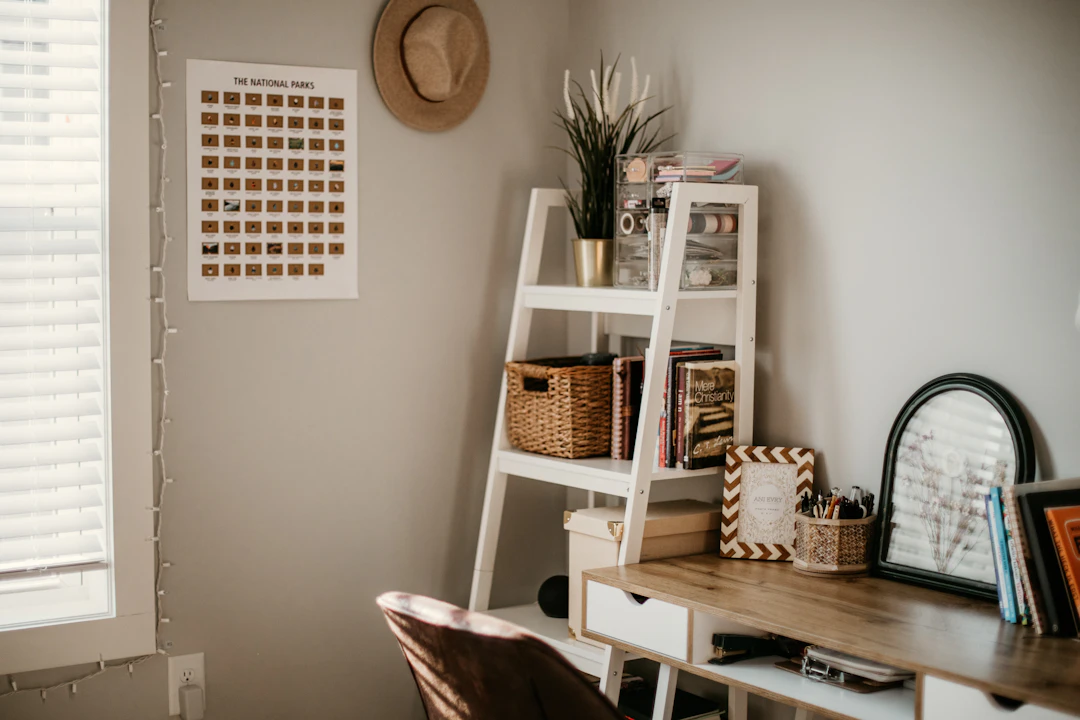
A desk at the foot of the bed can create a clear “sleep here, work there” layout in a rectangular bedroom. It works especially well when the room has enough width to preserve an easy path around both the chair and the bed.
Avoid this arrangement in narrow rooms where the chair would sit directly in the main circulation route. Keep the desk visually light, and consider closed storage so the view from the bed stays calm instead of feeling like an office supply aisle.
8. Use an Alcove or Niche as a Built-In-Looking Office
If your bedroom has an awkward recess, shallow alcove, or space between wardrobes, turn it into an advantage. A desk sized closely to the opening can look almost custom-built without requiring full cabinetry.
Use the walls around the niche for a small shelf, artwork, or task light, but leave enough breathing room so the workspace does not feel boxed in. Matching the desk finish to nearby furniture makes the nook feel intentional and polished.
9. Use a Bookcase to Separate Work From Sleep
A narrow open bookcase can divide the office zone from the bed without building a wall. The best versions are visually light and allow light to travel through the room.
Place work supplies on the desk-facing side and calmer items—books, baskets, or decor—toward the bed. Keep the unit stable and follow the manufacturer’s anti-tip guidance. In a small bedroom, a divider should create order without creating a tunnel.
For more ideas that use furniture to earn back space, see our storage solutions for small apartments.
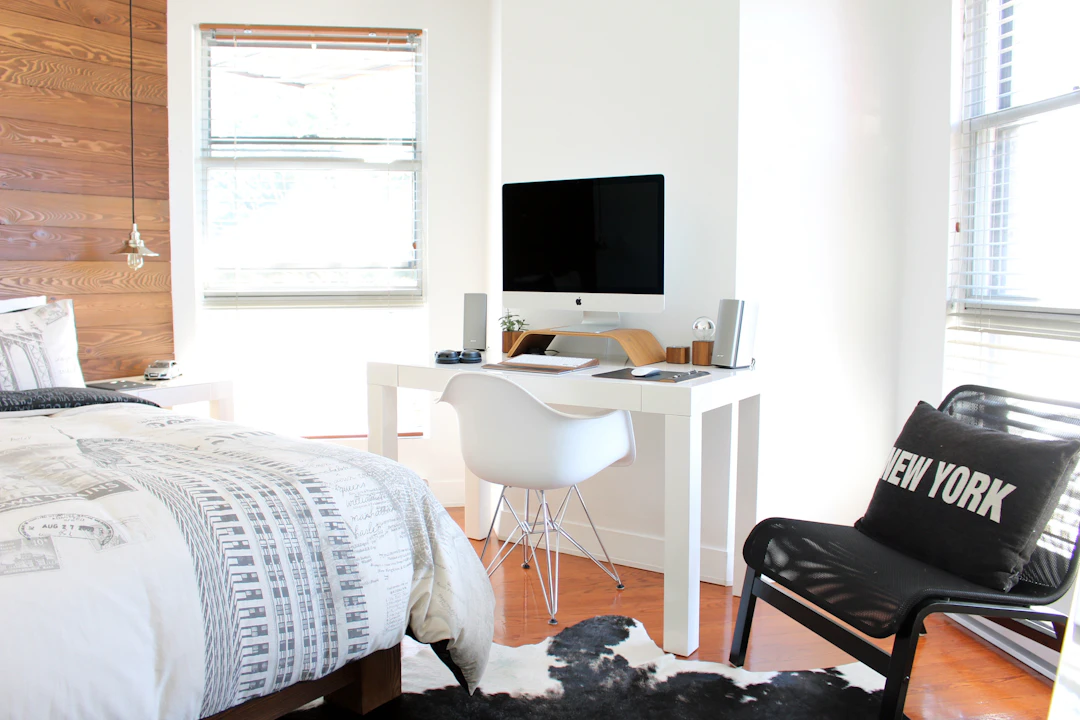
10. Choose a Fold-Down Desk for Occasional Work
If you work from the bedroom only a few times a week, a fold-down desk can be more useful than dedicating permanent floor space to a full workstation. Open it for focused work, then close it when the room needs to return to sleep mode.
This setup is best for lightweight equipment and short sessions. Before buying, check the working depth, mounting requirements, and whether the folded unit still projects into the room. A clever mechanism is not helpful if it blocks the same walkway you were trying to save.
11. Build Storage Up, Not Out
Small bedroom office ideas often fail because storage expands sideways. Instead, keep the floor plan simple and use one narrow vertical zone for files, books, and supplies.
A slim bookcase, shallow wall shelf, or over-door organizer can reduce pressure on the desk. If the bedroom has no closet, combine the office with the ideas in our small bedroom without a closet guide so work storage does not compete with clothing for every available surface.
12. Hide Work Clutter in Closed Storage
Open shelves can look beautiful in photos, but a real home office comes with cables, notebooks, receipts, chargers, printer paper, and things you do not necessarily want to look at from bed.
Closed drawers, lidded boxes, or a compact cabinet can instantly make the bedroom feel calmer after work. Keep only the few items that add warmth or personality on display. Everything else should have a place to disappear.
This is one of the biggest differences between a bedroom that contains a desk and a bedroom office that actually feels designed.
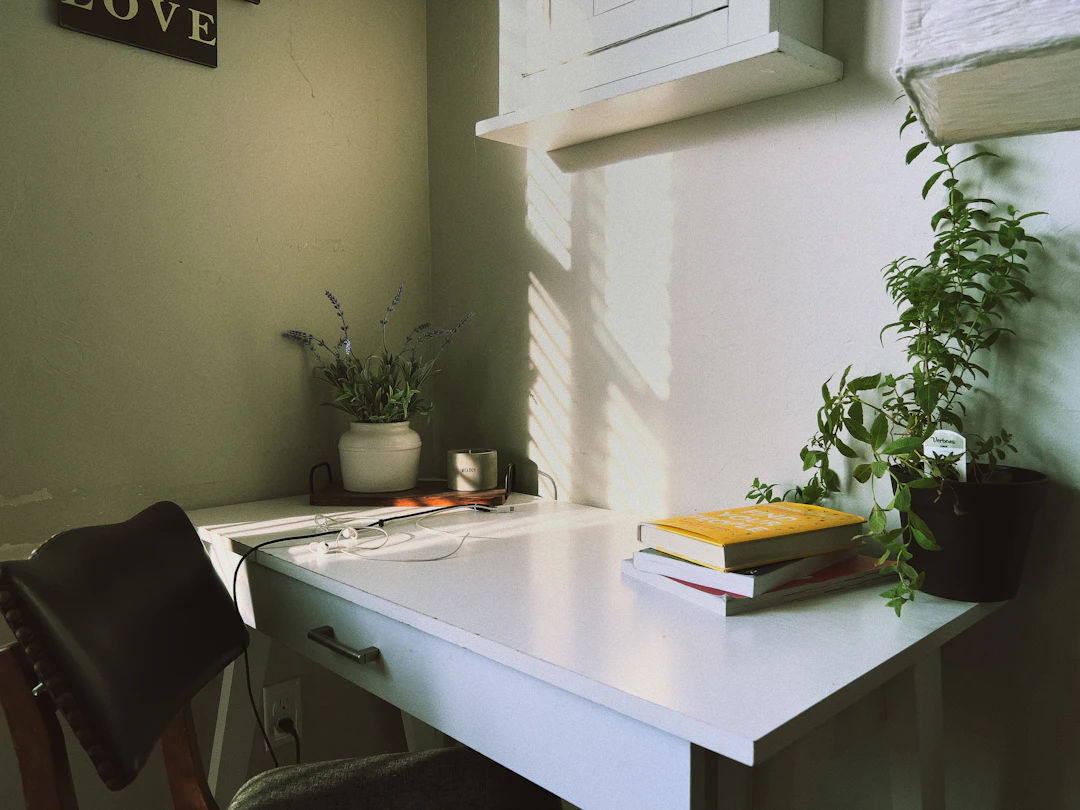
13. Match the Desk to the Bedroom Palette
The easiest way to make a home office in a bedroom feel less “office-like” is to repeat the room’s existing finishes. If the bedroom uses pale wood, soft white, black metal, warm oak, or muted green, let the desk and storage speak the same visual language.
You do not need a perfect furniture set. Repeating two or three materials is enough to make the workspace feel connected to the room. This is where styling matters: the same desk can feel intrusive in one bedroom and completely natural in another depending on color, lighting, and surrounding storage.
14. Give the Workspace Its Own Task Light
Bedroom lighting is usually designed to feel soft and relaxing. Work lighting needs to be more focused. Give the desk its own lamp so you do not have to flood the entire room with bright overhead light every time you answer an email.
A good task light also creates a visual boundary: when it is on, the desk is active; when it is off, the workday is over. That tiny ritual can make a shared bedroom-office feel much easier to live with.
15. Create a Five-Minute “Office Closed” Routine
The best bedroom office layout can still feel stressful if work spreads onto the bed, dresser, and nightstand. End each day by closing the laptop, putting loose paper away, returning chargers and pens to one drawer or caddy, removing cups, and tucking the chair back into position.
Think of it as visually closing the office. The goal is not perfection; it is making the bedroom feel like a bedroom again before you go to sleep.
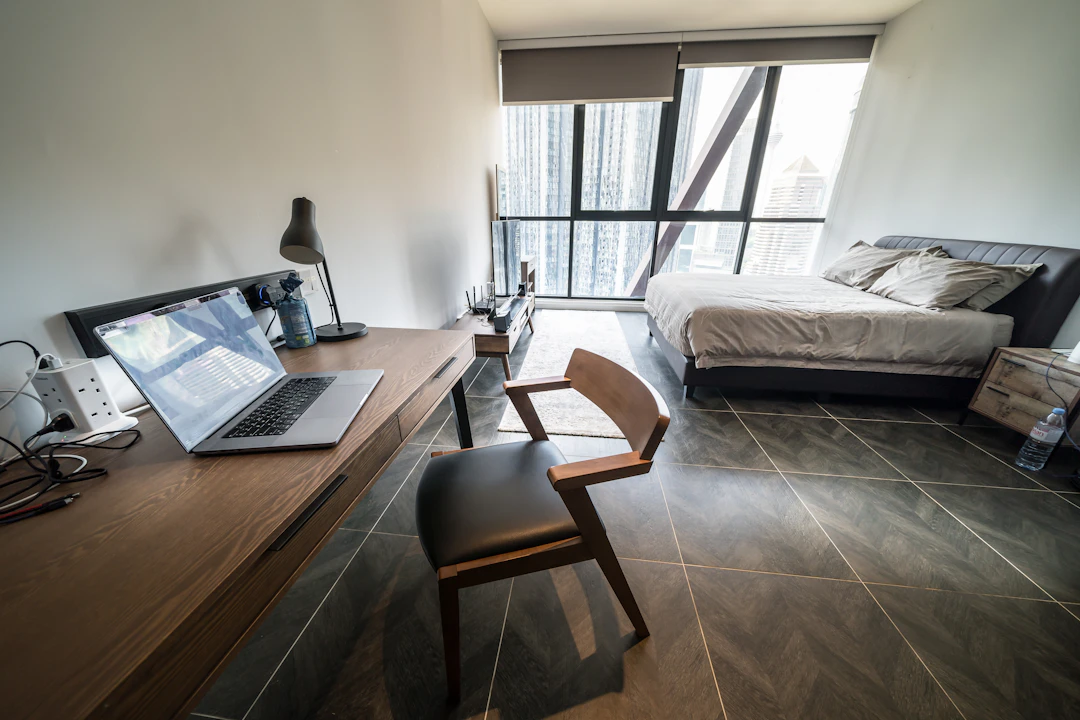
How to Make a Bedroom Office Feel Separate
You do not need a physical wall to separate work from sleep. Small visual signals are usually enough:
- use a rug under the desk area;
- choose one task lamp used only for work;
- place a narrow shelf beside the desk as a boundary;
- keep office supplies within one vertical zone;
- use closed storage so work visually disappears at night;
- keep the bed and desk surfaces completely separate.
The strongest bedroom office setups feel defined but not isolated. You want the work zone to have an identity without making the bedroom feel divided into tiny boxes.
What to Avoid in a Small Bedroom Office
| Avoid | Why it hurts the room | Better move |
|---|---|---|
| Oversized desk | Steals circulation space | Choose the smallest desk that fits your real equipment |
| Office chair in the walkway | Makes the room feel tighter | Choose a chair that parks neatly when not in use |
| Open storage everywhere | Creates visual clutter from the bed | Use one open display area and hide the rest |
| Loose cords across the floor | Looks messy and creates a trip hazard | Route power along one controlled edge |
| Work spreading onto the bed | Erases the boundary between work and rest | Give every office item a home within the desk zone |
If storage is the main reason the room feels crowded, our guides to under-bed storage ideas and over-the-door storage for small bedrooms can help move non-office items away from the workspace.
Bedroom Office FAQ
Where should a desk go in a small bedroom?
Start with the wall or corner that interferes least with the bed, wardrobe, dresser, and main walking route. A desk by a window, in an unused corner, or on a quiet wall usually works better than forcing it into the widest-looking space.
Is it okay to have a home office in the bedroom?
Yes. The key is creating a clear boundary between work and sleep. Keep the workspace compact, contain office clutter, and use an end-of-day reset so the room does not continue to feel like an active office at night.
What type of desk is best for a small bedroom?
A slim rectangular desk is usually the easiest fit because it gives you a useful work surface without consuming too much depth. Fold-down desks and compact console-style desks can work well when space is especially tight.
How do you hide an office in a bedroom?
Use closed storage, a desk that blends with the bedroom furniture, a closet nook, or a fold-down surface. Even without hiding the desk completely, removing paper, cables, and office supplies from view can make the work zone feel much less intrusive.
How can I make a bedroom office look more stylish?
Repeat the bedroom’s colors and materials at the desk, use one attractive task lamp, keep visible storage edited, and add a small piece of art or plant. Style helps, but the biggest visual improvement comes from controlling clutter.
The Bottom Line
The best bedroom office ideas do not try to squeeze a full corporate setup beside the bed. They use the room you actually have: a slim desk by the window, an empty corner, a closet nook, a dual-purpose nightstand desk, or a fold-down surface that disappears when the workday ends.
Choose the layout that protects circulation first. Keep storage vertical or closed. Match the workspace to the bedroom instead of fighting the room’s style. And when you finish working, give the desk a five-minute reset.
That is what makes a small bedroom office feel intentional: not more furniture, but a better boundary between where you work and where you rest.
Photo sources: Clay Banks, Aim | @photobypitcha, Abbey Houston, Gabriel Beaudry, Chris Vasquez, and Marc Wieland on Unsplash, used under the Unsplash License.