
Small Entryway Coat Storage: 12 Practical Fall Ideas
Twelve practical small-entryway storage ideas for fall coats, wet boots, backpacks, umbrellas and accessories, including renter-friendly options for narrow halls and homes without a coat closet.
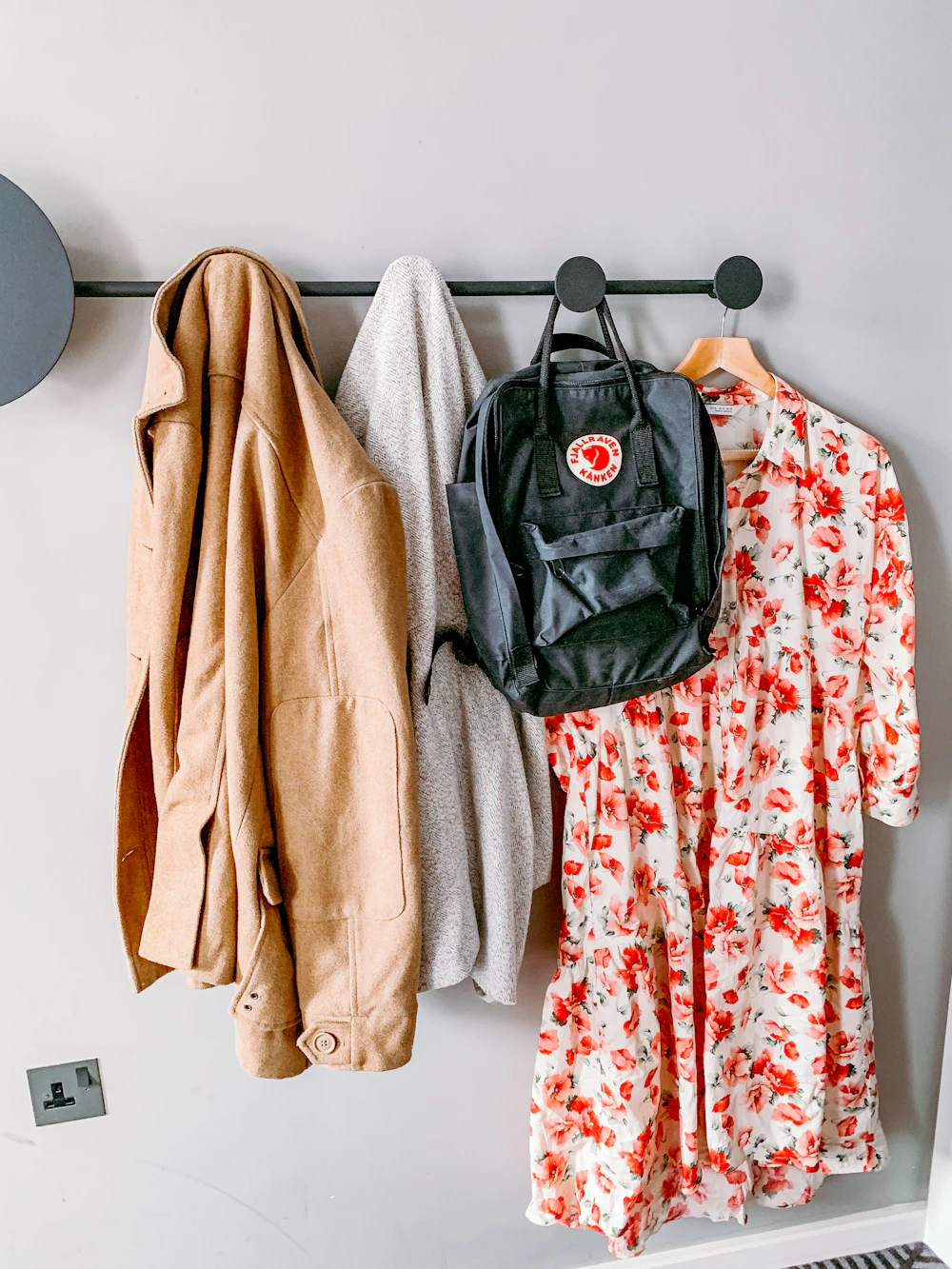
Small entryway coat storage becomes a different problem in fall. A summer drop zone may handle keys, sandals and one tote bag, but colder and wetter weather adds bulky coats, boots, umbrellas, backpacks, scarves and gloves to the same narrow patch of floor. If there is no coat closet, the entryway has to do the job without becoming an obstacle course.
The solution is to divide the entrance vertically: wet footwear stays low, everyday coats and backpacks hang at reachable heights, small accessories get one contained zone, and off-season overflow moves somewhere else. These 12 ideas work for apartments, narrow hallways, rentals and small homes where every inch near the door has to earn its place.
Featured photo by S O C I A L . C U T on Unsplash.
Measure the Entryway Before Adding Fall Storage
Do not start with a hall tree or shoe cabinet. Start with the clear path through the entrance and the full swing of every door. Tape the footprint of proposed furniture on the floor, then walk through the entrance carrying a grocery bag or backpack. If you have to turn sideways or the door hits the tape, the furniture is too deep for that location.
- Door swing: measure from the wall to the outer edge of the door when fully open.
- Usable wall width: exclude switches, intercoms, radiators, vents and trim.
- Furniture depth: include handles, tilted shoe drawers and baseboards—not just the catalog depth.
- Vertical clearance: check whether hanging coats will overlap shoes, a bench or a heater.
- Wet zone: identify a floor area that can tolerate a washable tray or mat without blocking the route.
If you still need a place for keys, mail and daily pocket items, keep that function separate with the compact system in our small entryway drop-zone guide.
1. Use Wall Hooks for the Coats Worn This Week
Hooks are efficient because they use vertical space and require almost no floor depth. But do not mount a wall of hooks and treat it as permanent coat storage. In a tiny entrance, five overloaded hooks can project farther into the walkway than a shallow cabinet.
Give each regular user one everyday-coat position if possible. If bulky coats overlap, stagger hooks vertically or use a short rail with enough horizontal spacing that garments can hang without hiding the hook next to them. Choose hardware and anchors suitable for the wall type and expected load; a heavy wet coat is very different from a scarf.
2. Add an Over-Door Rack When Wall Mounting Is Not Practical
An over-door rack can hold light jackets, hats, umbrellas or empty tote bags without drilling. Measure the door thickness, top clearance and gap to the frame before buying. Then check what happens when the door opens fully: hooks on the back should not hit the wall, shelving or another door.
Use this option for lighter items unless the product specifically supports heavier loads. For more no-drill comparisons, see our renter-friendly wall storage guide.
3. Choose a Narrow Flip-Front Shoe Cabinet for Dry Shoes
When an open rack looks visually busy, a flip-front cabinet can hide several pairs in a shallow footprint. For a tight hallway, start by testing furniture around 8–12 inches deep rather than assuming a standard dresser will fit. The exact depth you can use depends on your existing clear passage and door swing.
Measure your largest shoes before buying because some slim cabinets fit low shoes better than boots or large sneakers. Also check the clearance required for the drawer to tilt open. Tall, narrow furniture should follow the manufacturer’s anchoring and stability instructions.
4. Give Wet Boots a Tray, Not a Shelf
A boot tray creates a defined wet zone near the door and protects the rest of the entry system from drips and grit. Measure the footprint of the two or three pairs used most often and choose a tray slightly larger so soles sit fully inside the raised edge.
Do not stack wet boots in a closed cabinet. Let them drain and dry first, following the footwear care instructions. If a mat sits under the tray, make sure it can dry as well instead of trapping moisture against the floor.
| Storage type | Best for | Watch for |
|---|---|---|
| Boot tray | Wet, muddy or snowy footwear in active use | Floor protection, drying, trip risk |
| Open shoe rack | Fast access and airflow | Visual clutter, depth |
| Flip-front cabinet | Dry everyday shoes in a narrow hall | Shoe size, tilt clearance, anchoring |
| Closed bench | Dry accessories and shoes if space allows | Large footprint, damp items trapped inside |
5. Build Upward With a Two-Level Hook System
One high row can serve adult coats while a lower row handles children’s jackets, backpacks or dog leads. The lower row also keeps bags off the floor. Keep the two levels far enough apart that a long coat does not cover everything below it.
If the household is all adults, use the lower row for bags rather than doubling coat capacity. The goal is defined positions, not twice as many things in the entrance.
6. Give Every Backpack a Parking Spot
Backpacks are awkward because they are deep, heavy and frequently dropped on the floor. Assign one sturdy hook, peg or under-bench cubby per daily backpack. Place it away from the door handle and at a height that lets the user remove it without pulling neighboring coats down.
Empty food containers, papers and wet items regularly. A hook solves the floor problem but not the weight problem; follow the mounting hardware’s load guidance.
7. Use One Small Basket for Scarves and Gloves
Loose winter accessories create more visual clutter than their size suggests. Use one open-top basket, wall pocket or shallow drawer for the accessories currently in rotation. If four pairs of gloves live there but only one gets used, move the extras to bedroom or closet storage.
Keep wet gloves out until they are dry. The U.S. EPA emphasizes moisture control and recommends keeping indoor humidity below 60%, ideally 30–50%; its mold and moisture guidance is a useful reminder that closed storage should not become a damp holding zone.
8. Add a Slim Umbrella Stand or Drip Container
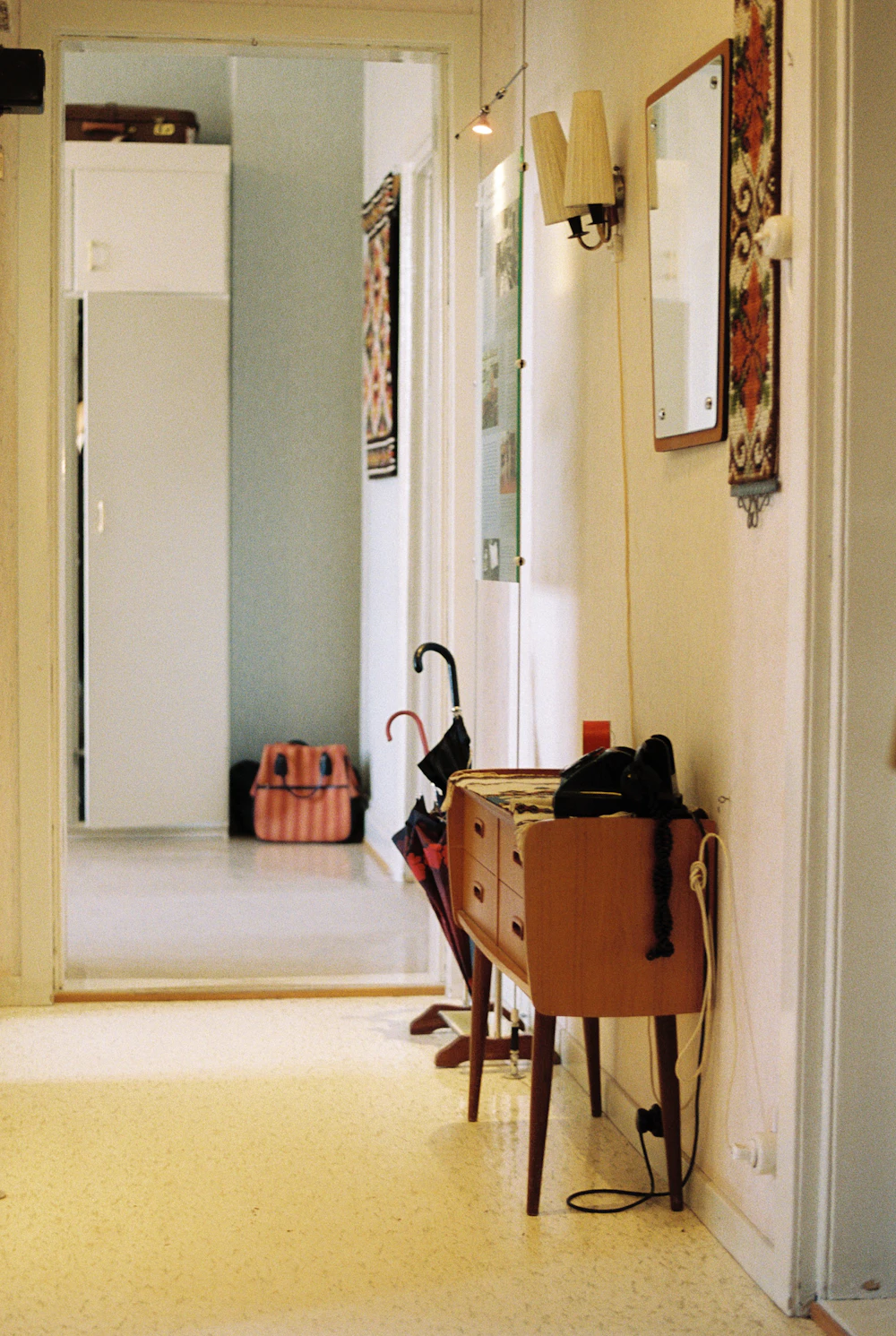
Choose the narrowest container that can hold the household’s active umbrellas without tipping. Place it on a water-tolerant surface and empty collected water rather than allowing the base to remain damp. Compact wall-mounted umbrella holders can work when the wall and mounting system are suitable.
9. Use a Shallow Shelf Above Hooks for Light Accessories
A shelf above a hook rail can hold light baskets for hats, spare gloves or a folded tote. Keep heavy objects out of hard-to-reach overhead storage. The shelf depth should not project so far that people hit it when reaching for coats.
If drilling is allowed, use fasteners appropriate for the wall and load. If it is not, a freestanding narrow tower may be safer than trying to reproduce a heavy shelf with adhesives.
10. Choose a Bench Only If Sitting Is More Valuable Than Floor Space
A bench is useful for putting on boots, but a 40-inch-wide bench can consume most of a small entry. Test the footprint with painter’s tape first. If you only need a perch, a compact stool that tucks under a console may do the job with less visual and physical weight.
For a storage bench, reserve the enclosed compartment for dry items. Wet boots are better on a tray where moisture is visible and can evaporate.
11. Use a Freestanding Garment Rack When There Is Truly No Coat Closet
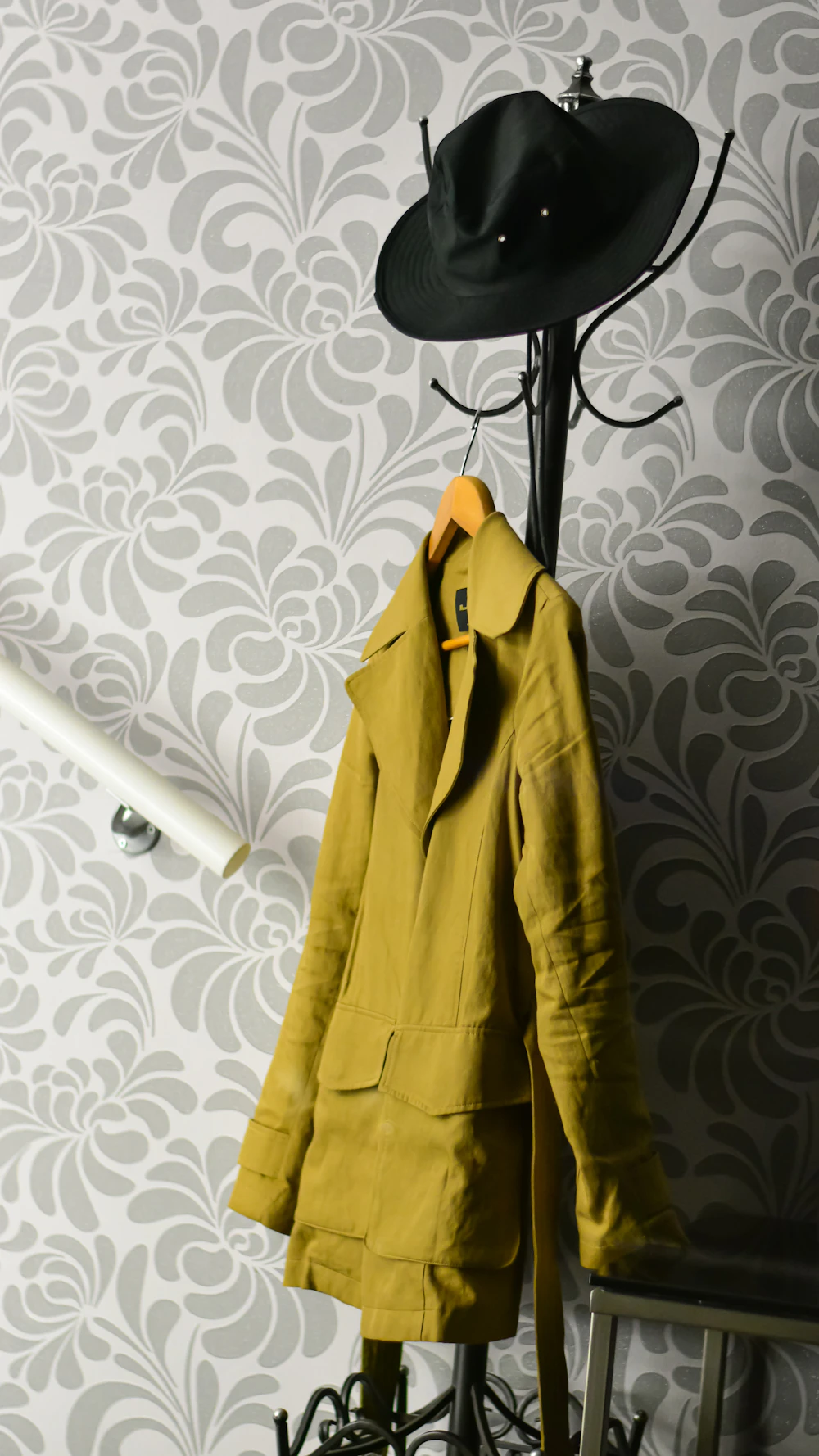
A compact rack can provide hanging space when walls cannot be drilled and the bedroom closet is already full. Choose a narrow model with a stable base and, if useful, a lower shoe shelf. Tape the dimensions on the floor before ordering.
A rack should hold current outerwear, not become a second wardrobe. If the home also lacks bedroom storage, our small-bedroom no-closet guide explains when a garment rack is worth the footprint and when drawers or under-bed storage are better.
12. Rotate the Entryway Every Two to Four Weeks
The smallest entryway cannot store a whole season for every person. Keep only the coats, footwear and accessories actually used in the current weather. When temperatures settle, move lightweight jackets and summer shoes out; when a warm spell returns, swap one or two pieces back rather than duplicating the entire wardrobe.
Our new fall closet organization guide shows how to create active, transitional and off-season zones so the entryway is not forced to become overflow clothing storage.
What to Put Where in a Tiny Fall Entryway
| Item | Best small-space location | Limit |
|---|---|---|
| Everyday coats | Wall hooks or short rail | Current weekly rotation |
| Wet boots | Washable boot tray | 2–3 active pairs if space is tight |
| Dry shoes | Shallow rack or flip-front cabinet | Frequently worn pairs only |
| Backpacks | Dedicated sturdy hook or cubby | One position per daily user |
| Gloves and scarves | One basket, pocket or shallow drawer | Current-season favorites |
| Umbrellas | Slim stand or drip-safe holder | Household’s active umbrellas |
Renter-Safe Mounting: What to Check First
Before mounting anything, check the lease and the surface. Removable adhesive products have surface, preparation, weight and removal requirements; “damage-free” is not a universal promise for every paint layer or humid wall. Over-door systems avoid wall holes but can mark door trim or prevent a door from closing if the brackets are too thick.
For heavier coats and backpacks, prioritize a mounting method designed for the load or use stable freestanding furniture. If a tall storage unit requires anti-tip anchoring, do not ignore the instruction just because the home is a rental; choose a different unit if you cannot install it safely.
Small Entryway Mistakes to Avoid in Fall
- Storing every coat by the door: keep weekly outerwear in the entry and overflow elsewhere.
- Putting wet boots in a closed cabinet: let them drain and dry first.
- Buying a deep bench for a narrow hall: test the footprint and door swing before ordering.
- Using one hook for a coat plus a loaded backpack: separate heavy jobs and respect hardware ratings.
- Filling the floor: preserve a clear route for entering, carrying bags and opening the door.
- Adding storage without rotation: even a good system fails when summer and winter gear stay active at the same time.
If the entire apartment needs more vertical storage, the principles in our small-apartment storage guide can help you move true overflow away from the entrance.
Frequently Asked Questions
How do you store coats in a small entryway without a closet?
Use a short row of properly mounted wall hooks, an over-door rack, or a stable compact garment rack. Keep only frequently worn coats there and rotate occasional outerwear to another dry storage zone.
What is the best boot storage for a tiny entryway?
For wet boots, a shallow tray near the door is usually more practical than a closed cabinet. For dry boots, use a rack with enough vertical clearance to keep shafts upright without crowding the walking route.
How deep should entryway storage be?
There is no single correct depth. Measure the clear route and door swing first. In a very narrow hall, furniture around 8–12 inches deep can be a useful range to test, but the right choice is the shallowest unit that fits your actual shoes and still allows comfortable passage.
Can renters use coat hooks?
Yes, but the right method depends on the lease, wall surface and weight. Adhesive hooks suit only loads and surfaces allowed by their instructions. Over-door systems or freestanding racks can reduce wall alterations, but they still need fit and stability checks.
The Fall Entryway Rule: Store the Week, Not the Season
A tiny entrance stays functional when it holds the coats, boots, bags and weather gear people are actually using now. Give wet items a low, easy-to-clean zone; use walls for everyday outerwear; contain small accessories; and rotate the rest. That creates a fall entryway that handles real weather without giving up the path through your home.