
Fall Closet Organization: A Practical Summer-to-Fall Guide
A practical fall closet organization plan for small homes: keep transitional clothes accessible, store summer pieces safely, and make room for sweaters, boots and layers without needing a second closet.
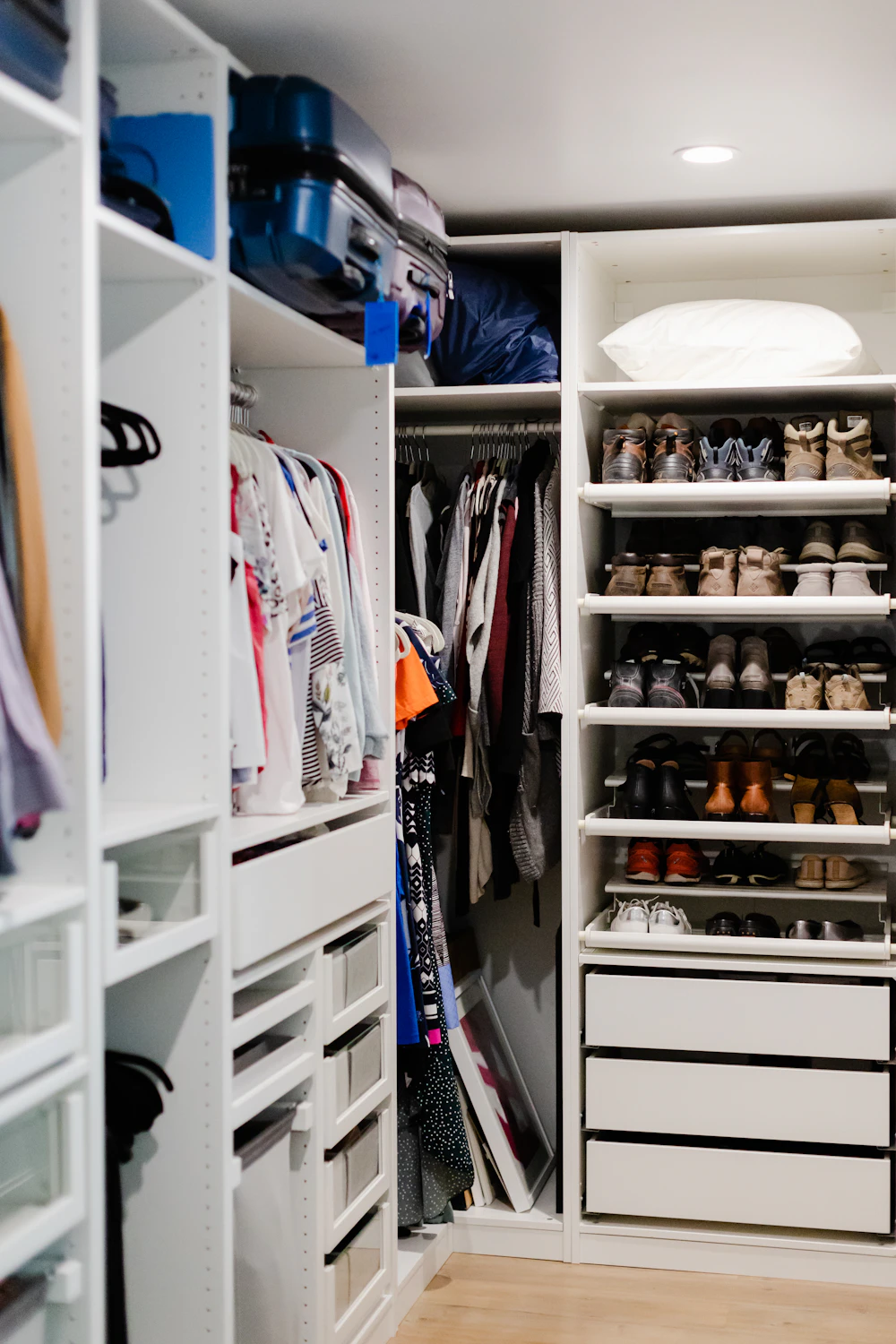
Fall closet organization is harder in a small home because September rarely gives you a clean seasonal break. Warm afternoons can keep T-shirts and light dresses in rotation while cool mornings bring sweaters, rain jackets and boots back into the same few feet of storage. If you do not have a second closet, the answer is not to pack away summer in one dramatic swap. It is to change which items get the easiest-to-reach space.
This guide uses a gradual summer-to-fall wardrobe transition for apartments, studios and small bedrooms. You will decide what stays accessible, what can move under the bed or to an upper shelf, how to store knits and shoes, and when vacuum bags help or create more problems than they solve.
Featured photo by ASR Design Studio on Unsplash.
Start With a Three-Zone Fall Closet, Not a Full Swap
Divide the closet by access before you divide it by clothing type. This keeps unpredictable early-fall weather from forcing you to reopen sealed bins every few days.
| Zone | What belongs there | Best small-space location |
|---|---|---|
| Active | Jeans, work clothes, favorite layers, everyday jacket, current shoes | Eye-level rod, easiest drawer, open shelf |
| Transition | T-shirts, light dresses, cardigan, rain layer, sneakers, one warmer sweater | Second rod section, one shelf bin, front of under-bed drawer |
| Off-season | Swimwear, beachwear, very light sandals, summer occasion pieces | Upper shelf, back of under-bed storage, labeled lidded bin |
Do not give all three zones equal space. In a tiny closet, the active zone should be the largest because it supports daily dressing. The transition zone can be compact: one short rod section or one shelf is usually enough to stop you from packing away clothing you may still need.
Measure the Closet Before Buying Seasonal Storage
Storage products are useful only when they fit the space and remain accessible. Measure the clear width, depth and height of each potential storage zone. Then measure the opening you must pass through—closet doors, bed frames and narrow gaps often determine whether a bin is actually usable.
- Under the bed: measure from the floor to the lowest rail or support, then subtract roughly 1 inch as an easy-grab allowance rather than buying a bin that scrapes every time.
- Upper shelf: measure usable depth with the closet door closed; a bin that overhangs can catch sliding or folding doors.
- Hanging area: measure from rod to shelf or floor. Long garments need a different zone from shirts and folded trousers.
- Shoe floor: open the closet door fully and mark the area that must stay clear for the door swing and your feet.
If the closet already feels physically full before fall layers arrive, use the layout fixes in our guide to doubling usable closet space before adding more containers.
What to Keep Accessible During Transitional Weather
Keep pieces that can handle a wide day-to-night temperature swing rather than keeping the entire summer and fall wardrobes active. A compact transition capsule might include several short-sleeve tops, one light overshirt, one cardigan, one rain layer, jeans or trousers, sneakers, and a pair of closed-toe shoes.
Put these pieces together instead of mixing them throughout the closet. A single transition zone makes the seasonal decision visible: when you have gone two or three weeks without reaching for a summer item, it is a strong candidate for off-season storage.
What to Store First
Start with clothing that is both climate-specific and low-frequency. Swimsuits, beach cover-ups, straw accessories, very light sandals and vacation-only clothes usually leave prime closet space before basic T-shirts do.
Before storage, wash or clean items according to their care labels and let them dry completely. Storing damp textiles creates a moisture problem in a space with limited airflow. The U.S. Environmental Protection Agency advises keeping indoor relative humidity below 60%, ideally around 30–50%, because excess moisture supports mold growth; its mold and moisture guidance specifically notes that closets and clothing can be affected by high humidity.
Use Under-Bed Storage for Bulky but Low-Frequency Summer Items
Under-bed storage is valuable because it moves seasonal volume out of the closet without adding another piece of furniture. Choose shallow, lidded containers for folded summer clothing, spare beach towels or shoes. Put the items you might retrieve during a warm spell toward the foot or side of the bed rather than burying them in the center.
For container height, wheel clearance and access options, use our under-bed storage guide for small bedrooms. The goal is a bin you can pull out with one hand, not maximum theoretical capacity.
Use Upper Shelves for Light, Predictable Seasonal Storage
Upper shelves are better for light bins than for heavy boxes you must lower from above shoulder height. One labeled container for summer clothes is easier to manage than several small baskets with overlapping categories.
Keep a little open space around the container rather than compressing soft goods tightly to an exterior wall. If a closet smells musty, shows condensation or has visible moisture, solve the moisture source before treating the shelf as long-term textile storage.
Fold Heavy Sweaters Instead of Crowding the Rod
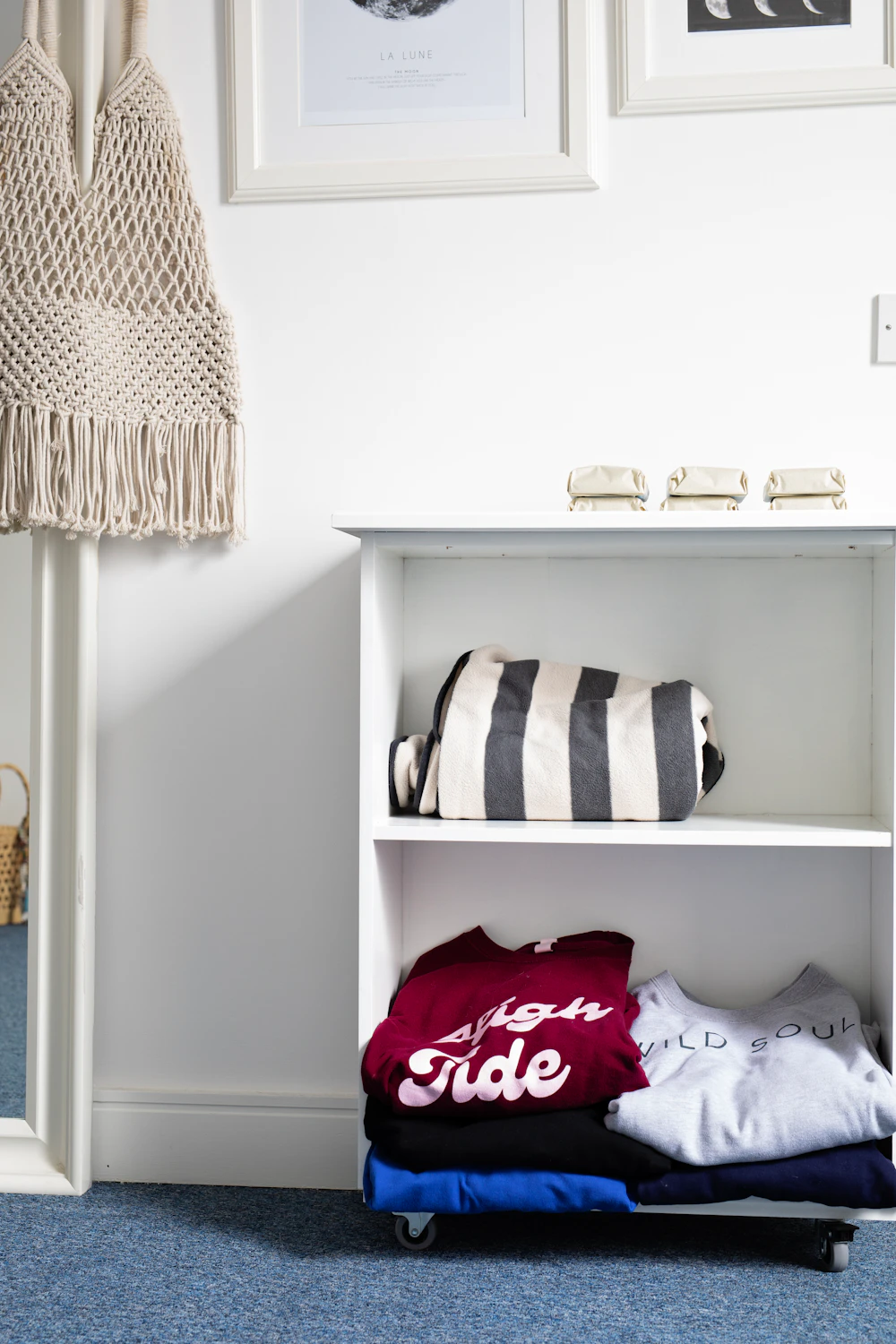
Fall brings volume. A row of chunky knits can consume the rod faster than almost anything else, and heavy sweaters may stretch at the shoulders on narrow hangers. Fold heavier knits and stack them in short piles, ideally two to four items high so you can remove one without rebuilding the shelf.
If the shelf is tall, add a divider or one open-front bin rather than stacking sweaters to the top. Keep lighter cardigans and structured knit jackets hanging only when their care and shape make that practical.
Vacuum Bags: Useful for Some Items, Wrong for Others
Vacuum bags can reduce the volume of soft, resilient textiles, but they should not become the default for every seasonal item. Use them when you need temporary volume reduction for washable cotton basics, spare bedding or similar items and when you can store the compressed bag on a flat, dry surface.
| Use vacuum storage for | Prefer a breathable or rigid container for |
|---|---|
| Basic cotton T-shirts and casual summer clothes | Structured jackets, tailored pieces and anything that creases badly |
| Soft textiles you can refold after storage | Delicate, embellished or fragile fabrics |
| Short- to medium-term space reduction | Items you need to inspect or access repeatedly |
Do not compress anything that is not completely clean and dry. Follow the garment and storage-bag instructions, and avoid treating compression as moisture protection; a sealed bag does not fix a damp room.
Rotate Summer Shoes Before Boots Arrive
Do not keep every pair on the closet floor. Choose the shoes you expect to wear weekly through early fall—perhaps sneakers, loafers and one lighter pair—and move true summer footwear to a labeled box or under-bed shoe container.
Boots need more vertical room, so measure the tallest pair before buying a rack. If a boot tray or shelf will sit below hanging clothes, confirm that coat or dress hems will not rest on wet footwear. Tall boots should stand without being crushed; simple boot shapers or rolled acid-free paper can help them keep their form.
Make a Garment Rack Earn Its Floor Space
A garment rack can solve a closet shortage, especially in a small bedroom without a built-in closet, but it can also become a second overloaded closet. Use one only when you can give it a defined job.
- Best job: current-week outfits, jackets or frequently worn fall layers.
- Footprint test: tape the rack dimensions on the floor and preserve a comfortable route around the bed and door.
- Capacity rule: leave visible gaps between garments; if every hanger must be squeezed sideways, the rack is already over capacity.
- Stability: follow the manufacturer’s load and anti-tip guidance, especially for tall or wheeled units.
Use Renter-Friendly Storage Without Assuming “No Drill” Means No Damage
Over-door organizers, tension rods and removable hooks can add small amounts of storage without permanent cabinetry. But paint condition, humidity, surface texture and the weight of winter clothing matter. A removable hook suitable for a lightweight scarf is not automatically suitable for a heavy wet coat.
Our renter-friendly wall storage guide compares no-drill options by surface and removal risk. For heavy clothing, a stable freestanding rack or over-door system is often easier to evaluate than adhesive hardware.
Give Fall Coats a Separate Rule
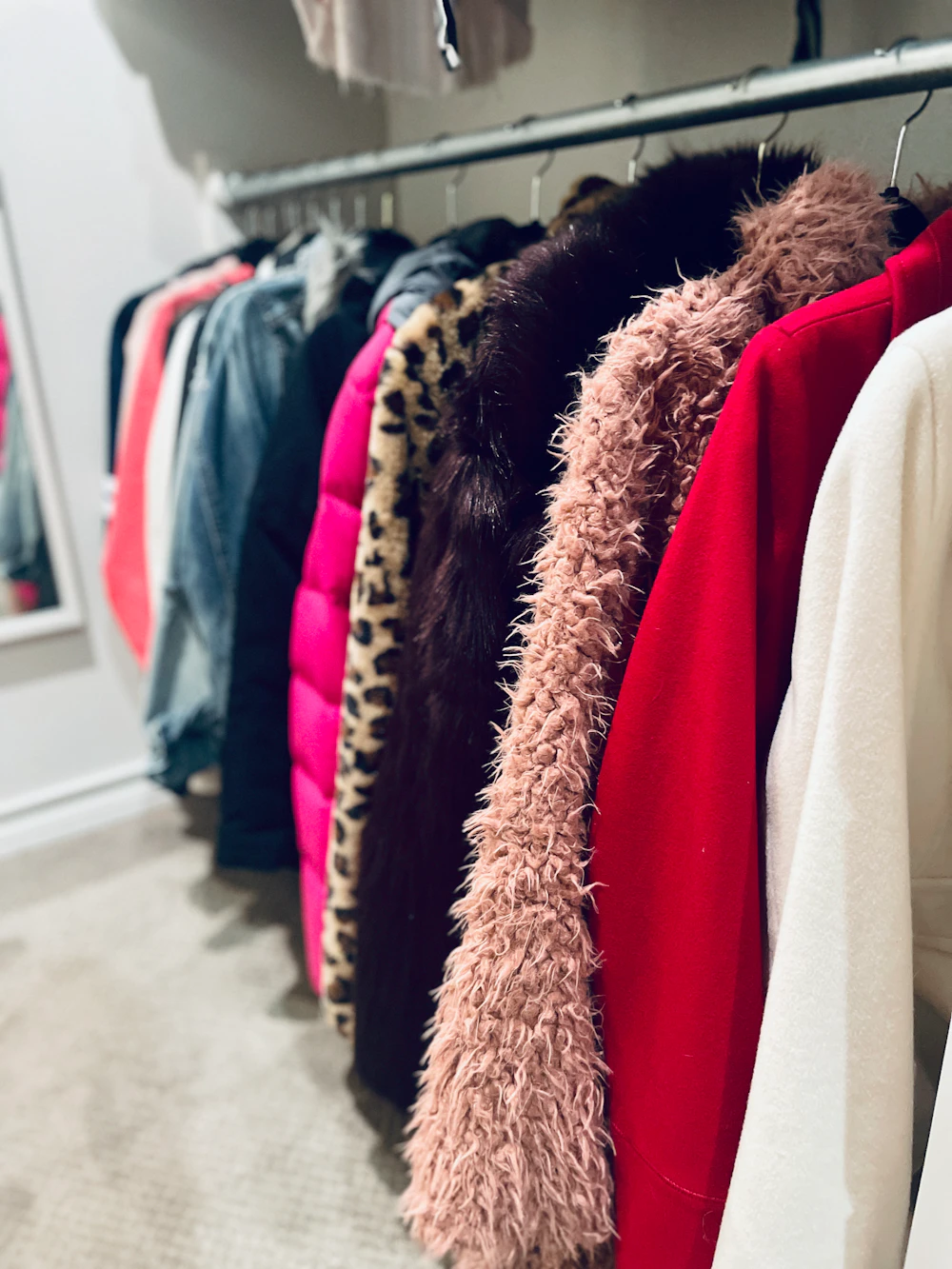
In a small bedroom closet, coats can consume the same rod space as several shirts. Keep only the outerwear you actually use every week in the most convenient position. A dress coat, ski jacket or occasional heavy coat can move to the far end of the rod, an upper garment bag, or another dry storage area if available.
A 30-Minute Summer-to-Fall Closet Transition
- 5 minutes: pull out obvious summer-only items and anything that no longer fits your current routine.
- 5 minutes: choose the transition capsule you still need for warm days.
- 8 minutes: move cleaned summer clothes into one under-bed or upper-shelf container.
- 5 minutes: fold bulky sweaters and place everyday layers at eye level.
- 4 minutes: rotate sandals out and bring weekly fall shoes forward.
- 3 minutes: leave one empty hand-width of space on a shelf or rod so the closet can absorb laundry day without overflowing.
If every surface remains full after the rotation, resist buying another organizer immediately. Revisit the access-first ideas in our small-apartment storage guide and decide whether the problem is missing storage or simply too many active-season items competing for prime space.
Fall Closet Organization Mistakes to Avoid
- Packing summer away by date alone: local weather, not the calendar, should decide when transitional clothes leave the active zone.
- Storing damp clothes or shoes: dry them fully before they enter closed storage.
- Hanging every sweater: bulky knits can waste rod space and may lose shape.
- Buying bins before measuring: a container that technically fits but is hard to remove will not stay useful.
- Filling every inch: a small amount of spare capacity makes putting laundry away much easier.
- Using adhesives beyond their job: follow surface and load instructions, especially for heavy fall outerwear.
Frequently Asked Questions
When should I switch my closet from summer to fall?
Use your local weather and what you have actually worn over the previous two or three weeks rather than a fixed September date. In early fall, keep a small transition zone instead of packing every warm-weather item.
How do I store summer clothes if I do not have another closet?
Prioritize under-bed drawers or bins, one upper-shelf container, or a compact dresser. Keep the storage location dry, easy to access and limited to true off-season items so you do not create a second clutter zone.
Should sweaters be folded or hung?
Fold heavy or easily stretched sweaters. Lighter cardigans and structured knit pieces can hang when their care labels and shape allow it. In a small closet, folding heavy knits also protects valuable rod space.
Are vacuum bags good for seasonal clothing?
They can be useful for compressible, washable textiles when space is extremely tight. Skip them for structured, delicate or crease-prone garments, and never seal damp clothing.
The Small-Closet Rule for Fall
You do not need enough space to display four seasons at once. Give the easiest-to-reach area to what you wear now, keep a compact transition zone for unpredictable weather, and move true summer pieces into one or two measured storage locations. That approach protects space without making you unpack the whole wardrobe every time the temperature changes.