21 Home Office Storage Ideas for Small Spaces That Keep Your Desk Clear
Home office storage ideas for small spaces, including shelves, closed cabinets, pegboards, rolling carts, file storage, cable control and desk-clearing systems.
Practical storage for real workspaces
The best home office storage ideas do one thing first: they protect the space you actually need to work. A desk can be beautifully styled and still fail by Wednesday if papers, chargers, notebooks, printer supplies, and “I’ll put this away later” items have nowhere obvious to go.
The answer is not automatically more furniture. In a small home office, every shelf, cabinet, drawer, and cart has to earn the space it takes. Daily tools should stay close. Weekly supplies can sit one step away. Archives can live farther out. And anything that makes the chair harder to use is not really saving space.
Below are 21 home office storage ideas for small spaces designed to keep the desk clear without turning your workspace into a wall of bins. The focus is simple: easier access, less visual clutter, better use of vertical space, and systems you can actually maintain.
Before You Buy Office Storage, Sort by Frequency
Most storage mistakes happen before the furniture arrives. Start by grouping what your office actually holds:
- Daily: laptop accessories, notebook, pen, headset, current documents.
- Weekly: printer paper, reference books, labels, extra stationery.
- Occasional: spare cables, packaging supplies, manuals, backup devices.
- Archive: records you need to retain but rarely open.
If you are planning the whole room rather than only the storage, start with our small home office ideas guide. Layout comes first; storage should support it.
Home Office Storage Ideas: Quick Comparison
| Storage type | Best for | Floor space | Visual clutter |
|---|---|---|---|
| Wall shelves | Books, boxes, reference items | None | Medium if overfilled |
| Closed cabinet | Paper, tech, backup supplies | Medium | Low |
| Rolling pedestal | Daily tools and files | Small | Low |
| Pegboard | Frequently used small items | None | Low to medium |
| Rolling cart | Projects, printer supplies, crafts | Small to medium | Medium |
| Bookcase | Mixed storage | Medium | Depends on styling |
| Over-door storage | Light overflow | None | Low when door is open |
1. Build One Vertical Storage Zone Beside the Desk
Instead of adding small organizers all around the room, create one vertical storage zone. A tall, shallow bookcase or storage tower can hold reference books, boxes, files, and office supplies while using much less floor area than several low cabinets.
Put heavier items on lower shelves, everyday reference material at comfortable reach, and low-use items higher up. The goal is not to fill every shelf. Leaving some breathing room makes the system easier to use and keeps the office from feeling visually heavy.
Best for: small offices that have wall height but limited floor width.
2. Use Closed Cabinets for the Things You Do Not Want to See
Papers, spare cables, envelopes, backup supplies, and tech accessories rarely look calm on open shelves. Closed storage gives those categories a place to disappear at the end of the day.
Inside the cabinet, keep the structure simple: one shelf for paper, one box for tech, one area for supplies. Do not turn a closed door into permission to create a hidden junk zone.
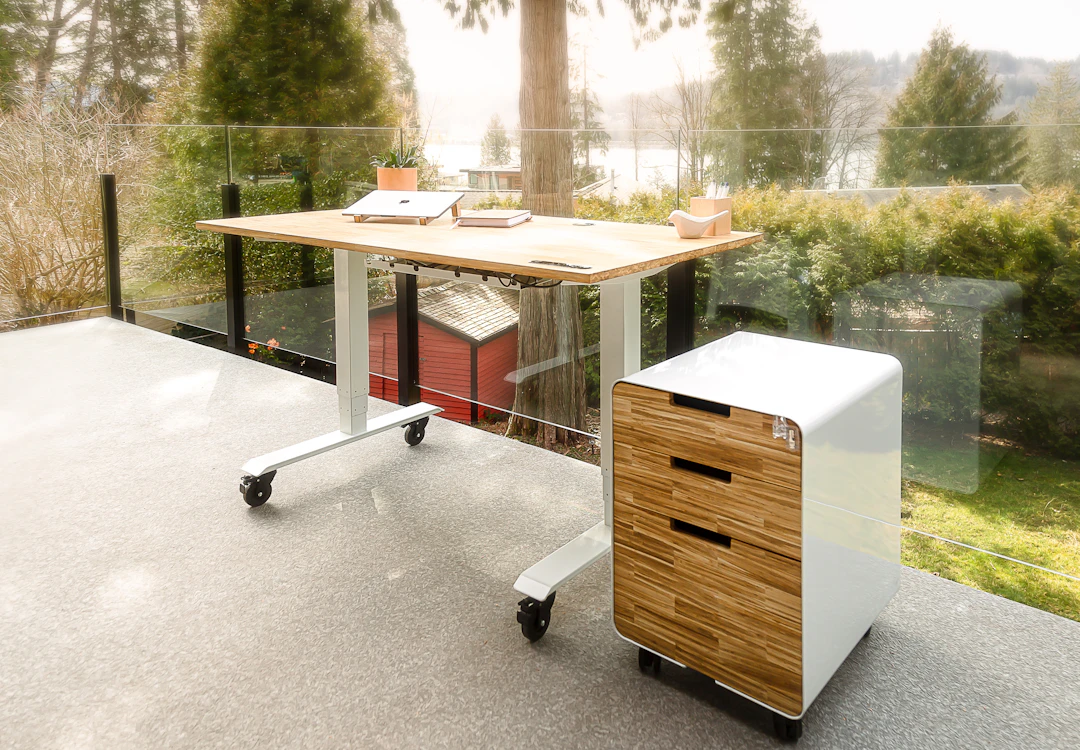
3. Add a Rolling Pedestal Instead of a Bigger Desk
If you need drawers but your desk does not have them, a slim rolling pedestal can be more flexible than replacing the entire desk. Use the top drawer for small daily tools, the middle for notebooks and adapters, and the bottom for files if the unit is designed for them.
Measure the chair and knee space first. The pedestal should slide beside or partly under the desk without forcing you to sit off-center.
4. Mount Shallow Shelves Above the Desk
Wall shelves can move books and reference items off the work surface without adding another piece of furniture. Keep them shallow enough that they do not loom over the desk, and avoid putting every small item directly on display.
Group smaller objects inside one or two matching boxes so the shelf reads as storage rather than clutter. For renters, our renter-friendly wall storage guide covers no-drill alternatives and the limits of adhesive mounting.
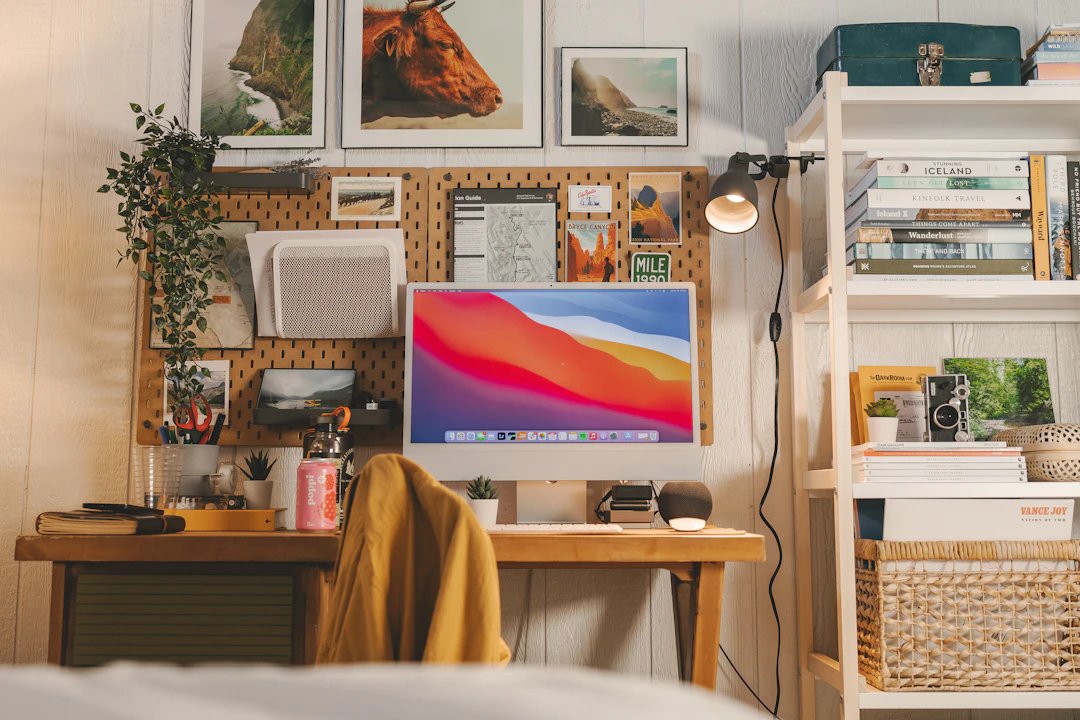
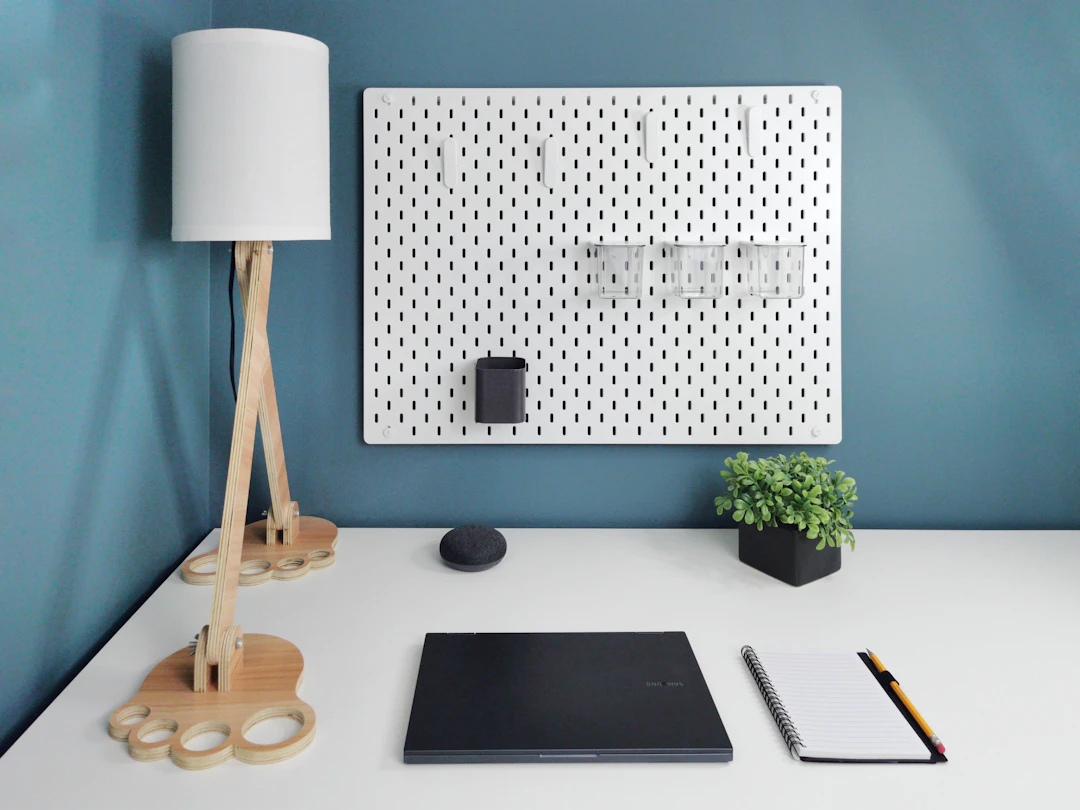
5. Use a Pegboard for Tools You Reach for Constantly
A pegboard is useful because it can change as your work changes. Headphones, scissors, a ruler, charging cable, small cups, or lightweight tools can move off the desk while staying visible.
The trick is restraint. A pegboard packed from edge to edge becomes visual noise. Keep only frequently used tools on it, group similar items together, and leave open space around the layout.
6. Put a Slim Drawer Under the Desk
A shallow under-desk drawer can handle pens, sticky notes, adapters, and other small items without using desktop space. It is especially useful for minimalist desks that have no built-in storage.
Check knee and chair clearance before installing one. Storage is not efficient if you keep bumping into it all day.
7. Give Active Paper a Vertical Home
Flat piles expand. A vertical file or wall pocket keeps active paperwork contained and makes it easier to see what still needs attention.
A simple three-part system works well:
- Action: documents that need a next step.
- Waiting: items pending a reply or decision.
- File: completed paper waiting to be moved to long-term storage.
The key word is active. Do not use the desk-side file as an archive.
8. Create a Dedicated Printer Station
Printers steal desk space because they need room not only for the machine but also for paper loading, output, controls, and spare supplies. If you print regularly, create a dedicated printer zone on a low cabinet, sturdy shelf, or rolling cart.
Keep paper and replacement supplies directly below or beside the printer so the entire category stays together. Follow the manufacturer’s clearance and ventilation guidance rather than boxing the printer tightly into furniture.
9. Use a Rolling Cart for Supplies That Move With Your Work
A rolling cart is useful when your supplies are not tied to one permanent task. It can hold shipping materials, notebooks, art tools, craft supplies, photography accessories, or a compact printer.
The most important question is not what it holds. It is where the cart parks. Choose that location before buying it. A cart that lives in the walkway is simply clutter on wheels.
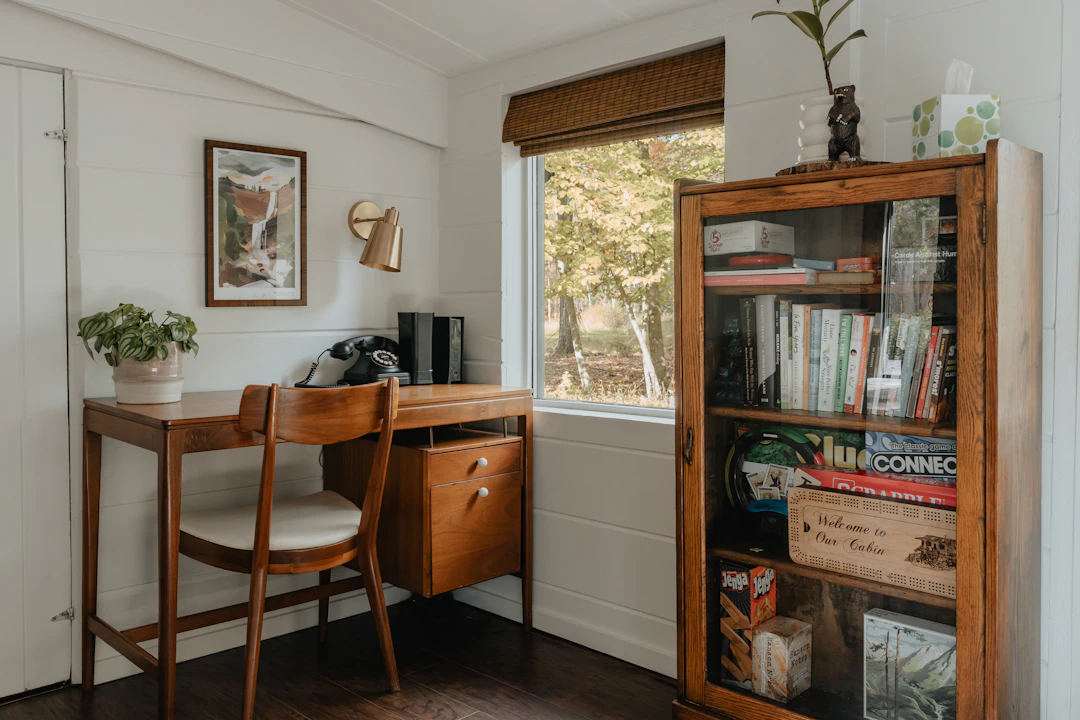
10. Turn a Bookcase Into Mixed Open-and-Closed Storage
A bookcase can do more than hold books. Use some shelves for reference material and attractive objects, then use baskets or lidded boxes for cables, stationery, spare devices, and other visually busy categories.
This combination gives you the convenience of open storage without making every office supply part of the room’s decor. Avoid filling every shelf edge to edge; a little open space makes the whole unit easier to read and maintain.
11. Use Drawer Dividers for the Tiny Things That Spread
Pens, clips, USB drives, adapters, batteries, and charging accessories create disproportionate clutter because they are small enough to be left anywhere.
Basic drawer dividers are usually enough. Give each category a rough home rather than creating a complicated system that takes more effort to maintain than the clutter itself.
12. Add a Monitor Riser With Useful Storage Underneath
If a monitor riser supports a comfortable screen position, choose one that also creates a useful zone underneath for a keyboard, notebook, or shallow tray.
Do not add a riser only because it creates another place to store things. Ergonomics comes first; storage is the bonus.
13. Use Cube Storage for Flexible Categories
Cube storage works well when your office holds mixed categories—books, files, boxes, craft supplies, or household admin. The simplest way to keep it under control is to give each cube one purpose.
Use closed bins for visually busy items and leave some cubes open for books or decor. If every cube is packed, the system quickly starts looking heavier than the room can handle.
14. Create One Tech Drawer for Cables, Adapters, and Spare Devices
Tech clutter spreads because each item feels too small to deserve its own system. Give charging cables, adapters, memory cards, batteries, dongles, and spare devices one drawer or box.
Label unfamiliar cables before storing them. If you cannot remember what a cable belongs to, you are much less likely to make a confident decision about keeping or removing it later.
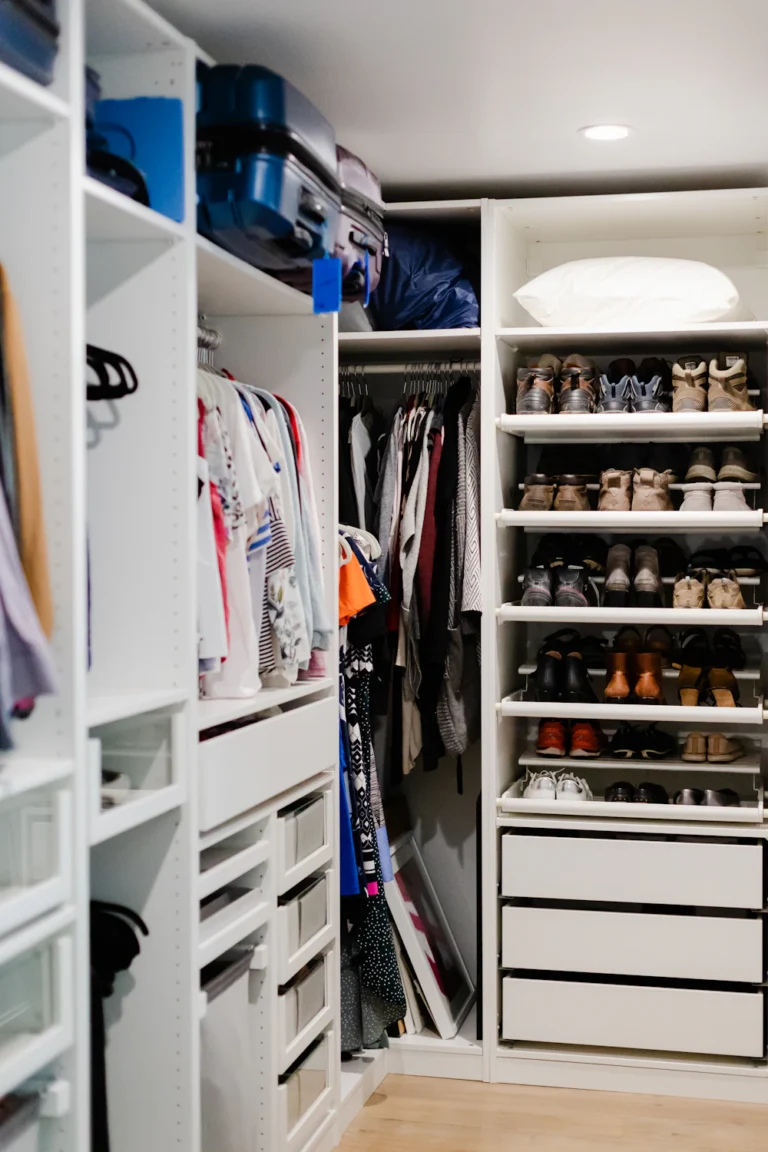
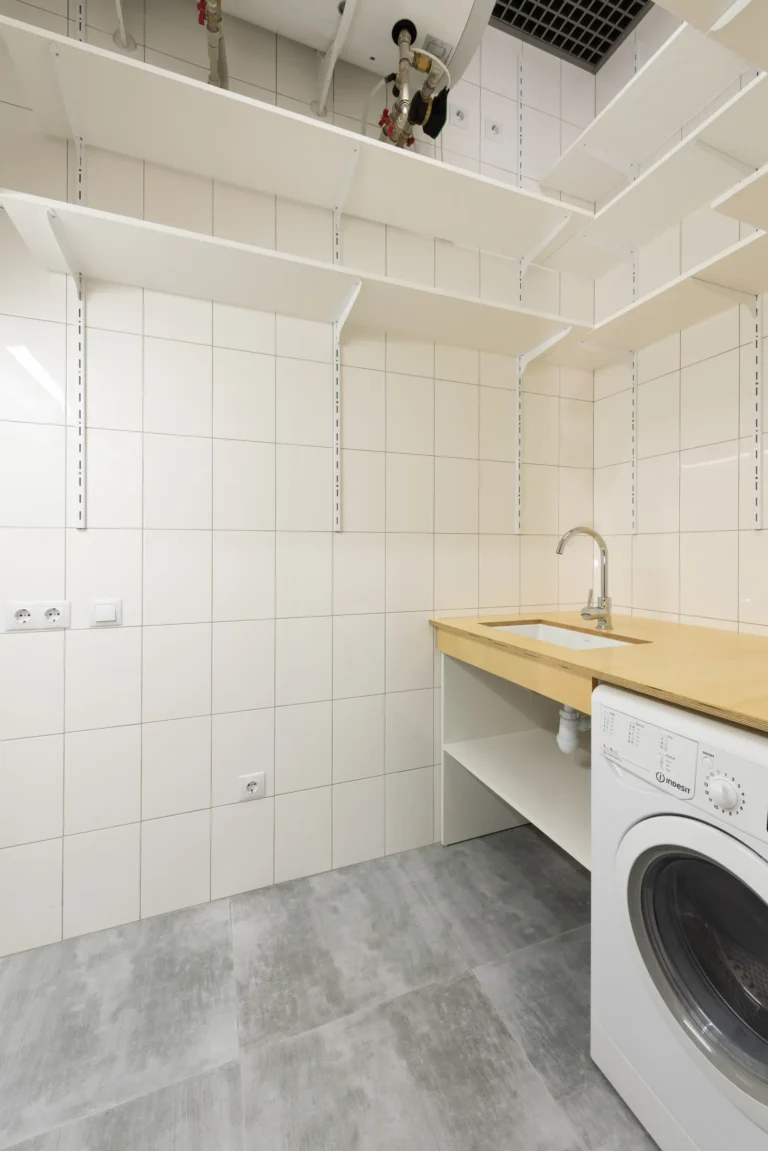
15. Use Closet Shelves for Low-Frequency Office Storage
If your home office shares a bedroom or guest room, a closet can hold archive boxes, spare paper, equipment cases, and backup supplies that do not need daily access.
The closet should not become a second office. Use it for low-frequency categories so the main work zone stays light.
If your workspace sits inside a bedroom, our bedroom office ideas guide shows how to keep work visually contained without crowding the room.
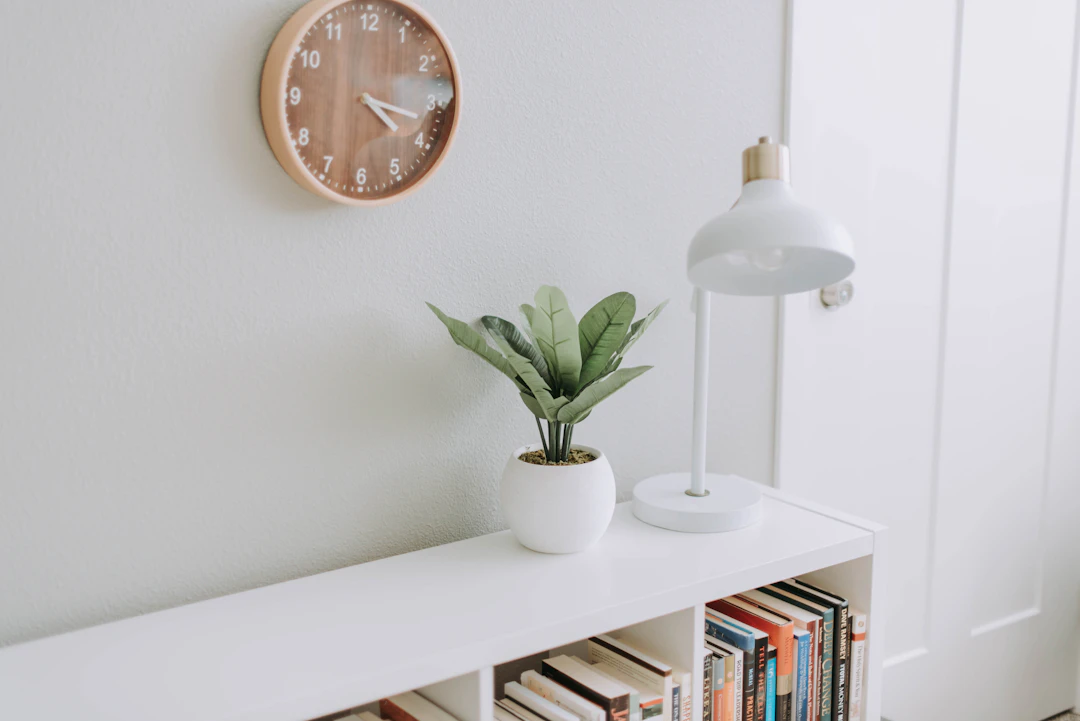
16. Use the Back of the Door for Lightweight Overflow
An over-door organizer can hold headphones, envelopes, labels, small notebooks, light stationery, and other low-weight items without using the floor.
Measure the door thickness and frame clearance first. Make sure the organizer does not prevent the door from closing cleanly. Heavy categories belong somewhere more stable.
17. Move Archives Away From the Desk
Old contracts, previous-year records, manuals, warranties, and completed project files do not need to live beside your keyboard just because they are “office things.”
Put archives in labeled boxes, a filing cabinet farther from the desk, or another appropriate storage area. Keep the best storage locations for the work you are doing now.
18. Use One Storage Bench or Low Cabinet for Two Jobs
In a small office, furniture earns its footprint more easily when it serves more than one useful function. A low cabinet can hold files while supporting the printer. A storage bench can hold supplies while offering occasional seating.
Do not force multifunctionality where it does not make sense. One piece doing two jobs is helpful; one piece doing three jobs badly is not.
19. Choose Modular Storage You Can Reconfigure
Your work may change. A home office that currently stores a laptop and a few notebooks may later need product samples, camera equipment, shipping supplies, or more paper files.
Modular shelves, stackable drawers, and movable boxes make it easier to change the system without replacing everything. Start with the capacity you need now and leave room to expand.
20. Label Only the Places That Usually Become Messy
You do not need labels on every drawer. Labels are most useful where categories repeatedly get mixed together or where more than one person uses the office.
Simple labels such as Cables, Printer Paper, Receipts, or Shipping reduce the number of decisions you have to make when putting things away.
21. Build a Weekly Storage Reset Into the System
Even good storage stops working if completed paper remains in the active file, empty packaging stays beside the printer, and supplies never return to their drawers.
Once a week, spend ten minutes putting the system back into its intended state:
- file or remove completed paperwork;
- return tools to drawers and pegboards;
- recycle packaging and empty boxes;
- restock printer paper or frequently used supplies;
- move archives out of the daily work zone;
- clear the center of the desk.
The reset is what turns a storage setup into a storage system.
What Should Stay on the Desk?
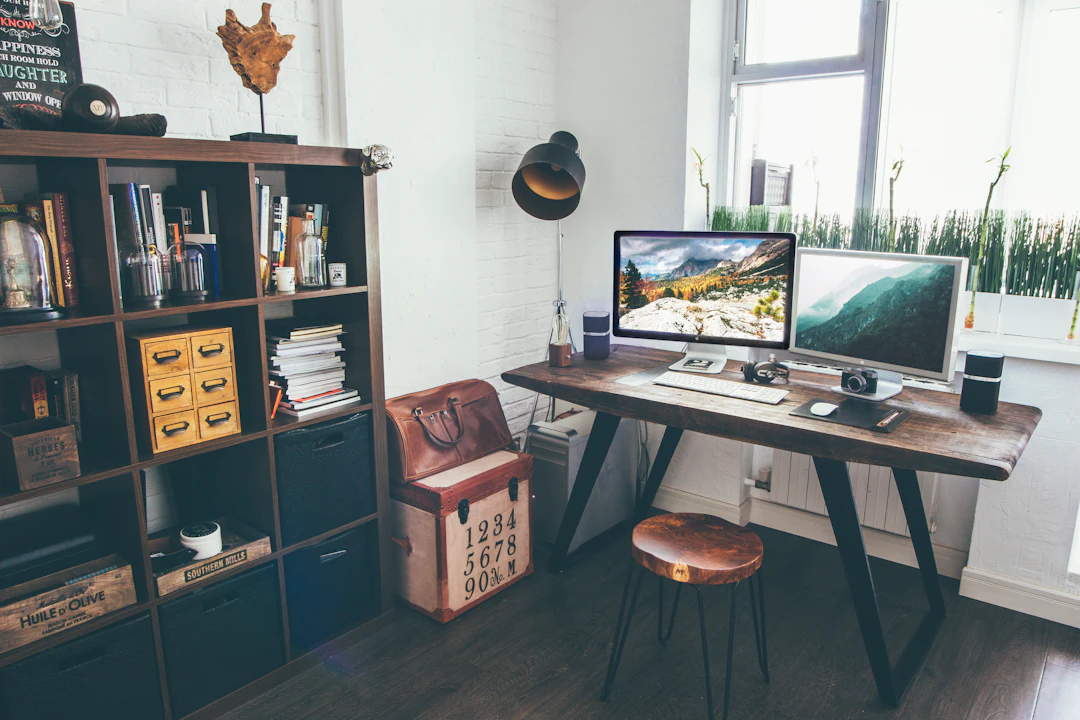
A clear desk does not need to be empty. It needs to support the work you are doing today.
| Item | Best location | Why |
|---|---|---|
| Laptop or keyboard | Main work zone | Daily task equipment |
| Current notebook | Reach zone | Used frequently |
| One pen or small caddy | Desk edge or drawer | Easy access without crowding |
| Active paper | Vertical file | Visible but contained |
| Spare cables | Tech drawer | Not needed constantly |
| Archives | Cabinet or separate storage | Low-frequency access |
For broader storage planning across a small home, see our storage solutions for small apartments. If the office is part of a living room, the circulation principles in our small living room storage guide are especially useful.
Home Office Storage Mistakes That Create More Clutter
- Buying storage before sorting the categories. You end up storing items you should have removed.
- Putting every organizer on the desk. The surface disappears under the tools meant to organize it.
- Using very deep shelves for small items. Objects get lost behind each other.
- Overfilling open shelving. The office looks busy even when technically organized.
- Using under-desk storage that steals legroom. Storage should never make the work position uncomfortable.
- Keeping archives beside daily tools. Low-use paper occupies high-value space.
- Buying a rolling cart without deciding where it parks. Flexible storage needs a home too.
- Can you clear the center of the desk in under one minute?
- Can you reach daily tools without opening three containers?
- Can the chair move freely?
- Do papers have a next-step system rather than a pile?
- Can low-frequency items move farther away?
- Is there some empty capacity left in the system?
Home Office Storage FAQ
How do I add storage to a small home office?
Start vertically. Use one tall shallow unit, a wall shelf, pegboard, or vertical file before adding more floor furniture. Keep daily tools close and move archives and backup supplies farther away.
How do I keep my home office desk from getting cluttered?
Limit the desk to active work. Give paper a vertical file, small supplies a drawer or caddy, spare cables a tech box, and weekly-use items a nearby cabinet or shelf. A short weekly reset prevents the categories from drifting back onto the desk.
What is the best storage for a home office with no drawers?
A slim rolling pedestal, under-desk drawer, portable caddy, or narrow cabinet can add storage without replacing the desk. Choose based on what you actually need to store and protect legroom first.
Are open shelves or closed cabinets better for an office?
Both are useful. Open shelves work well for books and attractive reference items. Closed cabinets are better for paper, spare tech, cables, and supplies that create visual clutter. A mix of both is often easiest to maintain.
How much office storage do I need?
Enough to hold your real work categories with some unused capacity. If every drawer and shelf is already completely full, the system has no room for normal change. Remove duplicates and move archives away before adding more furniture.
The Bottom Line
The most effective home office storage ideas are not the ones that fit the most stuff. They are the ones that make it obvious where things go.
Start with one strong vertical storage zone. Hide visual clutter in closed cabinets. Keep active paper upright. Give small tools a drawer. Move archives away from the desk. Use mobile storage only when it has a place to park. Then maintain the whole system with a short weekly reset.
When storage follows the way you actually work, the desk stays clearer with less effort—and a small home office starts to feel larger without adding a single square foot.
Photo sources: Hans, Clay Banks, Kenny Xie, EFFYDESK, Samantha Gades, and Vadim Sherbakov on Unsplash, used under the Unsplash License.